
A.C. Maas


The Ustedeo Guide — When Usted Is the Intimate Pronoun
Every Spanish textbook teaches usted as the formal pronoun. In Costa Rica, in the Colombian interior, in the Andean highlands, usted is also the intimate pronoun — used by parents with children, by spouses with each other, by old friends. A reference on what this means for learners.


The Diminutive in Latin American Spanish
Every Spanish textbook teaches the diminutive as a marker of smallness. Native speakers use it for almost everything else — for affection, softening, hospitality, irony, politeness, intimacy. A reference on the most undertaught and most useful feature of Latin American Spanish.



Indigenous Loanwords in Latin American Spanish
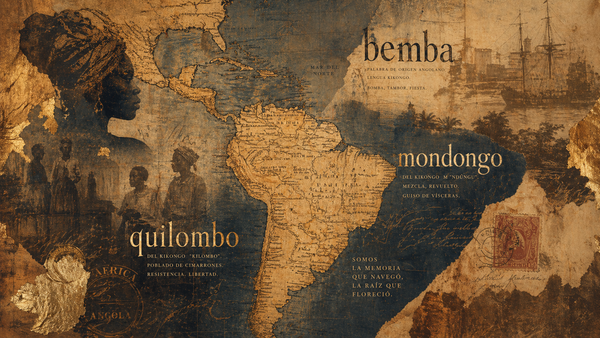
Spanish has absorbed vocabulary from the indigenous languages of the Americas — Nahuatl, Quechua, Taino, Guaraní, Mayan languages, Mapudungun, and many others. From chocolate and tomate to huracán and quinoa, the indigenous contribution to contemporary Spanish is large and ongoing.

Vos — The Pronoun Your Textbook Quietly Left Out
If you have studied Spanish from a textbook, you have learned about tú and vosotros. You have probably not been taught about vos — used by tens of millions of Latin Americans every day, with its own conjugations, its own history, and a story worth telling.

False Friends Across Latin American Spanish
Spanish vocabulary varies across regions — the famous coger case (innocent in Mexico, vulgar in Argentina), the carro that is a car in Mexico and a cart in Spain, the guagua that is a bus in the Caribbean and a baby in the Andes. A reference for navigating the regional vocabulary geography.

Che — The Word at the Heart of Argentine Spanish
Che runs through Argentine speech like a thread. It is not a noun, not a verb, not an adjective. It carries no grammatical weight. And yet it is the single word that most identifies an Argentine to other Spanish speakers — and one of them was named after it.


The Preterite and the Present Perfect
Latin American Spanish strongly prefers the simple preterite where Iberian Spanish uses the present perfect — one of the most noticeable cross-Atlantic differences in Spanish. A reference for learners navigating the regional pattern, with internal Latin American variation.


Review: italki
One of three products on my Recommendations page for serious learners of Latin American Spanish. An online marketplace connecting language learners with native-speaker tutors from around the world for one-on-one video lessons, with the distinguishing feature that learners can choose tutors by country of origin.
I have

Review: Rocket Spanish
One of three products on my Recommendations page for serious learners of Latin American Spanish. A structured audio course built around twenty-to-thirty-minute lessons, with voice recognition for pronunciation and role-play exercises for simulated conversation practice.
I have included Rocket Spanish among the three products I actively

Review: Spanish Uncovered
One of three products on my Recommendations page for serious learners of Latin American Spanish. A story-based course that builds reading and listening comprehension through extended narratives, with native-speaker audio in both Latin American and Castilian Spanish.
I have included Spanish Uncovered among the three products I actively



The Spanish of Mexico: Twelve Varieties, One Nation
If you meet a Mexican traveler in an airport in Buenos Aires, you will probably be able to tell they are Mexican within a sentence or two. But ask where they are from, and the answer will tell you a great deal. Mexican Spanish is not one Spanish — it is at least a dozen.
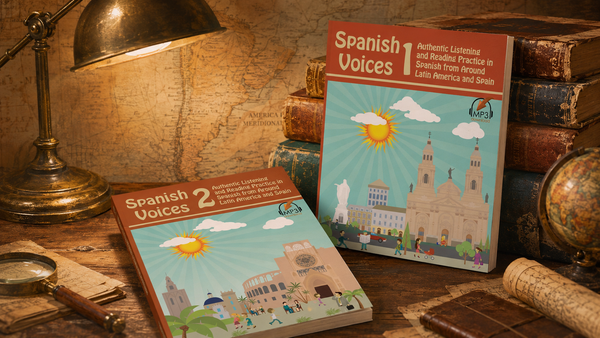
Review: Spanish Voices 1 & 2
There is a moment in every Spanish learner's progress when the coursebook audio stops being useful — when the textbook voice, slow and clear, has given everything it can. Lingualism's two-volume Spanish Voices arrives for exactly that moment. On the books that take the next step seriously.