The Spanish of Mexico: Twelve Varieties, One Nation
If you meet a Mexican traveler in an airport in Buenos Aires, you will probably be able to tell they are Mexican within a sentence or two. But ask where they are from, and the answer will tell you a great deal. Mexican Spanish is not one Spanish — it is at least a dozen.

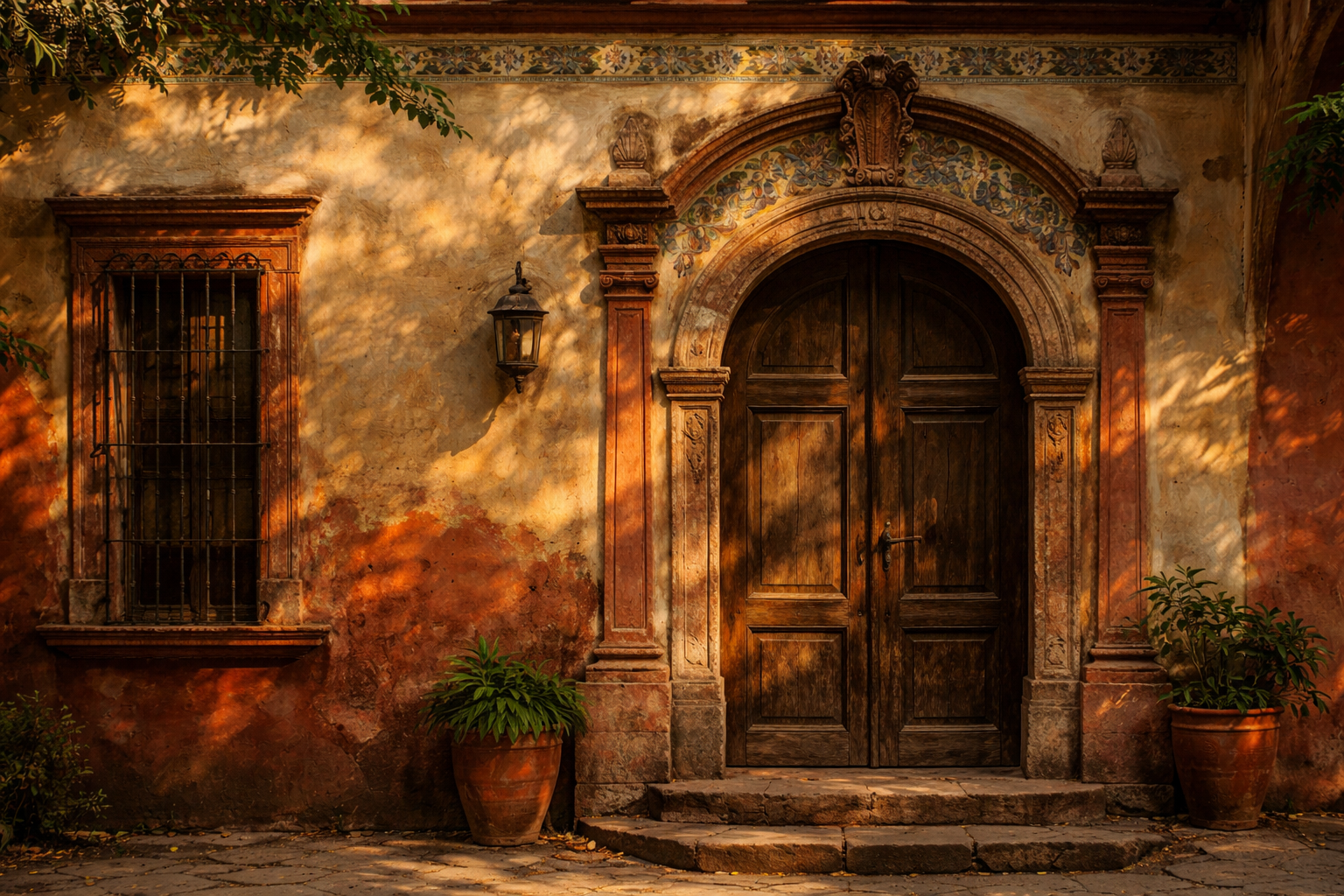
The first of a series of country-by-country portraits. Mexico first, because more people speak Mexican Spanish than any other variety in the world.
If you meet a Mexican traveler in an airport in Buenos Aires, or in a café in Madrid, or at a business meeting in São Paulo, you will probably be able to tell they are Mexican within a sentence or two. Not from anything they say, but from how they say it. Mexican Spanish has a sound — an intonation, a cadence, a certain way of shaping the ends of sentences — that is recognizable almost anywhere in the Spanish-speaking world.
But meet that same Mexican traveler at home, and ask where they are from, and the answer will tell you a great deal. Soy de Monterrey, they might say, and you will hear, if you listen carefully, a northern Spanish — direct, relatively unembellished, shaped by the proximity to the border and by the cattle-and-industry culture of Nuevo León. Soy de Mérida, and you will hear a different thing entirely — the lilt of the Yucatán, softer and more musical, shaped by centuries of contact with the Mayan languages that are still spoken across the peninsula. Soy de Oaxaca, and the Spanish will carry another coloring again, influenced by the Zapotec and Mixtec languages that surround it.
Mexican Spanish is not one Spanish. It is at least a dozen, probably more, and the differences between them are real.
This is the first thing worth knowing about the language of the country where more than 120 million people speak it every day.
Why Mexican Spanish Sounds Like Mexican Spanish
Before we get into the internal variety, it is worth pausing on what makes Mexican Spanish recognizable as a single thing, compared to the Spanish of other countries.
Several features give Mexican Spanish its characteristic sound.
Clear, enunciated consonants. Compared to Caribbean or Chilean Spanish, where consonants often soften or drop, Mexican Spanish tends to preserve them. The final s is usually fully pronounced. The d between vowels — the one that disappears in so many varieties (cansao for cansado) — is more often kept. A Mexican saying los amigos están cansados will generally sound all those consonants, where a Cuban or an Argentine often will not. This clarity is one of the reasons Mexican Spanish is so widely used in international dubbing and voice work: it reads cleanly to ears across the Spanish-speaking world.
A distinctive intonation pattern. Mexican sentences have a characteristic rising-and-falling melody, particularly at the ends of statements and questions. Linguists have studied this intonation for decades and have found that it varies significantly by region within Mexico — the Spanish of Mexico City rises and falls differently from the Spanish of Monterrey, which differs again from the Spanish of Mérida. But taken as a whole, Mexican intonation has a signature that experienced listeners recognize immediately.
A deep Nahuatl inheritance. Thousands of words in Mexican Spanish come from Nahuatl, the language of the Aztecs and the lingua franca of much of Mesoamerica at the time of the Spanish conquest. Some of these words have traveled far beyond Mexico — tomate, chocolate, aguacate, chile, coyote, ocelote are all Nahuatl, and all are now used throughout the Spanish-speaking world and in English. But many Nahuatl-derived words remain distinctly Mexican: cuate (friend), apapachar (to cuddle or hug warmly), popote (drinking straw), tlapalería (hardware store), jícara (a type of bowl). A conversation in Mexican Spanish is carrying, in every paragraph, the linguistic inheritance of civilizations that predate the Spanish arrival by centuries.
A distinctive vocabulary of daily life. Words like órale (an exclamation of encouragement, agreement, or surprise), neta (truth, the real story), güey (dude, guy, or more informal), padre (in the sense of cool, great), chido (cool, good), chamba (work, job), lana (money), and fresa (literally "strawberry," used to describe a preppy or upper-class person) are the connective tissue of Mexican conversation. A Spanish learner who has never encountered these words will find Mexican speech missing something essential.
The Regional Varieties Within Mexico
But underneath these shared Mexican features is the real story: Mexico is a country of regions, and each major region has its own Spanish.
Northern Mexico. The states of Nuevo León, Coahuila, Chihuahua, Sonora, and Tamaulipas share a northern Spanish that is relatively fast, relatively direct, and shaped by two significant influences: proximity to the United States (which brings English loanwords and the occasional Anglicism), and the cattle-and-industrial culture of the north. Northern Spanish tends to use fewer diminutives than central or southern varieties — the ubiquitous -ito and -ita that characterize Mexican Spanish elsewhere are slightly less frequent in Monterrey than in Mexico City. The vocabulary includes regionalisms like wey (a northern pronunciation of güey) and a rich layer of ranching vocabulary that has no equivalent in the south.
Central Mexico and the Bajío. The Spanish of Mexico City and the surrounding states — the Estado de México, Hidalgo, Puebla, Tlaxcala, Morelos, Querétaro, Guanajuato — is what most foreigners think of as "Mexican Spanish." It is the variety most widely heard in Mexican film, television, and music. It is also the variety most saturated with Nahuatl loanwords, because this was the heart of the Aztec civilization and the region where Nahuatl was most deeply embedded in daily life. The famous Mexican use of diminutives — ahorita, cafecito, un ratito, un poquito — reaches its highest concentration here. A Mexico City conversation is full of these softening endings, and they do cultural work beyond mere smallness: they signal politeness, warmth, and relational ease.
Mexico City itself. Worth singling out because chilango Spanish — the speech of the capital — has its own character even within central Mexican Spanish. It is faster than the surrounding regions, more saturated with slang, and tends to use a specific intonation pattern that other Mexicans immediately recognize. Chilangos use no manches (literally "don't stain," but meaning "no way" or "you're kidding") and qué padre and chingón (excellent, impressive) with a frequency that speakers from elsewhere notice. The city's Spanish has been the default voice of Mexican mass media for generations, which is why foreigners often learn it as default Mexican Spanish — but it is the dialect of one city, not the whole country.
Western Mexico. The Spanish of Jalisco, Michoacán, Colima, and Nayarit — often centered on Guadalajara — has its own distinctive sound. Guadalajaran Spanish is known for a particular melodic quality and for a tendency toward slightly slower, more deliberate speech than Mexico City. Western Mexican vocabulary includes regionalisms that do not travel well outside the region. Jalisco is also the birthplace of mariachi and the cultural heart of rural Mexican romantic imagery, which has shaped the register of Spanish heard in ranchera music and in the films associated with it.
Veracruz and the Gulf Coast. The Spanish of Veracruz and the Gulf coast has a noticeably Caribbean flavor — softer consonants, a faster rhythm, occasional s-dropping at the ends of words — that reflects the centuries of cultural exchange between this coast and Cuba and the broader Caribbean. A Veracruz conversation has a musicality that Mexico City Spanish does not share. The African influence on coastal Mexican Spanish, long underacknowledged, is also real here — the Afro-Mexican populations of Veracruz and Guerrero contributed meaningfully to the region's language and culture.
Yucatán Peninsula. The Spanish of Yucatán — spoken in the states of Yucatán, Campeche, and Quintana Roo — is perhaps the most distinctive regional Spanish in Mexico. It is heavily shaped by contact with Yucatec Maya, which is still spoken as a first language by hundreds of thousands of people in the peninsula and as a second language by millions more. Yucateco Spanish has its own characteristic intonation (often described as sing-song or lilting), its own vocabulary loaded with Mayan loanwords (mucbipollo, papadzules, chachalaco, chak), and some grammatical constructions that reflect Mayan influence. A Mexican from Mexico City meeting a speaker from Mérida will immediately recognize the difference — and will often need to listen more carefully to follow.
Oaxaca and the Southern Highlands. The Spanish of Oaxaca, Chiapas, and neighboring southern states sits in a region of extraordinary indigenous linguistic diversity. Oaxaca alone is home to Zapotec, Mixtec, Mazatec, Chinantec, Triqui, and dozens of other indigenous languages, many with millions of speakers. The Spanish of the region has been shaped by this multilingual environment. Phonologically, southern highland Spanish tends to be slower and more deliberate than central Mexican Spanish. Vocabulary draws on loanwords from the various indigenous languages of the area. And the sociolinguistic reality — where many speakers grow up with an indigenous first language and Spanish as a second — shapes how the language is spoken in ways that go beyond vocabulary and pronunciation.
Chiapas and the southern border. Shaped both by Mayan languages (Tzotzil, Tzeltal, Tojolabal, Ch'ol, and others) and by proximity to Guatemala and the rest of Central America, the Spanish of Chiapas has features that connect it more to Central American Spanish than to central Mexican Spanish. Some Chiapanecos use the vos form of informal address — the same form that dominates in Guatemala, Nicaragua, Argentina, and elsewhere — though tú is also common. This is unusual for Mexico, where tú is essentially universal.
The Mexican Spanish of the United States. Worth mentioning as a thirteenth variety, even though it is technically outside Mexico: tens of millions of Mexican-origin Spanish speakers live in the United States, primarily in the Southwest, California, and Texas. The Spanish spoken by these communities is a living continuation of Mexican Spanish — and a genuinely distinct variety that has been shaped by contact with English. Spanglish is sometimes the dismissive name given to this Spanish, but the reality is richer: these are speakers who navigate between two languages fluently and have produced a Spanish with its own vocabulary, its own rhythms, and its own cultural significance. It is the Spanish of Chicano literature, of Mexican-American cinema, of hundreds of cities in the American West.
What This Means for the Learner
The practical implication of all this regional variety is that "learning Mexican Spanish" is a more specific decision than most learners realize.
If your connection to Mexico is through Mexico City — through the films, the music, the media most visible from outside — you are naturally going to learn central Mexican Spanish. This is fine. It is the most widely understood variety of Mexican Spanish, and the one you are most likely to encounter in international contexts.
If your connection is through family or community in northern Mexico or the U.S. Southwest, you are likely learning — or should be learning — a northern Mexican variety, which differs in meaningful ways from chilango speech.
If you are drawn to the Yucatán, to Oaxaca, to Chiapas, to Veracruz — each of these regions rewards specific attention, specific listening, specific cultural context. The Mexican Spanish of Mexico City will carry you through these places, but you will not fully hear them until you let your ear adjust to what is specific about each.
And across all of these varieties, a single truth holds: Mexican Spanish is a living, continuously evolving language, carrying within it the inheritance of the Aztec civilization, the Mayan civilizations, dozens of other indigenous civilizations, centuries of Spanish colonial reshaping, and decades of contact with the United States. Every word you speak in Mexican Spanish is, in a small way, the product of all of this.
A Note on Listening
If this article has you curious about how the regional varieties of Mexican Spanish actually sound, the best thing you can do is listen.
For central Mexican Spanish, the films of Alfonso Cuarón, Guillermo del Toro, and Alejandro González Iñárritu are all worth hearing in their original audio. Roma in particular is a beautiful opportunity to hear Mexico City Spanish across different social classes. Mexican television — including the enormous number of telenovelas produced in Mexico City for international audiences — is central Mexican Spanish in its most accessible form.
For northern Mexican Spanish, the regional music of Nuevo León and Chihuahua — norteño, banda, and related styles — carries the northern sound clearly. Films set in the north, like Miss Bala and the narco-dramas of recent decades, offer contemporary northern speech.
For Yucateco Spanish, look for music and media specifically from the Yucatán — the singer Armando Manzanero, films from Mérida, regional radio broadcasts available online. The lilt of Yucatán is immediately recognizable once you know what you're listening for.
For Oaxacan Spanish and the speech of the southern highlands, the films of Everardo González and the oral traditions documented in regional media are good entry points.
A future series of articles on this site will go deeper into each of these regional varieties, one at a time. This overview is the orientation; the full portraits are what the series of regional features will build out, month by month, over the coming year.
Mexico is a beginning. There are nineteen more countries to meet.