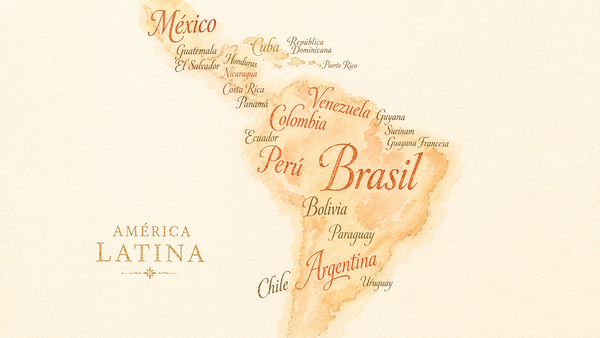
Regional Varieties
Country-by-country explorations of Latin American Spanish as it is actually spoken — Mexican, Caribbean, Andean, Rioplatense, Chilean, and the dozens of varieties within them. For readers who want to hear the language where it lives.

The Ustedeo Guide — When Usted Is the Intimate Pronoun
Every Spanish textbook teaches usted as the formal pronoun. In Costa Rica, in the Colombian interior, in the Andean highlands, usted is also the intimate pronoun — used by parents with children, by spouses with each other, by old friends. A reference on what this means for learners.



Vos — The Pronoun Your Textbook Quietly Left Out
If you have studied Spanish from a textbook, you have learned about tú and vosotros. You have probably not been taught about vos — used by tens of millions of Latin Americans every day, with its own conjugations, its own history, and a story worth telling.

False Friends Across Latin American Spanish
Spanish vocabulary varies across regions — the famous coger case (innocent in Mexico, vulgar in Argentina), the carro that is a car in Mexico and a cart in Spain, the guagua that is a bus in the Caribbean and a baby in the Andes. A reference for navigating the regional vocabulary geography.


The Spanish of Mexico: Twelve Varieties, One Nation
If you meet a Mexican traveler in an airport in Buenos Aires, you will probably be able to tell they are Mexican within a sentence or two. But ask where they are from, and the answer will tell you a great deal. Mexican Spanish is not one Spanish — it is at least a dozen.
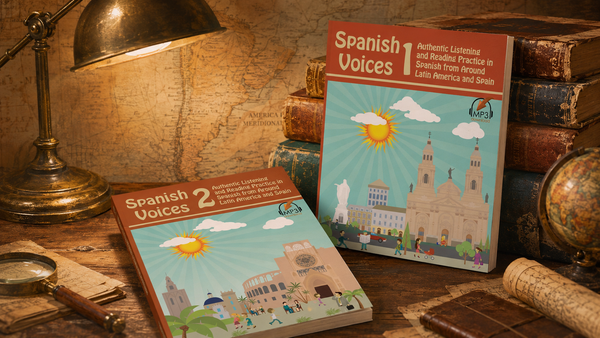
Review: Spanish Voices 1 & 2
There is a moment in every Spanish learner's progress when the coursebook audio stops being useful — when the textbook voice, slow and clear, has given everything it can. Lingualism's two-volume Spanish Voices arrives for exactly that moment. On the books that take the next step seriously.



The Spanish Your Textbook Didn't Teach You
Open a popular Spanish textbook. What you read is a language — but not, quite, the language that is actually spoken by four hundred and eighty million people. It is a close cousin. It is a useful approximation. And almost no one tells you where the approximation ends.