Puerto Rican Spanish: A Learner's Guide
Puerto Rican Spanish is a Caribbean variety shaped by sustained United States political relationship and Spanish-English bilingualism — with the large diaspora and the cultural production that has driven salsa and reggaeton.

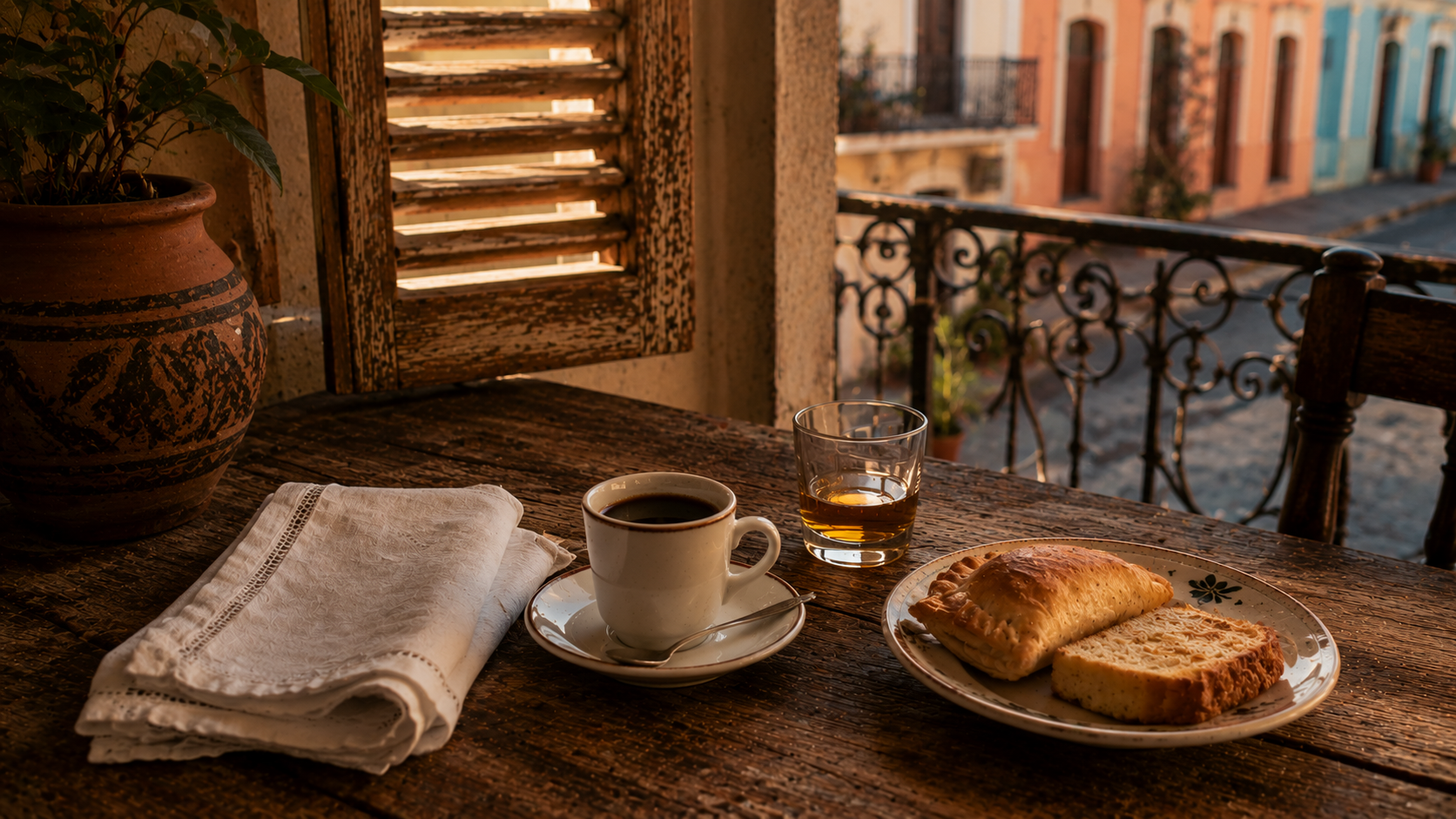
A reference on the Spanish of Puerto Rico — the Caribbean variety shaped by a century and a quarter of sustained United States political relationship and Spanish-English bilingualism unlike any other Spanish-speaking situation; the distinctive phonology with the famous r-to-l transformation (Puerto Rico becomes Puelto Rico) and the velarized r that resembles French or German r sounds in some speakers; the deep African and Taino inheritances from the colonial period; the diaspora that outnumbers the island population, with approximately 5.8 million Puerto Ricans on the United States mainland compared to 3.2 million on the island; the bilingual reality that has produced extensive code-switching and the contested Spanglish phenomenon; the cultural production that has driven salsa from its New York-Puerto Rican origins, given rise to reggaeton, and produced one of the most globally heard Spanishes of the contemporary era; and the unresolved political status question that continues to shape Puerto Rican cultural-political identity.
A Caribbean Spanish in a Unique Political Situation
Puerto Rican Spanish presents a learner with a Caribbean variety shaped by circumstances that no other Spanish has experienced. Since 1898, Puerto Rico has been a territory of the United States — first as a possession acquired from Spain at the end of the Spanish-American War, then as a commonwealth since 1952, with the political status remaining unsettled and contested through the present day. The result is that Puerto Rican Spanish has developed for more than a century in sustained, daily contact with English, in a political context where Spanish has had to be defended, where bilingualism has been the norm for much of the population, and where the relationship between the two languages carries political and cultural weight that few other Spanish-speaking situations match.
This unique political-linguistic situation has shaped Puerto Rican Spanish in ways that other Caribbean varieties have not been shaped. The vocabulary contains English loanwords integrated more deeply than in most other Latin American varieties. Code-switching between Spanish and English — what is sometimes called Spanglish — has developed as a genuine bilingual mode of expression. The diaspora — Puerto Ricans living on the United States mainland — outnumbers the island population, and stateside Puerto Rican Spanish, particularly the New York Nuyorican variety, has become a major form of contemporary Puerto Rican Spanish in its own right. Puerto Rican cultural production — through salsa, through reggaeton, through literature, through television and film — has reached global audiences through both Spanish-language and English-language channels in ways that few other Latin American cultures have.
Beneath these unique circumstances, Puerto Rican Spanish remains a Caribbean variety, sharing core features with Cuban and Dominican Spanish: the disappearing or softening final s, the consonant reductions, the rapid pace, the warm pragmatic norms, the deep African and Taino linguistic inheritances. A learner who has studied Cuban or Dominican Spanish will recognize Puerto Rican Spanish as part of the same Caribbean family. The differences are real and meaningful, but the family resemblance is clear.
This guide treats Puerto Rican Spanish as the family of varieties it actually is — the island variety, the stateside diaspora variety, the various regional and class varieties within each. It addresses the political-linguistic context honestly without taking sides on the contested status question. It treats the Spanglish question as a real linguistic phenomenon rather than as either a curiosity or a degeneration. And it acknowledges the cultural reach that has made Puerto Rican Spanish one of the most globally heard Spanishes of the contemporary era, particularly through reggaeton and the broader Latin urban music boom that has been driven largely by Puerto Rican artists.
A note on scope. Puerto Rican Spanish in this guide refers primarily to the Spanish spoken in Puerto Rico and in stateside Puerto Rican communities. The major regional varieties within Puerto Rico include the San Juan metropolitan variety, the western highland variety (Mayagüez and the western interior), the southern coastal variety (Ponce and the southern coast), and the eastern variety. The major stateside varieties include the New York Nuyorican variety, the Chicago Puerto Rican variety, the Florida (Orlando, Tampa) Puerto Rican variety, and others. All are treated as forms of Puerto Rican Spanish, with their differences acknowledged.
1. The Pronoun Core
Puerto Rican Spanish is a tuteo variety. Tú is universal as the second-person singular informal pronoun. Vos is absent in productive use. Usted functions in the textbook formal sense.
The Puerto Rican tuteo system is standard. Tú hablas, tú comes, tú vives. Standard conjugations. The familiar imperative uses standard tuteo forms (habla, come, vive). The subjunctive is the standard tuteo subjunctive.
The formal-intimate distinction works as the textbook describes. Tú with intimates; usted in formal contexts, with elders, in professional settings, with strangers. Puerto Rico does not have intimate ustedeo as discussed in The Ustedeo Guide. The textbook formal/informal binary holds cleanly.
The Caribbean warmth. Like other Caribbean varieties, Puerto Rican Spanish moves into the tú register quickly with relative strangers in informal contexts. The threshold for casual tú use is low compared to varieties like Bogotano or Sierra Ecuadorian Spanish.
1.1 — The Distinctive Vos Awareness
Puerto Rican Spanish does not use vos, but Puerto Rican speakers are sometimes more aware of voseo than speakers in other tuteo varieties because of the diaspora experience and exposure to other Spanish-speaking communities in the United States. A Puerto Rican in New York or Florida encounters Argentine, Salvadoran, Costa Rican, and other voseo speakers regularly. The awareness of voseo as a feature of other varieties is part of the broader Puerto Rican linguistic consciousness.
1.2 — The Subject Pronoun Pattern
Like Dominican Spanish but to a less extreme degree, Puerto Rican Spanish tends to express subject pronouns more frequently than other tuteo varieties. Tú tienes que ir (with explicit tú) is more common than tienes que ir in many Puerto Rican contexts, particularly in casual speech. The pattern is less pronounced than in Dominican Spanish but more so than in Mexican or Spanish-Spanish.
1.3 — Practical Consequences for the Learner
A learner of Puerto Rican Spanish should master standard tuteo as the foundation and use usted in formal contexts as the textbook describes, while developing awareness of the moderately expressed-subject-pronoun pattern. The textbook formal/informal binary holds cleanly without intimate ustedeo, which keeps the pronoun grammar itself simple. The deeper feature that shapes Puerto Rican Spanish beyond pronouns is the sustained Spanish-English bilingualism, which affects vocabulary, expressions, and pragmatic patterns in ways the following sections address.
2. The Sound of Puerto Rico
Puerto Rican phonology shares core Caribbean features with Cuban and Dominican Spanish but has its own particular character. The systematic treatment of Caribbean phonological patterns is in A Pronunciation Guide to Latin American Spanish. What follows is the Puerto Rican-specific picture.
2.1 — The Softening S
The final s in Puerto Rican Spanish softens to an h-like breath or disappears in casual speech, similar to Cuban Spanish though typically less aggressive than Dominican Spanish.
Before consonants. Los amigos becomes loh amigoh. Estos hombres becomes ehtoh hombre. The aspiration to h is more common than the complete loss seen in Dominican Spanish.
At word endings. Los often becomes loh. Buenos días becomes bueno día or buenoh día. The pattern is similar to Cuban Spanish.
Educated and formal Puerto Rican speech preserves more of the s than casual speech does. The reduction is associated with casual register, with regional speech, and with class variation.
2.2 — The Famous R → L Transformation
The most internationally recognized feature of Puerto Rican Spanish is the transformation of r to l in syllable-final position. Puerto Rico becomes Puelto Rico. Comer becomes comel. Por favor becomes pol favol. Cantar becomes cantal. Hablar becomes hablal.
This r → l pattern is one of the most identifying features of Puerto Rican speech, particularly in casual register and in popular speech. It is shared with some Dominican and Cuban speech but is most consistently associated with Puerto Rican Spanish in the broader Spanish-speaking consciousness.
The pattern carries social meaning within Puerto Rican Spanish. Educated formal speech tends to preserve the r more often; casual speech and working-class speech use the l transformation more consistently. The feature is sometimes stigmatized in formal contexts but is celebrated as a marker of Puerto Rican identity in cultural and musical contexts.
2.3 — The Velarized R
A distinctive Puerto Rican phonological feature is the velarized realization of the trill r (the rolled r of words like perro, carro, Ricardo). Some Puerto Rican speakers produce this r with a sound at the back of the throat rather than at the alveolar ridge — a sound that can resemble the French r or the German r or, to English ears, a kind of throaty h.
This velarized r is most pronounced in certain regional and class varieties of Puerto Rican Spanish and is one of the features that immediately marks a speaker as Puerto Rican to other Spanish speakers. Ricardo in this pronunciation can sound closer to Hicardo or Khicardo than to the standard alveolar trill.
The feature is socially marked. Some Puerto Ricans embrace it as a distinctive marker of identity; others, particularly in formal or educated contexts, prefer the alveolar trill. The pattern continues to evolve, with younger urban speakers showing variation in their use of the velarized realization.
2.4 — The Softening D
The intervocalic d, particularly in past participles, softens or drops in casual speech. Cansado becomes cansao. Pescado becomes pescao. Hablado becomes hablao. The pattern is consistent with broader Caribbean Spanish and similar to Cuban and Dominican usage.
2.5 — The Nasal Hum
Word-final n in Puerto Rican Spanish, like in other Caribbean varieties, takes on a hum similar to the ng in English sing. Pan sounds closer to pang. Buen sounds closer to bueng.
2.6 — Standard Yeísmo
Puerto Rican Spanish uses standard yeísmo. Ll and y merge to the standard y sound. Llamar sounds like yamar. Yo sounds like yo in English.
2.7 — Soft J and G
The Puerto Rican realization of j and g before e/i is soft, close to the English h sound. Jefe sounds close to hefe. Gente sounds close to hente.
2.8 — The Distinctive Puerto Rican Intonation
Puerto Rican Spanish has a characteristic melodic intonation that distinguishes it from Cuban or Dominican Spanish. The pattern is sometimes described as having a particular rise-and-fall quality with rhythmic patterning that has been celebrated in Puerto Rican music. The intonation is one of the markers that international audiences recognize through Puerto Rican music, particularly salsa, bomba, plena, and contemporary reggaeton.
2.9 — The Speed
Puerto Rican Spanish is moderately fast — faster than Mexican or Bogotano Spanish but typically slower than Dominican Spanish. The combination of consonant reductions, fluid word linking, and rhythmic patterning produces speech that requires comprehension-building practice for learners coming from less-reduced varieties.
2.10 — English Phonological Influence
The sustained Spanish-English bilingualism in Puerto Rican communities has produced some English phonological influence in some Puerto Rican Spanish, particularly stateside. Vowel realizations, intonation patterns, and rhythm can show English influence in heavily bilingual speakers. The pattern varies widely across speakers, with monolingual or Spanish-dominant speakers showing little influence and English-dominant heritage speakers showing more.
3. The Taino Inheritance
Puerto Rico, along with Cuba and the Dominican Republic, has a deep Taino linguistic inheritance from the indigenous people who inhabited the islands at the time of Spanish arrival in 1493. The Taino population in Puerto Rico declined catastrophically in the first century of colonization, but Taino vocabulary entered Caribbean Spanish in ways that remain visible in Puerto Rican Spanish today.
3.1 — Taino Loanwords
The Taino vocabulary now part of general Spanish (and through Spanish, of English) appears throughout Puerto Rican Spanish:
- Hamaca (hammock)
- Tabaco (tobacco)
- Huracán (hurricane)
- Canoa (canoe)
- Iguana
- Maíz (corn)
- Yuca (cassava)
- Mamey
- Caoba (mahogany)
- Sabana (savanna)
- Cacique (chief)
- Barbacoa (barbecue)
- Maraca
- Manatí
- Caimán
- Batata (sweet potato)
- Coquí (the small frog native to Puerto Rico, a symbol of Puerto Rican identity, whose name is Taino)
3.2 — Place Names
Puerto Rican place names map the Taino inheritance throughout the island: Borinquen (the Taino name for Puerto Rico, still used as a poetic name and an identity marker — boricua, derived from Borinquen, is the most common informal demonym for Puerto Ricans), Caguas, Mayagüez, Bayamón, Guaynabo, Humacao, Ponce (named for the conquistador but with surrounding indigenous-origin place names), Yauco, Yabucoa, Utuado, and many others. The cultural-geographic identity of the island is mapped in Taino-origin names that residents use daily.
3.3 — The Boricua Identity
The term boricua — derived from the Taino Borinquen — has become one of the most affirmed identity markers in Puerto Rican Spanish. To call oneself boricua is to assert a Puerto Rican identity that is connected to the indigenous heritage of the island, distinct from purely Spanish colonial identity, and meaningful in both island and diaspora contexts. The cultural-political weight of boricua identity has grown deeply over recent decades.
3.4 — Taino Cultural Reference Beyond Vocabulary
Beyond vocabulary and place names, Taino cultural reference appears in Puerto Rican Spanish in identity discussions, in cultural-political discourse, in some traditional crafts and arts. The Taino legacy is more visible in Puerto Rican cultural consciousness than in some other Caribbean settings, perhaps in part because the political situation has produced a sustained interest in pre-Hispanic and non-United States cultural sources.
4. The African Inheritance
Puerto Rico received large numbers of enslaved Africans during the colonial period (though smaller in absolute terms than Cuba and somewhat comparable to or slightly smaller than the Dominican Republic), and the resulting Afro-Puerto Rican communities have shaped Puerto Rican culture and Spanish deeply.
4.1 — African-Origin Vocabulary
African-origin vocabulary in Puerto Rican Spanish overlaps closely with Cuban and Dominican usage, with some Puerto Rican specifics:
- Mondongo, bemba, cachimba — shared with broader Caribbean usage
- Words related to traditional Afro-Puerto Rican musical and cultural traditions
- Ñame, guineo, fufú — various food-related African-origin words
4.2 — Afro-Puerto Rican Cultural Traditions
The Afro-Puerto Rican cultural presence is visible particularly in:
Bomba — the foundational Afro-Puerto Rican musical tradition, with its drum-based rhythms and the call-and-response between the drummer and the dancer. Bomba is recognized as one of the most distinctive Afro-Puerto Rican cultural traditions, with active communities maintaining the tradition in towns like Loíza and elsewhere.
Plena — the related musical tradition, sometimes called the "newspaper of the people" because of the topical and political content of plena lyrics historically. Plena and bomba together form the foundation of Afro-Puerto Rican musical tradition.
The cultural contribution to salsa — Puerto Rican musicians and rhythms have been central to the development of salsa music, particularly in New York where Puerto Rican Spanish and Afro-Puerto Rican rhythms combined with Cuban and other influences to produce the global salsa tradition.
The Loíza tradition — the town of Loíza, on the northeastern coast, has been particularly central to Afro-Puerto Rican cultural identity, with traditions like the Santiago Apóstol festival.
4.3 — The Cultural Recovery
In recent decades, there has been sustained cultural-political work in Puerto Rico to recover and celebrate Afro-Puerto Rican heritage, which had been historically marginalized in some official narratives. Contemporary writers, musicians, and cultural figures have brought Afro-Puerto Rican experience into broader Puerto Rican cultural consciousness. The contemporary moment is one where Afro-Puerto Rican identity is more publicly affirmed than in earlier periods.
5. The English Contact and the Spanglish Question
Puerto Rican Spanish exists in a sustained Spanish-English bilingual context unlike any other Latin American variety. The political relationship with the United States since 1898, the large diaspora, the educational system that teaches both languages, and the everyday cultural contact have produced linguistic patterns that distinguish Puerto Rican Spanish from other Caribbean varieties.
5.1 — English Loanwords in Puerto Rican Spanish
English loanwords integrate into Puerto Rican Spanish more readily than into most other Latin American varieties. Many of these are not unique to Puerto Rican Spanish — they appear in Latin American Spanish more broadly — but they are particularly common in Puerto Rican usage:
- Parquear (to park, from English park) — used commonly in Puerto Rico
- Rentar (to rent) — common
- Marqueta (market) — particularly in some communities
- Janguear (to hang out, from English hang) — common in casual speech
- Brodel / broder (brother, used as a term of address) — common in casual speech
- Lonchera (lunchbox)
- Frizar (to freeze)
- Frizer (freezer)
- Cash (sometimes Spanish-adapted as cas)
- Liquor store and other retail/professional terms
5.2 — Code-Switching: The Spanglish Phenomenon
More than discrete loanwords, contemporary Puerto Rican Spanish — particularly stateside but also on the island — frequently involves code-switching between Spanish and English within sentences and conversations. The phenomenon is sometimes called Spanglish, though linguists prefer terms like "code-switching" or "bilingual mode" to avoid the suggestion that the resulting speech is a corrupted or degraded version of either language.
Code-switching follows linguistic rules (though speakers do not consciously apply them). Switches typically occur at clause boundaries, at sentence boundaries, or at points where a particular word or expression in one language captures something that the other language cannot capture as efficiently. The result is not random mixture but a coherent bilingual mode of expression that fluent bilinguals navigate with real sophistication.
Code-switching has been celebrated in Puerto Rican (and broader Latino) literature as an authentic mode of expression for bilingual communities. The Nuyorican literary tradition — writers like Pedro Pietri, Miguel Algarín, Tato Laviera, Sandra María Esteves, and many others — built much of its early identity around bilingual literary expression. Contemporary Puerto Rican authors continue this tradition.
Code-switching has also been politically charged. Critics from various perspectives have argued that code-switching represents Spanish language loss, English-language dominance, or cultural assimilation. Defenders have argued that it represents authentic bilingual expression and that the political concerns about it reflect anxieties about cultural identity rather than linguistic realities.
For learners of Puerto Rican Spanish, the practical implication is that the variety in its contemporary forms — particularly in stateside communities — involves real code-switching. A learner who works with Puerto Rican Spanish in any but the most formal or monolingual-island contexts will encounter code-switching as a normal feature of speech.
5.3 — The Calque Question
Beyond loanwords and code-switching, Puerto Rican Spanish in heavy English-contact contexts has developed some calques — direct translations of English expressions that result in non-standard Spanish:
- Llamar para atrás (to call back, translated from English) — this is a clear Anglicism; standard Spanish would be devolver la llamada
- Te llamo para atrás — same calque
- Eventualmente in the English sense of "eventually" rather than the Spanish sense of "occasionally" — a shift in meaning under English influence
- Various other expressions translated more or less directly from English
These calques are common in stateside Puerto Rican Spanish and increasingly common in island Spanish through media and educational contact. They are sometimes criticized as Anglicisms and sometimes accepted as part of contemporary Puerto Rican Spanish.
5.4 — The Bilingualism as a Real Feature
For the learner, the practical recognition is that Puerto Rican Spanish is fundamentally a bilingual variety — not in the sense that all speakers are equally fluent in both languages (they are not), but in the sense that the variety has developed and continues to operate in sustained English contact in ways that have shaped vocabulary, expressions, and patterns. This is a real feature of the variety, not a deviation from some Spanish-only ideal. Engaging with Puerto Rican Spanish authentically means engaging with its bilingual context.
6. Distinctive Puerto Rican Vocabulary
Puerto Rican Spanish has developed an extensive vocabulary that is recognizably Puerto Rican. Some vocabulary is shared with other Caribbean varieties; some is specifically Puerto Rican.
6.1 — Core Puerto Rican Vocabulary
A selection of high-frequency Puerto Rican words a learner will encounter:
- Boricua — Puerto Rican (from Taino Borinquen). The most identifying ethnic-national term. Soy boricua (I am Puerto Rican).
- Borinquen — the Taino name for Puerto Rico, used poetically and in identity contexts
- Brutal — used positively to mean "great," "amazing." Está brutal (It's amazing). Distinctively Puerto Rican.
- Chévere — great, cool. Pan-Caribbean usage.
- Bregar — to deal with, to manage, to work on. Estoy bregando con eso (I'm dealing with that). Distinctively Puerto Rican usage.
- Pana — friend. Pan-Caribbean.
- Mano / mana — kid, dude (as a term of address). Distinctively Puerto Rican.
- Wepa — exclamation of approval or excitement. Distinctively Puerto Rican.
- Ay bendito — exclamation expressing sympathy, surprise, or commentary. ¡Ay bendito! is one of the most identifying Puerto Rican expressions, often used in moments of empathy or compassion.
- Pichear — to ignore, to brush off (from English baseball pitch?). Me picheó (he ignored me).
- Vacilar / vacilón — to mess around, to joke around. Estábamos vacilando (we were joking around). Un vacilón (a fun time).
- Bochinche — gossip, drama. Shared with Dominican usage.
- Bochinchero / bochinchera — gossip, person who spreads drama
- Mahones — jeans. Distinctively Puerto Rican.
- Zafacón — trash can. Distinctively Puerto Rican (the standard basurero exists but is less common).
- Guagua — bus (shared with Cuban and Dominican usage)
- Carro — car (rather than the Iberian coche)
- Chinos — Chinese-style takeout food
- Pava — sometimes used as informal term for a girl or woman
- Coquí — the tiny native frog whose call is part of Puerto Rican night soundscape; symbol of Puerto Rican identity
- Jíbaro — historically a rural mountain dweller, with cultural significance as a Puerto Rican identity figure (the jíbaro tradition is celebrated in music, literature, and cultural reference)
6.2 — Reggaeton and Contemporary Slang
The contemporary reggaeton-driven popular culture has produced a wave of new vocabulary, much of it international through music but with strong Puerto Rican roots:
- Perreo — the reggaeton dance style
- Dale — used as encouragement in reggaeton and casual speech ("go ahead," "do it")
- Cabrón / cabrona — used productively as friend marker or insult depending on context (universal in Latin American Spanish but particularly common in Puerto Rican casual speech)
- Gata / gato — used in reggaeton lyrics as terms for women/men
- Tirar — used in various senses including "to release" (a song), "to shoot" (verbally attack another artist), "to throw"
- Tiraera — a feud, particularly a musical feud between artists
- Soltar — to release, to set free
- Various other slang terms that have spread from Puerto Rican reggaeton to global Latin urban music
6.3 — Food Vocabulary
Puerto Rican Spanish carries an extensive food vocabulary:
- Mofongo — the iconic mashed green plantain dish, often stuffed with meat or seafood
- Arroz con gandules — rice with pigeon peas, often considered the national dish
- Pernil — slow-roasted pork, particularly for Christmas
- Pasteles — the holiday tamale-like dish wrapped in plantain leaves
- Lechón — whole roasted pig
- Tostones — fried green plantain slices
- Maduros — fried sweet plantains
- Alcapurrias — fried fritters of plantain and yuca dough
- Bacalaítos — codfish fritters
- Coquito — the coconut Christmas drink (a Puerto Rican version of eggnog)
- Pitorro — homemade rum
- Café — coffee, central to Puerto Rican domestic culture; Puerto Rican coffee from the mountain regions is internationally recognized
6.4 — Vocabulary of the Political-Status Conversation
The contested political status of Puerto Rico has produced its own vocabulary:
- Estado Libre Asociado — the Commonwealth status (literally "Free Associated State")
- Independentista — supporter of independence
- Estadidad — statehood (the political option of becoming the 51st U.S. state)
- Estadista — supporter of statehood
- Popular — historically associated with the Partido Popular Democrático (the commonwealth-supporting party)
- Penepé — informal name for the PNP (Partido Nuevo Progresista), the statehood party
- Estatus — the political status question itself
- Plebiscito — the recurring plebiscites on political status
- Diáspora — the Puerto Rican diaspora in the United States, politically and culturally significant
7. The Diminutive in Puerto Rican Spanish
As covered in The Diminutive in Latin American Spanish, Caribbean varieties use diminutives at moderate frequency. Puerto Rican Spanish uses diminutives at a moderate to high frequency, comparable to Cuban Spanish and somewhat more than Dominican Spanish.
The Puerto Rican diminutive functions for affection and softening within the standard patterns. Mamita, papito, abuelita, hijita — affectionate diminutives in family contexts. Cafecito, cervecita, ratito — diminutives in domestic and social contexts.
A particularly Puerto Rican usage involves the cafecito tradition — the small strong cup of coffee that is offered in Puerto Rican homes as part of hospitality. Tomar un cafecito is a near-universal Puerto Rican social ritual.
8. Pragmatics: The Puerto Rican Style
Beyond grammar and vocabulary, Puerto Rican Spanish has pragmatic features that distinguish it from other Caribbean varieties.
Warmth and rapid intimacy. Puerto Rican speech is famously warm, with quick movement toward casual closeness with relative strangers. Mi amor, mi cielo, corazón, mami, papi appear in everyday speech. The pragmatic norm is closer engagement than in more formal varieties.
The Ay bendito register. The expression ¡Ay bendito! — used to express sympathy, compassion, surprise, mild dismay, or commentary — is one of the most identifying features of Puerto Rican pragmatics. The expression carries a particular emotional warmth that Puerto Ricans use abundantly in conversation. Learning to use Ay bendito naturally is part of acquiring Puerto Rican Spanish.
Verbal expressiveness. Puerto Rican speech values verbal expressiveness, humor, and lively conversational engagement. The conversational register can be high-energy, with extensive gesture and physical expressiveness accompanying speech.
Humor and vacilón. The Puerto Rican tradition of vacilón — joking around, having fun, light verbal play — is one of the recognized features of Puerto Rican social interaction. Estamos vacilando (we're just messing around) describes a common social mode.
The political consciousness in casual speech. Because political status has been such a sustained feature of Puerto Rican life, political-cultural questions appear in everyday conversation more often than in some other Latin American varieties. Casual conversation among Puerto Ricans can move into status questions, identity questions, language questions in ways that learners should be prepared for.
The English-Spanish navigation. Puerto Ricans navigate Spanish-English bilingualism with real sophistication in social contexts. Code-switching happens in particular registers and contexts; choice between Spanish and English carries meaning. A learner becomes aware of these dynamics over time and develops competence in navigating them.
Greetings. Puerto Rican greetings tend toward warmth and physical contact — kisses on the cheek between women and between men and women, sometimes handshakes among men but increasingly cheek-kisses across genders in younger generations. Greetings can be elaborated with ¿Cómo está la familia? and similar extensions.
9. Regional Variation Within Puerto Rico
Puerto Rico, despite its small size, has internal regional variation.
9.1 — San Juan and the Metropolitan Area
The Spanish of San Juan and the surrounding metropolitan area is the dominant variety in national media and the implicit standard. The metropolitan variety carries cultural-political prestige and is the variety most international audiences encounter.
9.2 — The Western Highlands (Mayagüez and the Western Interior)
The west of the island, including Mayagüez (the major western city) and the western mountain regions, has its own regional variety with distinctive features and a strong regional identity. The mountainous interior is historically associated with the jíbaro tradition.
9.3 — The Southern Coast (Ponce and the South)
Ponce, the second-largest city in Puerto Rico, anchors the southern coastal region. Ponceño Spanish has distinctive features and is associated with a rich cultural-historical tradition.
9.4 — The Eastern Region (Fajardo, Humacao, the East)
The eastern part of the island has its own regional features.
9.5 — Loíza and Afro-Puerto Rican Communities
The town of Loíza, on the northeastern coast, with its large Afro-Puerto Rican population, has a particular cultural-linguistic register associated with the Afro-Puerto Rican traditions discussed in Section 4.
9.6 — Rural-Urban Variation
Beyond regional variation, Puerto Rican Spanish shows real rural-urban variation. Rural Puerto Rican speech (the jíbaro speech historically) has preserved some conservative features and uses distinctive vocabulary. Urban Puerto Rican speech has been more exposed to media and to English contact.
10. The Stateside Puerto Rican Diaspora
A defining feature of Puerto Rican Spanish in the contemporary period is the large diaspora in the United States. Puerto Ricans have United States citizenship by birth (since 1917), and the migration to the mainland has been sizeable and sustained since the early twentieth century. Today, approximately 5.8 million Puerto Ricans live on the United States mainland, compared to about 3.2 million on the island. The diaspora outnumbers the island population — a situation found nowhere else in Latin America.
10.1 — New York and the Nuyorican Tradition
New York City has been the historical center of stateside Puerto Rican community. Beginning in significant numbers in the 1920s and 1930s and continuing through the Gran Migración of the 1950s-1960s and beyond, Puerto Ricans settled particularly in East Harlem (El Barrio), the South Bronx, and other neighborhoods. The cultural-linguistic tradition that emerged — Nuyorican identity — has its own rich literary, musical, and cultural production.
The Nuyorican literary tradition, with its embrace of bilingual expression, urban poetry, and political consciousness, has been one of the most significant Latino literary movements in the United States. Pedro Pietri's "Puerto Rican Obituary" (1969), Miguel Algarín's work at the Nuyorican Poets Café, Tato Laviera's bilingual poetry, Sandra María Esteves's work, Pedro López Adorno, and many others established Nuyorican literature as a major body of work.
Nuyorican Spanish carries features that distinguish it from island Puerto Rican Spanish — deeper English contact, more developed code-switching, particular vocabulary and pragmatic patterns reflecting the urban U.S. experience. The variety is recognizably Puerto Rican but with its own distinctive character.
10.2 — Other Major Stateside Communities
Chicago has a large Puerto Rican population, particularly in the Humboldt Park area, with its own community history including the cultural-political activism of the 1960s-1970s.
Florida, particularly the Orlando-Tampa area, has become one of the largest concentrations of Puerto Ricans outside the island in recent decades, with sharp migration following Hurricane Maria in 2017 and ongoing economic patterns.
Philadelphia, Hartford, Boston, Cleveland, Holyoke, Lawrence and other cities have large historical Puerto Rican communities.
Each stateside community has its own particular character — different settlement patterns, different histories, different relationships with the broader U.S. society. The linguistic features of stateside Puerto Rican Spanish vary across communities while sharing core features.
10.3 — Generational Patterns
Stateside Puerto Rican Spanish operates by generational patterns common in immigrant and diaspora communities:
First-generation Puerto Ricans (born on the island, moved to the mainland) typically maintain Puerto Rican Spanish patterns closely, with some English contact features.
Second-generation (born on the mainland to Puerto Rican parents) often grow up bilingual, with Spanish as a heritage language and English as the dominant educational and professional language. Their Spanish carries Puerto Rican features but operates differently than island Spanish.
Third-generation and beyond often have weaker Spanish-language competence, though many maintain heritage-language connections and cultural identity through music, food, and community.
The constant back-and-forth movement between the island and the diaspora — many families have members in both places, and people frequently move between them — keeps Puerto Rican Spanish (in both its island and diaspora forms) in active circulation.
10.4 — The Linguistic Conversation Between Island and Diaspora
Unlike some diaspora situations where the homeland variety and diaspora variety develop in isolation, Puerto Rican Spanish on the island and in the diaspora are in constant conversation. Music, media, family connections, return migration, and the U.S. citizenship status all keep the two varieties in contact. Innovations move in both directions — from the island to the diaspora and from the diaspora back to the island. The result is a Puerto Rican Spanish that is genuinely transnational in its development.
11. The Cultural Register
Puerto Rico has produced cultural output disproportionate to its small population, with global reach particularly through music.
11.1 — Music
Salsa — Puerto Rican musicians and Puerto Rican rhythms were central to the development of salsa music, particularly in 1960s-1970s New York where Puerto Rican Spanish and Afro-Puerto Rican rhythms combined with Cuban and other influences. Major figures include Tito Puente, Eddie Palmieri, Willie Colón, Héctor Lavoe (perhaps the most iconic Puerto Rican salsa figure), Ismael Rivera, Cheo Feliciano, Ray Barretto, and many others. Salsa remains a foundational form, with contemporary artists continuing the tradition.
Bomba and plena — the traditional Afro-Puerto Rican musical forms discussed in Section 4. These traditions remain alive, with established cultural infrastructure maintaining and developing them.
Reggaeton — the contemporary urban music genre that emerged in Puerto Rico in the 1990s-2000s, drawing on dancehall, hip-hop, and Latin influences. Reggaeton has become one of the most globally successful contemporary musical movements, with Puerto Rican artists driving the global Latin urban music boom. Daddy Yankee, Don Omar, Wisin & Yandel, Tego Calderón, Calle 13 / Residente, Bad Bunny (the most internationally successful Spanish-language artist of the past several years), Ozuna, Anuel AA, Rauw Alejandro, Karol G (Colombian but working extensively in the reggaeton tradition), and many others have brought reggaeton to global audiences. Reggaeton's role in spreading contemporary Puerto Rican Spanish globally has been large.
Música tropical and bolero — Puerto Rican contributions to the broader Latin American tropical and romantic music traditions, with figures like Daniel Santos and many others.
Rock and contemporary genres — Puerto Rican artists have worked across genres, from rock en español through contemporary popular music.
11.2 — Literature
The early twentieth century produced foundational Puerto Rican writers including René Marqués (La carreta, 1953, addressing the migration to New York), Pedro Juan Soto, and others.
Luis Rafael Sánchez (born 1936), author of La guaracha del Macho Camacho (1976), one of the foundational contemporary Puerto Rican novels.
Rosario Ferré (1938-2016), one of the most internationally recognized Puerto Rican writers, working in both Spanish and English.
Mayra Montero (born 1952), Cuban-Puerto Rican writer whose work has been widely translated.
Mayra Santos-Febres (born 1966), contemporary novelist and poet whose work has reached international audiences.
Eduardo Lalo (born 1960), contemporary novelist and essayist.
The Nuyorican tradition — as discussed in Section 10, the bilingual literary tradition that includes Pedro Pietri, Miguel Algarín, Tato Laviera, Sandra María Esteves, Pedro López Adorno, Martín Espada, and contemporary writers continuing the tradition.
Contemporary stateside Puerto Rican writers including Esmeralda Santiago, Judith Ortiz Cofer (1952-2016), Jaquira Díaz, and many others writing in English with deep Puerto Rican content.
11.3 — Cinema
Puerto Rican cinema has produced significant work over decades, with contemporary films and filmmakers continuing the tradition.
11.4 — Television, Radio, and Other Media
Puerto Rican television and radio have wide cultural reach. The island's relationship with U.S. mainland media creates a complex bilingual media environment.
11.5 — Cultural Themes
Puerto Rican cultural identity has been shaped by:
- The pre-Columbian Taino civilization
- The Spanish colonial period (Puerto Rico was a Spanish colony from 1493 to 1898)
- The 1898 transition to United States control and the subsequent century-plus of political relationship
- The large twentieth-century migration to the United States and the development of the diaspora
- The unresolved political status question and its ongoing political consciousness
- The economic challenges including the bankruptcy of the Puerto Rican government in 2017 and the ongoing economic situation
- The natural disasters, particularly Hurricane Maria in 2017, and their cultural-political consequences
- The contemporary global cultural reach through reggaeton and the Latin urban music boom
12. For the Learner
A few practical paths into Puerto Rican Spanish:
Plan for a Caribbean phonological adjustment period. Puerto Rican Spanish requires comprehension-building practice similar to Cuban Spanish — moderate phonological reduction, fast pace, the distinctive r → l transformation and velarized r. A learner moving from less-reduced varieties should expect three to six months of dedicated listening before casual Puerto Rican speech becomes reliably accessible.
Start with salsa. Classic salsa music provides condensed exposure to Puerto Rican Spanish across registers. Héctor Lavoe, Willie Colón, and the broader 1970s-1980s salsa tradition offer accessible introduction with rich lyrics that learners can study.
Engage with contemporary reggaeton. For contemporary speech patterns, the reggaeton catalog offers extensive material. Bad Bunny, Daddy Yankee, Residente, and others provide exposure to current Puerto Rican Spanish, including the contemporary slang and the broader urban cultural reference.
Watch Puerto Rican films and television. The Puerto Rican television tradition and contemporary films provide listening practice across registers.
Read Puerto Rican and Nuyorican literature. For island Spanish, Rosario Ferré, Mayra Santos-Febres, Eduardo Lalo, and others provide accessible engagement. For the diaspora variety, the Nuyorican tradition (Pedro Pietri, Tato Laviera) and contemporary stateside writers (Esmeralda Santiago, Jaquira Díaz) provide bilingual literary experience.
Find a Puerto Rican tutor. As discussed in the italki review, italki provides access to Puerto Rican tutors. Both island-based and stateside Puerto Rican tutors are available. The two will offer somewhat different varieties — island tutors providing more monolingual island Puerto Rican Spanish, stateside tutors potentially offering more bilingual diaspora Puerto Rican Spanish, depending on the individual.
Travel to Puerto Rico. As a United States territory, travel to Puerto Rico from the U.S. mainland involves no passport requirement. The island is accessible and has well-developed tourism infrastructure. San Juan provides exposure to the metropolitan variety; trips to Ponce, Mayagüez, and the interior provide regional varieties.
Engage with stateside Puerto Rican communities. New York, Chicago, Florida, and other U.S. cities with large Puerto Rican populations have cultural infrastructure (restaurants, music venues, cultural organizations, festivals) where Puerto Rican Spanish is actively used.
Accept the bilingual reality. Engaging authentically with Puerto Rican Spanish means engaging with its bilingual context — the English loanwords, the code-switching, the calques, the back-and-forth movement between Spanish and English. This is a feature of the variety, not a deviation.
Acquire the core vocabulary and pragmatic markers. Boricua, brutal, bregar, vacilón, ¡Ay bendito!, and the other distinctive Puerto Rican words and expressions are central to the variety. Acquiring them naturally is part of acquiring Puerto Rican Spanish.
Understand the political-cultural context. The contested political status, the diaspora situation, the relationship with the United States — these shape contemporary Puerto Rican Spanish in ways that engaged understanding involves awareness of. A learner who follows Puerto Rican news, contemporary cultural production, and political discourse develops the contemporary contextual awareness.
Recognize the global cultural reach. Puerto Rican Spanish in the contemporary moment has reached global audiences through reggaeton in ways that few Spanish varieties have. A learner of Puerto Rican Spanish is engaging with a variety that is currently in one of the most culturally productive periods of any Latin American Spanish.
A Closing Note
Puerto Rican Spanish, in its Caribbean warmth and its bilingual complexity, in its large diaspora that has produced one of the most significant Spanish-language communities in the United States, in its cultural production that has driven contemporary global Latin music, in its literary tradition that has engaged honestly with questions of identity and political status, and in its distinctive phonology and vocabulary — is one of the great varieties of Caribbean Spanish.
The unique political situation has shaped the variety in ways that no other Spanish has been shaped, producing a Spanish that operates in sustained English contact, that exists in transnational conversation between island and diaspora, and that has become one of the most globally heard Spanishes of the contemporary era. The complications — the contested political status, the diaspora separation and reconnection, the bilingual navigation — are real and ongoing, but they have not diminished what Puerto Rican Spanish actually is: a Caribbean variety of real depth, with deep African and Taino inheritances, with extraordinary cultural production, and with a transnational community that keeps the variety vital and developing.
For a learner, Puerto Rican Spanish offers exceptional engagement with a Spanish that is in one of its most culturally significant moments, with cultural reach that exceeds what the small island's population might suggest, and with the bilingual and diasporic dimensions that make the variety distinctive in the Spanish-speaking world. The investment in learning Puerto Rican Spanish provides access to a culture whose contributions to global music, literature, and political-cultural thought have been disproportionate to the population size, and whose contemporary moment continues to produce new work of real global significance.