Panamanian Spanish: A Learner's Guide
Panamanian Spanish is the Central American odd one out — using tuteo rather than the voseo of its neighbours, with Caribbean-influenced phonology, the deep Afro-Antillean inheritance from West Indian Canal workers, and the unique Canal cultural context.

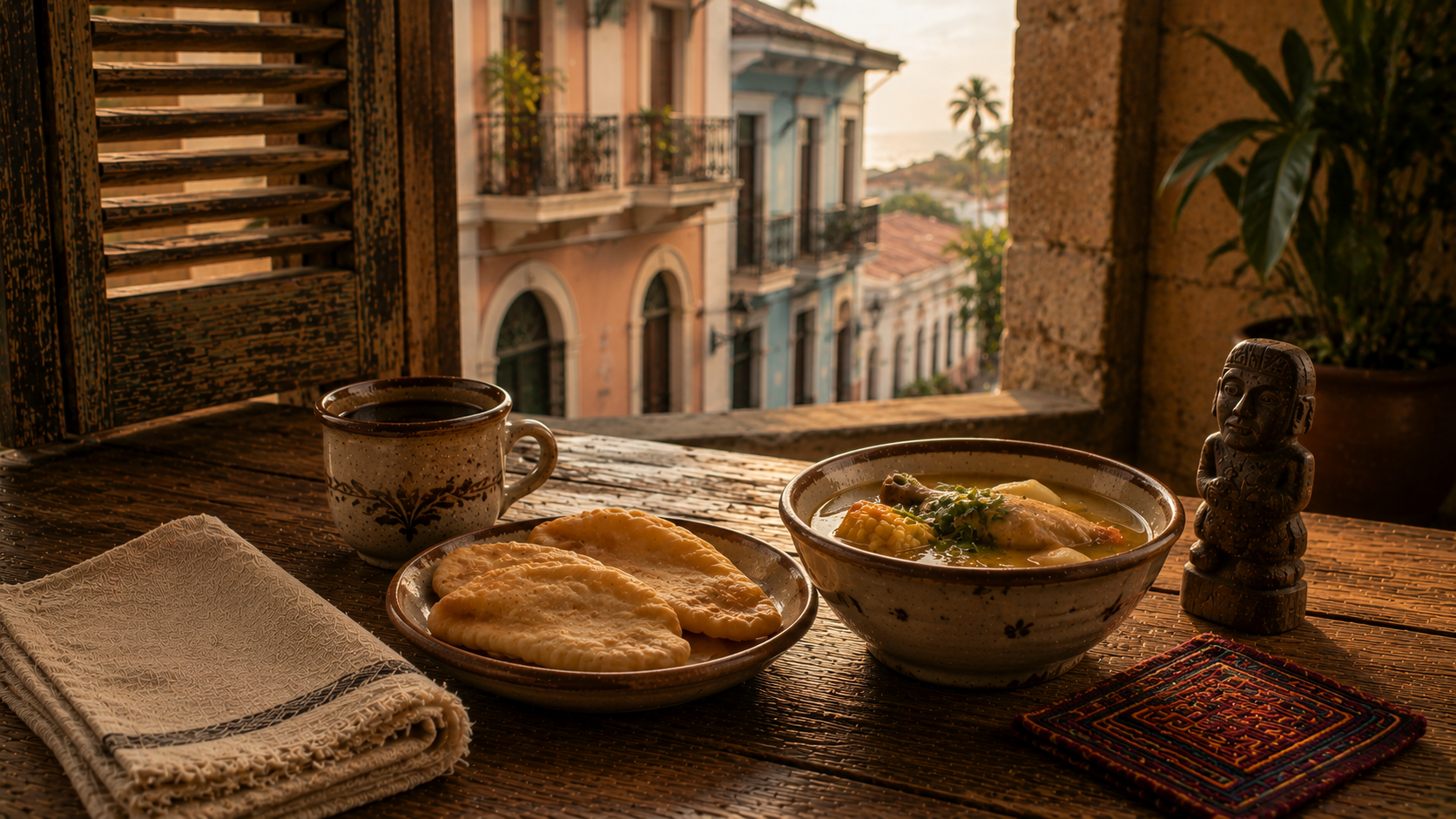
A reference on the Spanish of Panama — the Central American country that is linguistically the odd one out, using tuteo rather than the voseo of its neighbors; the Caribbean-influenced phonology shared with Cuban, Dominican, and Puerto Rican Spanish rather than with mainland Central American varieties; the deep Afro-Antillean inheritance descended from West Indian Canal workers; the unique Panama Canal cultural-historical context shaped by the 1903-1999 U.S. control of the Canal Zone; the indigenous communities including Guna, Ngäbe-Buglé, Emberá-Wounaan, and others with continuing linguistic vitality; the large Chinese-Panamanian community with deep cultural-linguistic presence; the literary tradition that has produced Ricardo Miró, Rogelio Sinán, and contemporary writers; the contemporary position as the bridge between Central and South America and as a major international financial centre; and the recent migration crisis through the Darién Gap that has shaped contemporary Panamanian reality.
The Odd One Out
A learner approaching Panamanian Spanish having previously studied the Spanish of Costa Rica, Guatemala, Nicaragua, El Salvador, or Honduras encounters a country that is geographically and politically Central American but linguistically operates by different rules than its immediate neighbors. While the other Central American countries use voseo universally — vos hablás, vos comés, vos vivís — Panama uses tuteo. Tú hablas, tú comes, tú vives. The pronoun vos is essentially absent from Panamanian Spanish, sounding foreign or affected if used. The pronoun system aligns Panama with the Caribbean island varieties (Cuban, Dominican, Puerto Rican) rather than with mainland Central American Spanish.
This is the first of several ways in which Panama is the linguistic odd one out in Central America. The phonology shares Caribbean features more than mainland Central American features. The vocabulary contains Caribbean and English-influenced elements that mainland Central American Spanish lacks. The cultural-historical context — with the large Afro-Antillean community, the long U.S. presence at the Canal, the large Chinese-Panamanian community, and the role as a major international financial centre — has produced a Spanish that operates differently from its mainland Central American neighbors.
The reasons for these linguistic distinctions are historical-geographical. Panama, throughout the colonial period and the nineteenth century, was a part of Colombia rather than of the broader Central American federation that included Guatemala, El Salvador, Honduras, Nicaragua, and Costa Rica. Panama's separation from Colombia in 1903, with U.S. involvement to facilitate the Canal construction, created the modern nation. The colonial-period and nineteenth-century linguistic developments that shaped voseo in the rest of Central America operated differently in what was then Panama (part of New Granada/Colombia), producing the contemporary tuteo pattern that distinguishes Panama from its current Central American neighbors.
Beyond the pronoun and phonological distinctions, Panama has linguistic-cultural complexities that distinguish it from neighboring countries. The Afro-Antillean community, primarily descended from Jamaican, Barbadian, and other West Indian workers who came to construct the Canal in the late nineteenth and early twentieth centuries, has produced a real bilingual Spanish-English community with its own particular linguistic-cultural patterns. The long U.S. control of the Canal Zone (1903-1999) produced sustained English-Spanish contact that shaped Panamanian Spanish in lasting ways. The Chinese-Panamanian community, with deep cultural-linguistic roots in Panama, represents one of the largest Chinese diasporas in Latin America. The indigenous communities — Guna, Ngäbe-Buglé, Emberá, Wounaan, Naso, Bri-Bri — maintain their own languages and cultures with continuing contemporary vitality.
This guide treats Panamanian Spanish in its full complexity, with attention to the tuteo system that distinguishes it from other Central American varieties, the Caribbean-influenced phonology, the Afro-Antillean and Chinese-Panamanian communities, the indigenous languages, the unique Canal cultural-historical context, the contemporary geographic-economic position, and the practical paths for learners engaging with the variety.
A note on scope. Panamanian Spanish in this guide refers primarily to the Spanish spoken in Panama, with attention to the major regional varieties — Panama City and the surrounding metropolitan area, the interior provinces (Coclé, Veraguas, Herrera, Los Santos, Chiriquí), the Caribbean coast (Colón and the Bocas del Toro region), the Darién region, and the indigenous regions including the Guna Yala (San Blas) autonomous territory. The Afro-Antillean community, the Chinese-Panamanian community, and the indigenous communities are treated as central rather than peripheral to the linguistic-cultural reality.
1. The Pronoun Core: Tuteo, Not Voseo
The most striking feature of Panamanian Spanish for learners coming from other Central American varieties is the universal tuteo. Panama is the only Central American country (along with the small linguistic enclaves) that uses tuteo as its standard informal pronoun, distinguishing it from all neighboring countries.
The systematic treatments of voseo and intimate ustedeo are in The Voseo Guide and The Ustedeo Guide. What follows is the Panamanian-specific picture.
1.1 — The Standard Panamanian Tuteo
The pronoun. Tú is the universal informal second-person singular pronoun. The pattern aligns Panama with Mexican, Caribbean (Cuban, Dominican, Puerto Rican), and most other tuteo varieties.
The verb forms. Panamanian tuteo follows standard textbook patterns: tú hablas, tú comes, tú vives. Standard conjugations.
The imperative. Standard tuteo imperatives: habla, come, vive, haz, pon, ven, di.
The subjunctive. Standard tuteo subjunctive: que tú hables, que tú comas, que tú vivas.
1.2 — Vos in Panama
Vos is essentially absent from Panamanian Spanish. It appears occasionally in:
- Speech of Panamanians who have lived extensively in voseo-using countries (the immediate neighbors)
- Some media-influenced contexts
- Very occasional traditional or rural speech in some specific contexts
- Foreign-influenced speech
But native Panamanian speech is overwhelmingly tuteo, and vos sounds foreign to most Panamanian ears.
1.3 — Usted in Panama
Usted functions in Panama in the standard formal sense — used with elders, in professional contexts, with strangers, with hierarchical superiors. The formal/informal binary holds.
Panama does not have intimate ustedeo as discussed in The Ustedeo Guide. Usted operates as the textbook formal pronoun.
1.4 — The Caribbean Warmth and Casual Tuteo
Like other Caribbean-influenced varieties, Panamanian Spanish moves into the tú register quickly with relative strangers in informal contexts. The threshold for casual tú use is low, similar to Cuban, Dominican, and Puerto Rican patterns.
1.5 — Practical Consequences for the Learner
A learner of Panamanian Spanish should master standard tuteo as the foundation, use usted in formal contexts as the textbook describes, and recognize that vos will sound foreign and should generally not be used. The crucial recognition is that Panama's tuteo distinguishes it from its Central American neighbors and aligns it with Caribbean varieties. For learners who have studied Cuban, Dominican, Puerto Rican, or Mexican Spanish, the Panamanian pronoun system requires no adjustment; for learners coming from other Central American varieties, the transition from voseo to tuteo is required.
2. The Sound of Panama
Panamanian phonology shares many features with Caribbean Spanish, distinguishing it from mainland Central American varieties. The systematic treatment of regional phonological patterns is in A Pronunciation Guide to Latin American Spanish. What follows is the Panamanian-specific picture.
2.1 — The Softening S
The final s in Panamanian Spanish softens to an h-like breath or disappears in casual speech, similar to Cuban Spanish and to other Caribbean varieties. The pattern is more pronounced than in mainland Central American Spanish.
Before consonants. Los amigos becomes loh amigoh or lo amigo. Estos hombres becomes ehtoh hombre. The aspiration and loss patterns are similar to Cuban patterns.
At word endings. Los often becomes loh or lo. Buenos días becomes bueno día. The pattern is consistent with Caribbean Spanish.
Between vowels. The s between vowels is more often preserved than in other positions, though some weakening occurs in fast speech.
Educated and formal Panamanian speech preserves more of the s than casual speech does.
2.2 — The Softening Final R
Like some other Caribbean varieties, Panamanian Spanish weakens or transforms the final r in casual speech, with some r → l patterns in some contexts (similar to Puerto Rican Spanish), and some r loss.
2.3 — The Softening D
The intervocalic d, particularly in past participles, softens or drops in casual speech. Cansado becomes cansao. Pescado becomes pescao. The pattern is consistent with Caribbean Spanish.
2.4 — The Nasal Hum
Word-final n in Panamanian Spanish takes on the ng-like hum characteristic of Caribbean varieties.
2.5 — Standard Yeísmo
Panamanian Spanish uses standard yeísmo. Ll and y merge to the standard y sound. Llamar sounds like yamar.
2.6 — Soft J and G Before E/I
The Panamanian realization is close to the English h sound, similar to Caribbean and Mexican patterns.
2.7 — Distinctive Panamanian Intonation
Panamanian Spanish has a characteristic melodic intonation that distinguishes it from Caribbean island varieties and from Central American mainland varieties. The pattern is recognisable to other Spanish speakers as Panamanian, with its own particular rhythm and pitch contours.
2.8 — Speech Rate
Panamanian Spanish is moderately fast — faster than mainland Central American Spanish, slower than Dominican Spanish, similar in pace to Cuban Spanish.
2.9 — English Phonological Influence
The Afro-Antillean community and the long U.S. presence at the Canal have produced some English phonological influence in some Panamanian Spanish, particularly in the bilingual communities and in the urban Panama City and Colón areas with sustained English contact.
3. The Afro-Antillean Inheritance
A distinctive feature of Panamanian linguistic-cultural geography is the Afro-Antillean community — descendants of West Indian (primarily Jamaican, Barbadian, and other English-speaking Caribbean) workers who came to Panama to work on the Canal construction and other projects. The community has deep linguistic-cultural significance.
3.1 — The Historical Background
The Panama Canal construction (1881-1914, with the U.S. period from 1904) required an enormous labor force, and the colonial Caribbean — with its English-speaking populations skilled in tropical labor and exposed to English — provided much of that workforce. Tens of thousands of West Indian workers came to Panama, primarily from Jamaica and Barbados but also from other British Caribbean islands. Many died during the construction (yellow fever and other diseases were devastating). Many stayed, establishing the Afro-Antillean community.
After the Canal construction, additional waves of West Indian migration came to work on the banana plantations of the Atlantic coast (particularly in the Bocas del Toro region) and in other sectors.
3.2 — The Linguistic Reality
The Afro-Antillean community has been bilingual or trilingual in real proportions:
English — Many first-generation West Indian migrants spoke English as their primary language. Subsequent generations have included real English-Spanish bilingualism, with some communities maintaining English alongside Spanish.
English Creole — Caribbean English Creole, related to Jamaican Patois and to other English Creoles of the Caribbean, has been the everyday vernacular of these communities. The Creole continues in use, particularly in older speakers and in some communities.
Spanish — As the dominant national language, Spanish has become the primary language of subsequent generations of the Afro-Antillean community. The Spanish has its own particular features influenced by English contact.
Code-switching — Sustained code-switching between Spanish, English, and English Creole has been characteristic of the community.
3.3 — The Geographic Concentration
Major Afro-Antillean communities in Panama include:
- Colón — the Caribbean port city at the Atlantic end of the Canal, with a large Afro-Antillean population
- Panama City — particularly historical neighborhoods like Calidonia and El Chorrillo (and the historic neighborhood of Río Abajo where many Afro-Antilleans settled)
- Bocas del Toro — the Caribbean province with a large Afro-Antillean population from the banana plantation era
- Various other communities along the Atlantic coast
3.4 — The Cultural Distinctness
The Afro-Antillean community has real cultural distinctness from the broader Panamanian society:
- Religious traditions (Anglican, Methodist, Baptist, and other Protestant churches alongside Catholicism) — different from the predominantly Catholic mainland population
- Cuisine including dishes derived from Caribbean cooking traditions (rice and peas cooked in coconut milk, jerk chicken, plantain dishes)
- Musical traditions including calypso, reggae, and contemporary developments
- Family names of English origin (Bailey, Clarke, Brown, Smith, Williams, Reid, and many others) marking the British Caribbean heritage
- Cultural celebrations including aspects of West Indian cultural tradition
3.5 — The Historical Marginalization and Contemporary Recognition
The Afro-Antillean community was historically marginalized in Panamanian society, with sustained discrimination throughout the twentieth century. The community was sometimes called antillanos (West Indians) by the dominant Spanish-speaking population, marking ethnic-linguistic distinction. The marginalization included educational segregation, employment discrimination, and broader social exclusion.
Contemporary Panama has formally recognized the Afro-Antillean cultural-linguistic contribution. The Day of Afro-Panamanian Ethnicity (May 30) is officially celebrated. Cultural organizations work on Afro-Antillean heritage preservation. Various contemporary cultural figures have brought Afro-Panamanian voices to broader audiences.
3.6 — Practical Consequences for the Learner
For learners of Panamanian Spanish, the Afro-Antillean community represents a major linguistic-cultural dimension. Engagement with Colón, Bocas del Toro, or specific Panama City neighborhoods provides exposure to the bilingual Spanish-English reality and to the distinctive cultural-linguistic patterns. For learners specifically interested in Caribbean English Creoles or in Afro-Latin American cultural-linguistic studies, the Panamanian Afro-Antillean community represents a rich subject of engagement.
4. The Panama Canal and the U.S. Presence
The Panama Canal and the long U.S. presence in the Canal Zone (1903-1999) have shaped Panamanian Spanish deeply. The cultural-historical context is fundamental to understanding contemporary Panama.
4.1 — The Historical Background
The Canal was constructed under U.S. control from 1904 to 1914 (after the failed French effort of the 1880s). The 1903 Hay-Bunau-Varilla Treaty granted the United States control of the Canal Zone — a 10-mile-wide strip of territory through the country — in perpetuity. This created a U.S.-controlled enclave within Panama that operated under U.S. law, with U.S. governance, U.S. schools (where English was the language of instruction), and a sustained U.S. cultural-linguistic presence.
The Canal Zone existed as a U.S. territory within Panama until the 1977 Torrijos-Carter Treaties returned the Canal to Panamanian control, with full transfer completed on December 31, 1999. During the nearly 100 years of U.S. control, the Canal Zone was a continuous U.S. cultural-linguistic presence within Panama.
4.2 — The U.S. Military Intervention
The 1989 U.S. invasion of Panama, Operation Just Cause, which removed dictator Manuel Noriega, was the most recent major U.S. military intervention in Latin America. The invasion killed several hundred Panamanians (with some estimates much higher) and destroyed parts of Panama City, particularly the El Chorrillo neighborhood. The intervention shaped contemporary Panamanian-U.S. relations and remains a difficult historical reference for Panamanians.
4.3 — The Linguistic Consequences
The long U.S. presence produced real linguistic-cultural consequences:
English-language presence — Sustained English-language education, English-language administrative culture, and English-language commercial activity continued throughout the U.S. Canal Zone period. Many Panamanians, particularly those who worked in or near the Canal Zone, developed strong English proficiency.
English loanwords in Spanish — English vocabulary integrated into Panamanian Spanish, particularly in fields where Canal Zone presence was concentrated (engineering, administration, commerce, transportation).
Code-switching patterns — Spanish-English code-switching has been characteristic of Panamanian urban speech, particularly in Panama City and Colón.
Bilingual cultural production — Panamanian literature, music, and other cultural production has frequently engaged with the bilingual reality and with the U.S. presence.
4.4 — The Contemporary Canal Era
Since the 1999 return of the Canal to Panamanian control, the Panama Canal Authority (Autoridad del Canal de Panamá, ACP) has operated the Canal as a Panamanian enterprise. The Canal continues to be central to Panamanian economy and identity. The 2016 expansion of the Canal with the new locks system was a major contemporary undertaking.
4.5 — The Practical Consequences
For learners of Panamanian Spanish, awareness of the Canal context is part of engaged understanding of contemporary Panama. The English-language presence in Panamanian commercial, financial, and tourism sectors continues today, with many educated Panamanians being functionally bilingual.
5. The Indigenous Communities
Panama has several indigenous groups with continuing contemporary linguistic-cultural vitality.
5.1 — The Guna (Kuna)
The Guna are an indigenous people of the San Blas (now officially Guna Yala) archipelago and the surrounding mainland territory. The Guna language is part of the Chibchan language family.
The Guna are one of the most politically organized and culturally autonomous indigenous groups in Latin America. The Guna Yala autonomous territory was established in 1925 following the Guna Revolution against attempts by the Panamanian government to enforce cultural assimilation. The territory is now formally recognized as the Comarca de Guna Yala, with real autonomy in cultural, political, and linguistic matters.
The Guna population is approximately 60,000-80,000. The Guna language remains in active use, with deep cultural-linguistic continuity. The Guna are internationally recognized for their distinctive textile tradition (the mola, a complex appliqué textile that has become internationally collected).
5.2 — The Ngäbe-Buglé
The Ngäbe-Buglé are the largest indigenous group in Panama, with approximately 200,000-250,000 people. The Ngäbe (sometimes called Guaymí) and Buglé are two distinct but related groups, often referred to together as Ngäbe-Buglé. They live primarily in the western Panamanian provinces of Chiriquí, Bocas del Toro, and Veraguas, in the Comarca Ngäbe-Buglé (an autonomous territory established in 1997) and surrounding areas.
The Ngäbe language remains in active use, with real cultural-linguistic vitality. The Buglé language similarly maintains use.
5.3 — The Emberá and Wounaan
The Emberá and Wounaan are indigenous groups in the Darién region in eastern Panama (and in Colombia, where they have larger populations). The two are distinct language groups, though they share cultural-geographic context. The Emberá population in Panama is approximately 30,000; the Wounaan population is approximately 7,000.
Both languages remain in active use.
5.4 — The Naso (Teribe) and Bri-Bri
The Naso (also called Teribe) and Bri-Bri are smaller indigenous groups in the Bocas del Toro region near the Costa Rican border. The Bri-Bri are connected to the larger Bri-Bri population in Costa Rica.
5.5 — Indigenous Loanwords in Panamanian Spanish
Various indigenous-origin words appear in Panamanian Spanish:
- Mola — the Guna textile (now in international usage)
- Various place names of indigenous origin throughout Panama
- Some food and plant names from indigenous sources
5.6 — The Contemporary Indigenous-Political Context
Panama's indigenous communities have formal autonomous territories (the comarcas indígenas) — the Guna Yala, Ngäbe-Buglé, Emberá-Wounaan, Madungandí, Wargandí, and Naso Tjër Di. These autonomous territories have real cultural-political authority within their boundaries.
Contemporary indigenous-political organising has been active, with major issues including land rights, mining and hydroelectric project conflicts, cultural preservation, and broader political representation.
6. The Chinese-Panamanian Community
Panama has one of the largest Chinese-Panamanian populations in Latin America, with deep contemporary cultural-linguistic presence.
6.1 — The Historical Background
Chinese migration to Panama began in earnest in the 1850s with the construction of the Panama Railroad (which preceded the Canal). Additional waves came during the Canal construction and in subsequent decades. The community has continued growing through the twentieth and twenty-first centuries, with continuing recent migration from various parts of China.
6.2 — The Contemporary Reality
The Chinese-Panamanian population is estimated at approximately 200,000-300,000 people (a notable percentage of Panama's total population of approximately 4.4 million). The community is concentrated in Panama City but has presence throughout the country. Many traditional Panamanian small businesses (corner stores, small restaurants) are operated by Chinese-Panamanians, with the term chino often used colloquially for "corner store" regardless of the actual ownership.
6.3 — The Linguistic Reality
The Chinese-Panamanian community has bilingual or trilingual contexts:
- Cantonese — the historical primary Chinese variety of the community, descended from the original Cantonese-speaking migrants
- Mandarin — increasingly present with recent migration
- Hakka — present in some communities
- Spanish — the national language, used in broader Panamanian society
The Chinese cultural-linguistic presence is one of the deepest in Latin America.
6.4 — The Cultural Contribution
Chinese-Panamanian cultural contributions include cuisine, business culture, traditional cultural celebrations (Chinese New Year), and broader cultural integration with Panamanian society. The continuing intermarriage between Chinese-Panamanian and broader Panamanian populations has produced large mixed-heritage communities.
7. Distinctive Panamanian Vocabulary
Panamanian Spanish has extensive vocabulary that is recognisably Panamanian. Some is shared with Caribbean Spanish; some is specifically Panamanian; a considerable share reflects English contact.
7.1 — Core Panamanian Vocabulary
A selection of high-frequency Panamanian words a learner will encounter:
- Tú — universal informal pronoun
- Buay / buai — guy, dude (from English boy, distinctively Panamanian)
- Chombo / chomba — informal term for Afro-Antillean Panamanians (the term has complicated history — sometimes used affectionately within the community, sometimes considered offensive when used by outsiders)
- Chévere — great, cool (shared with broader Caribbean usage)
- Vaina — thing (shared with various Caribbean and Latin American varieties)
- Yeyo — fainting feeling, anxiety
- Pelao / pelá — kid, friend (informal, distinctively Panamanian)
- Compa / compai — friend (informal)
- Pana — friend (shared with Venezuelan and broader Caribbean usage)
- Birra — beer
- Chumeco / chumeca — kid, child (informal)
- Brete — work (shared with Costa Rican usage)
- Camarón — small job, gig (and the literal shrimp; the metaphorical usage is distinctive)
- Goma — hangover (shared with broader Central American usage)
- Estar arrancado — to be broke
- Plata — money
- Real / realito — money (informal, with the diminutive form particularly common)
- Fula — money (slang)
- Coger pon — to hitch a ride (distinctively Panamanian)
- Pon — ride (in the hitchhiking sense)
- Diablo rojo — "red devil," the colourful traditional Panama City buses (now mostly retired)
- Chambón / chambona — bungler, someone who does sloppy work
- Cabuya — line, rope (and metaphorical uses)
- Estar en algo — to be involved in something
- Hueco — broke (informal)
- Brujería — witchcraft (used productively in casual contexts beyond literal meaning)
- Tomarse el tiempo — to take one's time
- Picarse — to get offended
- Vacile — joke, joking
- Vacilar — to joke around (shared with Caribbean usage)
- Pelao / pelá — naked or also a young person (depending on context)
- Estar bocón / bocona — to talk too much
- Aja — discourse marker
- ¿Qué xopá? — "what's up?" (extremely distinctively Panamanian — the xopá is pasó read backwards in characteristic Panamanian wordplay)
- Maleante — troublemaker, sometimes used affectionately
- Pega — work, job (informal)
7.2 — English-Influenced Vocabulary
The sustained English contact has produced extensive English-derived vocabulary:
- Parquear — to park
- Rentar — to rent
- Buai / buay — boy, guy (from English boy)
- Chivo — cheap (from English cheap?)
- Pelao — kid (related to peluche or also possibly to other sources)
- Pana — friend (possibly from English partner)
- Frizar — to freeze
- Various other English-influenced terms
7.3 — Food Vocabulary
Panamanian cuisine has produced an extensive vocabulary:
- Sancocho — the iconic Panamanian chicken soup with vegetables and culantro
- Ropa vieja — Panamanian version of the shredded beef dish
- Patacones — fried green plantain slices
- Tamales — Panamanian-style tamales
- Tortillas — Panamanian tortillas (different from Mexican; these are thick fried corn tortillas)
- Hojaldras — fried dough bread
- Carimañolas — fried cassava fritters with meat filling
- Empanadas — Panamanian empanadas
- Ceviche — Panamanian-style ceviche
- Saus — pickled pig feet (Afro-Antillean influence)
- Rondón — coconut-based seafood soup (Afro-Antillean and Caribbean coast influence)
- Café — coffee, particularly the famous Panamanian Geisha varietal which has gained international recognition
- Seco Herrerano — the traditional Panamanian distilled spirit from sugar cane
- Chichas — fruit-based traditional drinks
7.4 — Cultural-Political Vocabulary
- Canalero / canalera — relating to the Panama Canal
- Zonian — historical term for U.S. residents of the former Canal Zone
- Rabiblanco / rabiblanca — derogatory term for the traditional Panamanian elite (literally "white tail")
- PRD — Partido Revolucionario Democrático (the political party founded by Torrijos)
- Panameñista — supporter of the Partido Panameñista
- Operación Causa Justa — the 1989 U.S. invasion
- El General — informal reference to Omar Torrijos
- Noriega — Manuel Noriega, the dictator removed in 1989
- Reverción — referring to the 1999 reversion of the Canal to Panamanian control
- Comarcas indígenas — the indigenous autonomous territories
8. The Diminutive in Panamanian Spanish
As covered in The Diminutive in Latin American Spanish, Caribbean varieties use diminutives at moderate frequency. Panamanian Spanish uses diminutives at moderate frequency, comparable to Cuban and Dominican usage.
The Panamanian diminutive functions for affection and softening within the standard patterns. Mamita, papito, abuelita — affectionate diminutives in family contexts. Realito, cafecito, ratito — diminutives in everyday contexts.
9. Pragmatics: The Panamanian Style
Panamanian Spanish has pragmatic features that distinguish it from neighboring varieties.
9.1 — Caribbean Warmth
Panamanian speech tends toward warmth and casual closeness, similar to other Caribbean-influenced varieties. Mami, papi, mi amor, mi vida — affectionate terms appear in everyday speech.
9.2 — Bilingual Pragmatic Reality
The bilingual context produces pragmatic patterns that include code-switching, particularly in Panama City and Colón urban contexts. Choice between Spanish and English in given contexts carries social meaning.
9.3 — Cosmopolitan Urban Register
Panama City has a strong international character, with the Canal traffic, the banking sector, and the international population producing a cosmopolitan urban register that differs from interior Panamanian Spanish.
9.4 — The Coast-Interior Distinction
The Caribbean coast (Colón, Bocas del Toro) operates with Afro-Antillean and Caribbean cultural-linguistic patterns. The Pacific interior (Coclé, Veraguas, Herrera, Los Santos) has more traditional Panamanian rural patterns. The two regions have markedly different cultural-pragmatic registers.
9.5 — The Wordplay Tradition
Panamanian speech has a rich wordplay tradition, exemplified by expressions like ¿Qué xopá? (which reads pasó backwards). The cultural value placed on linguistic creativity is real and shapes everyday speech.
9.6 — Greetings
Panamanian greetings tend toward warmth and physical contact (kisses on the cheek in many informal contexts), with extensions inquiring about family and well-being.
10. Regional Variation Within Panama
Panama has real internal regional variation.
10.1 — Panama City and the Metropolitan Area
The Spanish of Panama City and the surrounding metropolitan area is the dominant variety in national media. The capital variety carries cultural-political prestige and is the variety most international observers encounter.
10.2 — Colón
The major Atlantic-coast city, with a large Afro-Antillean population and Caribbean cultural-linguistic features. Colón Spanish has its own particular character.
10.3 — The Interior (Provinces of Coclé, Veraguas, Herrera, Los Santos)
The interior central provinces, with strong agricultural and ranching culture, have their own regional Spanish. The Azuero Peninsula (Herrera and Los Santos) is particularly associated with traditional Panamanian folklore and rural cultural patterns.
10.4 — Chiriquí (Western Highlands)
The western highland province of Chiriquí, bordering Costa Rica, has its own regional Spanish with some influence from neighboring Costa Rica and with the strong Ngäbe-Buglé indigenous presence.
10.5 — Bocas del Toro
The northwestern Caribbean province, with a large Afro-Antillean population (particularly in the islands of Bocas del Toro town), indigenous Ngäbe-Buglé and Naso populations, and English-Spanish-Creole bilingual contexts.
10.6 — The Darién
The eastern jungle region bordering Colombia, with a large Emberá-Wounaan indigenous population and the contemporary migration crisis.
10.7 — The Comarcas Indígenas
The various indigenous autonomous territories (Guna Yala, Ngäbe-Buglé, Emberá-Wounaan, and smaller ones) operate with marked linguistic distinctness from broader Panamanian Spanish-speaking patterns.
11. The Recent Migration Crisis Through the Darién
A specific contemporary dimension of Panama is the migration crisis through the Darién Gap. The Darién — the dense jungle separating Panama and Colombia and the only break in the Pan-American Highway — has become one of the major migration routes for people heading north to the United States.
11.1 — The Scale
Hundreds of thousands of migrants have crossed the Darién in recent years, with sharp increases in the early 2020s. The migrants come primarily from Venezuela, Haiti, Ecuador, Cuba, and increasingly from outside the Americas (with growing numbers from Africa, Asia, and the Middle East). The route is extremely dangerous, with many deaths and human rights abuses including violence and sexual assault.
11.2 — The Linguistic-Cultural Reality
The migration through the Darién has produced:
- A multilingual presence in transit communities including Spanish from various Latin American countries, Haitian Creole, French, English, Portuguese, and various other languages
- Strain on Panamanian indigenous Emberá and Wounaan communities through whose territory the migration route passes
- A substantial Panamanian state response, including formal and informal reception infrastructure
- A continuing humanitarian crisis with international attention
11.3 — The Practical Consequences
For learners of Panamanian Spanish, awareness of the Darién migration reality is part of engaged understanding of contemporary Panama. The crisis is one of the major contemporary realities shaping Panamanian society and politics.
12. The Cultural Register
Panama has produced significant cultural work, with notable recent development.
12.1 — Literature
Ricardo Miró (1883-1940), the foundational Panamanian poet, whose work is widely studied and whose figure represents Panamanian literary identity.
Rogelio Sinán (1902-1994), important twentieth-century novelist and poet. His novel Plenilunio (1947) is one of the foundational contemporary Panamanian novels.
Demetrio Korsi (1899-1957), important poet of the early twentieth century.
Rosa María Britton (1936-2019), important contemporary novelist whose work engaged with Panamanian history and contemporary themes.
Ramón H. Jurado (1922-2013), important twentieth-century writer.
Pedro Rivera (1939-2021), poet and filmmaker, important cultural figure.
Joaquín Beleño (1922-1988), novelist whose work engaged with the Canal Zone reality. His novel Luna verde (1951) addressed the Afro-Antillean experience and the Canal Zone society.
Carlos Wynter Melo (born 1971), contemporary novelist and short story writer who has reached international audiences.
Other contemporary writers include Carlos Fong, José Carrasquilla, and many others continuing the literary tradition. The contemporary Afro-Panamanian literary movement has been growing, with writers bringing Afro-Antillean and broader Afro-Panamanian experience to wider audiences.
12.2 — Music
Música típica panameña — traditional Panamanian folk music, particularly associated with the Azuero Peninsula. The Mejorana festival celebrates this tradition annually.
Salsa — Panama has produced significant salsa figures, particularly Rubén Blades (born 1948), one of the most internationally recognized Latin musicians of the twentieth and twenty-first centuries. Blades combined salsa with serious political-cultural content and continues to be an internationally significant figure.
Reggaeton and reggae en español — Panama is one of the foundational countries for reggae en español (Spanish-language reggae) and contemporary reggaeton. El General (born 1969, in Panama before moving to Brooklyn) is considered one of the foundational figures of reggae en español in the early 1990s. Panamanian artists have continued contributing to the broader Latin urban music movement.
Calipso and reggae — strong English-language Caribbean musical traditions in Afro-Antillean communities.
Jazz — Panama has a strong jazz tradition, with international figures including Danilo Pérez (born 1965) bringing Panamanian jazz to global audiences.
12.3 — Cinema
Panamanian cinema has produced significant work in recent decades, with films like Chance (2009) and others reaching some international audiences.
12.4 — Cultural Themes
Panamanian cultural identity has been shaped by:
- The pre-Columbian indigenous heritage continuing through contemporary communities
- The Spanish colonial period and the strategic importance of the Panama isthmus
- The historical position as part of Colombia until 1903
- The Canal construction era and its cultural-historical consequences
- The long U.S. presence in the Canal Zone and the cultural-linguistic consequences
- The migration from the Caribbean, China, and other regions
- The Torrijos era and the Carter Center treaties returning the Canal
- The Noriega era and the 1989 U.S. invasion
- The 1999 return of the Canal and the contemporary post-canal era
- The position as a major international financial centre
- The contemporary indigenous-political organising
- The Darién migration crisis and its contemporary implications
13. For the Learner
A few practical paths into Panamanian Spanish:
Master tuteo as the universal informal pronoun. Unlike Panama's Central American neighbors, Panama uses tú — tú hablas, tú comes, tú vives. For learners coming from voseo-using Central American varieties, this is the most important adjustment.
Develop Caribbean phonological awareness. The softening s, the consonant reductions, the Caribbean intonation patterns — Panamanian phonology operates similarly to Cuban, Dominican, and Puerto Rican varieties.
Engage with the bilingual reality. Panamanian Spanish operates in real English contact, particularly in urban Panama City and Colón. Code-switching is part of authentic Panamanian speech in many contexts.
Acquire the core Panamanian vocabulary. Buay, chombo, vaina, pelao, ¿qué xopá? and the other distinctively Panamanian words are part of authentic Panamanian speech.
Read Panamanian literature. Rubén Blades's songs as literary-musical engagement. Joaquín Beleño's Luna verde for the Canal Zone perspective. Rosa María Britton's novels for contemporary fiction. Carlos Wynter Melo for contemporary work.
Listen to Panamanian music. Rubén Blades for the salsa-political tradition. Música típica panameña for the folk tradition. Reggae en español and contemporary reggaeton for the urban music tradition. Calipso for the Afro-Antillean tradition. Danilo Pérez for the jazz tradition.
Find a Panamanian tutor. As discussed in the italki review, italki provides access to Panamanian tutors. Panama is represented, with tutors offering various regional and cultural backgrounds.
Travel to Panama. Panama City for the dominant variety; Colón for the Caribbean coast and Afro-Antillean culture; the interior provinces (Coclé, Veraguas, Herrera, Los Santos) for traditional rural Panama; the Azuero Peninsula for folkloric tradition; Bocas del Toro for the multilingual Caribbean reality; the comarcas indígenas (with appropriate respect and arrangement) for indigenous cultural exposure; Boquete for the highland coffee region. The country has well-developed tourism infrastructure.
Engage with the Canal context. Visiting the Canal, learning about its history, and understanding its contemporary economic-cultural importance is part of engaging with Panama.
Acknowledge the Afro-Antillean dimension. The Afro-Antillean community is fundamental to contemporary Panama. Engagement involves awareness of this dimension and respect for the community's cultural-historical significance.
Be aware of the indigenous-political reality. The indigenous communities with their autonomous territories represent a major Panamanian linguistic-cultural reality. Engagement involves awareness and respect.
Understand the Darién migration crisis. The contemporary migration through the Darién is one of the major current realities shaping Panama. Engaged understanding involves awareness of this dimension.
A Closing Note
Panamanian Spanish — in its tuteo that distinguishes it from neighboring Central American voseo countries, its Caribbean-influenced phonology that aligns it with Cuban, Dominican, and Puerto Rican varieties, its deep Afro-Antillean inheritance from West Indian Canal workers, its unique Canal cultural-historical context shaped by nearly a century of U.S. presence, its indigenous communities including Guna, Ngäbe-Buglé, Emberá-Wounaan, and others with continuing linguistic vitality, its Chinese-Panamanian community with deep cultural-linguistic presence, its position as the bridge between Central and South America, its contemporary role as a major international financial centre, and its rich cultural production through Rubén Blades, contemporary writers, and others — is one of the most distinctive Spanish varieties in the Americas.
The linguistic odd-one-out position alone makes Panama worth serious attention. The country shares geographic-political identity with Central America but operates linguistically more similarly to the Caribbean — a position that reflects Panama's historical-geographical reality as a country that has been simultaneously Central American, Caribbean, and a bridge between continents. The tuteo, the Caribbean phonology, the sustained English contact, the Afro-Antillean and Chinese communities — these features together produce a Spanish that does not fit neatly into either the Central American or the Caribbean categories but operates as its own distinctive variety.
Beyond the linguistic distinctness, Panamanian Spanish offers engagement with a country whose contemporary position is unusual — the major international financial centre, the operator of one of the world's most important shipping routes, the site of one of the contemporary world's major migration crises, the home to substantial indigenous autonomous territories. The cultural production through Rubén Blades alone represents real international cultural impact disproportionate to the country's small population. The continuing cultural-linguistic vitality of the Afro-Antillean, indigenous, and Chinese communities demonstrates the multicultural reality of contemporary Panama.
For a learner, Panamanian Spanish offers exceptional engagement with a Spanish that operates differently from its geographical neighbors, with a multicultural reality including English-speaking and indigenous-language dimensions, with a contemporary moment that includes both economic-cultural development and humanitarian challenges. The investment provides access to a country whose linguistic and cultural distinctness is real, whose multicultural reality deserves serious engagement, and whose contemporary position as bridge between continents and as international economic centre is genuinely distinctive.