Honduran Spanish: A Learner's Guide
Honduran Spanish is the Spanish of the heart of Central America — universal voseo, moderate phonology with Caribbean-influenced features on the Atlantic coast, the world's largest Garífuna community, a deep Lenca cultural heritage, and the catracho cultural identity.

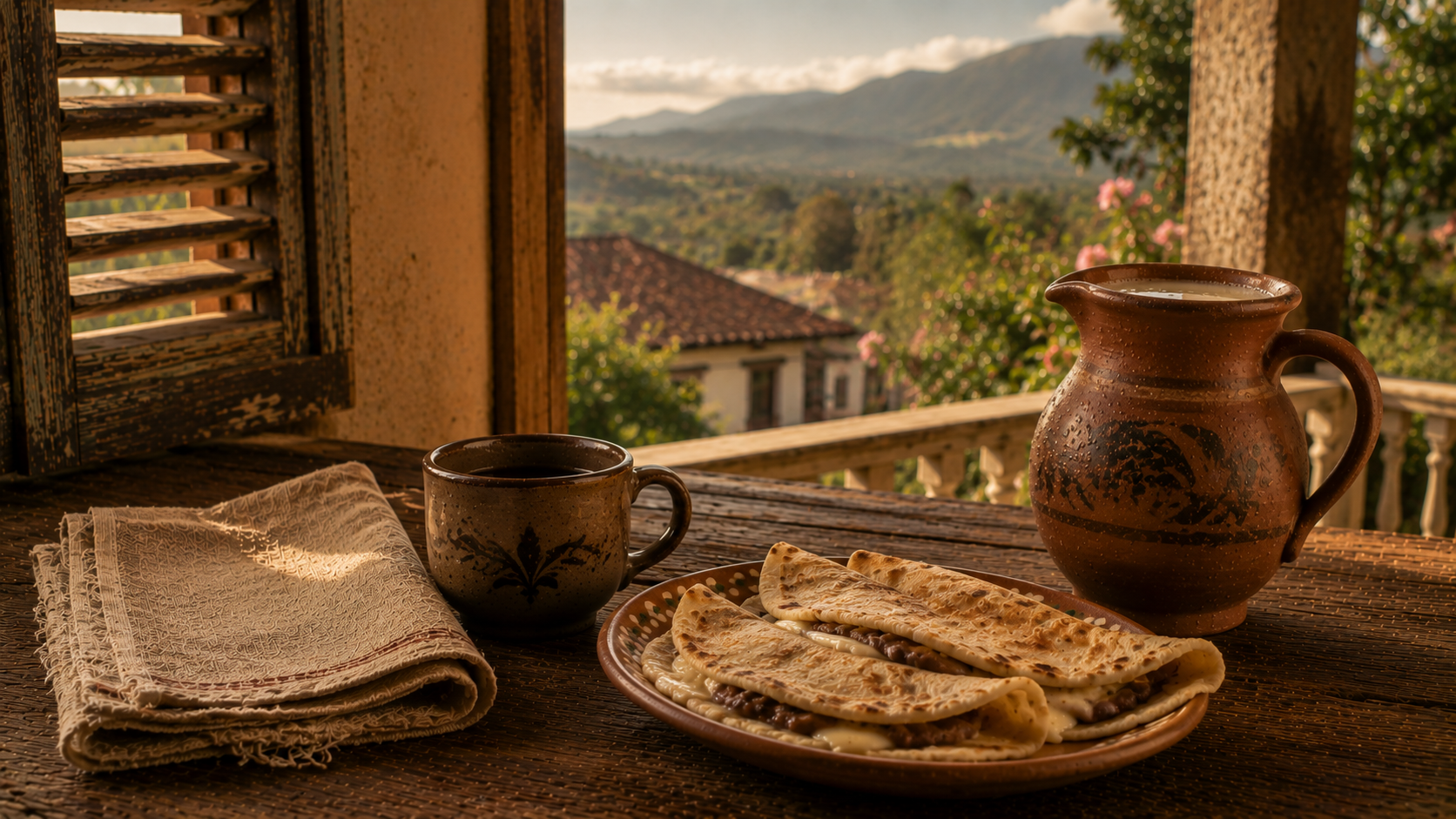
A reference on the Spanish of Honduras — the country in the Central American heartland with universal voseo shared with neighboring Guatemalan, Salvadoran, and Nicaraguan Spanish; the moderate Central American phonology; the Lenca, Pech (Paya), Tolupán (Jicaque), and other indigenous inheritances of the western and central regions; the largest Garífuna community in the world on the Atlantic coast; the Bay Islands with their British Caribbean English-speaking heritage; the cultural register that has produced Ramón Amaya Amador, Roberto Sosa, and contemporary writers; the cultural-historical context shaped by the United Fruit Company era and contemporary political instability including the 2009 coup; the large diaspora particularly in the United States; and the strong catracho cultural identity that distinguishes Honduras from its Central American neighbors.
The Heart of Central America, in All Its Complexity
A learner approaching Honduran Spanish encounters a country in the geographic heart of Central America that contains real linguistic and cultural complexity within its borders. Honduras shares borders with Guatemala to the west, El Salvador to the southwest, and Nicaragua to the southeast — placing the country at the centre of the Central American Spanish-speaking region. The population of approximately 9.5 million makes Honduras one of the larger Central American countries. The territory spans the mountainous interior, the short Pacific coastline at the Gulf of Fonseca, the long Atlantic/Caribbean coastline that includes the Bay Islands archipelago, and the rural agricultural regions that have long defined the country's economy.
Honduran Spanish operates as one variety within a country of marked linguistic diversity. While the Spanish-speaking majority dominates national life, the country contains:
- A deep Lenca cultural heritage in the western and southwestern regions, with the Lenca language now severely endangered but with several hundred thousand people identifying as Lenca
- Smaller but real indigenous-language communities including Pech (Paya), Tolupán (Jicaque), Tawahka, and Miskito
- The largest Garífuna population in the world (approximately 200,000 to 300,000 people) along the Atlantic coast, speaking the Garífuna language alongside Spanish
- The Bay Islands (Islas de la Bahía) — the three main islands of Roatán, Utila, and Guanaja — which have historically been English-speaking with British Caribbean cultural-linguistic heritage
- Various Creole English-speaking Afro-Caribbean communities along the Atlantic coast
The result is that Honduras, while predominantly Spanish-speaking, contains a multilingual diversity that distinguishes it from monolingual Spanish-speaking countries. The Atlantic coast in particular operates as a culturally and linguistically distinct region, with patterns more similar to the Caribbean coast of Nicaragua, the Caribbean coast of Costa Rica (Limón), the Caribbean coast of Panama, or the broader English-Creole-speaking Caribbean than to mainland Honduran Spanish-speaking patterns.
Beyond the multilingual complexity, Honduran Spanish shares core features with neighboring Central American Spanish varieties — universal voseo, moderate phonology, the three-pronoun system, distinctive vocabulary common to the region with Honduran particularities. The country has its own cultural-historical context shaped by the United Fruit Company era (Honduras was the original "banana republic" — the term itself was coined for Honduras), by the long history of political instability including military governments and the 2009 coup, by the serious gang violence problem of recent decades, and by the contemporary economic-political realities.
The Honduran cultural identity is often summarized through the demonym catracho (for men) and catracha (for women) — used affectionately by Hondurans for themselves and by other Central Americans for Hondurans. The term, of disputed origin but widely embraced, functions as one of the most identifying features of Honduran cultural-linguistic identity, analogous to Tico for Costa Ricans, Chapín for Guatemalans, or Nica for Nicaraguans.
This guide treats Honduran Spanish in its complexity — the mainland Spanish-speaking variety as the dominant national variety, the Atlantic coast with its multilingual reality, the Bay Islands with their English-speaking heritage, and the diaspora. The profile addresses the universal voseo, the distinctive Honduran vocabulary, the cultural and literary tradition, the historical-political context, and the practical paths for learners engaging with the variety.
A note on scope. Honduran Spanish in this guide refers primarily to the Spanish spoken in Honduras, with attention to the major regional varieties — the central highlands (Tegucigalpa and surrounding regions, which serve as the implicit national standard), the western regions (where Lenca cultural heritage is strongest), the northern coastal cities (San Pedro Sula and surrounding industrial regions), the Atlantic coast (with its multilingual reality including Garífuna), and the Bay Islands (which are English-speaking historically). The Garífuna language, English Creole varieties, and indigenous languages are treated as part of the broader linguistic landscape rather than as the central focus of a Spanish-language profile.
1. The Universal Voseo
Honduran Spanish uses voseo universally in casual contexts, like neighboring Salvadoran, Guatemalan, and Nicaraguan Spanish. The pattern places Honduras firmly in the Central American voseo cluster.
The systematic treatment of voseo is in The Voseo Guide. What follows is the Honduran-specific picture.
1.1 — The Standard Honduran Voseo
The pronoun. Vos is the standard informal pronoun in casual Honduran speech across all social classes and regions.
The verb forms. Honduran voseo follows the standard Central American pattern: vos hablás, vos comés, vos vivís, vos sos. Final-syllable stress in present indicative.
The imperative. Hablá, comé, viví, andá, sé, hacé, poné, salí, vení, decí.
The subjunctive. Honduran voseo typically uses the voseo subjunctive (que vos hablés) more consistently than in some other voseo varieties, similar to Nicaraguan and Salvadoran usage. Educated and urban speech sometimes uses the tuteo subjunctive (que vos hables).
1.2 — The Three-Pronoun System
Like other Central American voseo countries, Honduran Spanish operates with three second-person singular pronouns:
Vos — informal/casual, the dominant informal pronoun
Tú — intermediate register, used in some semi-formal contexts. The tú register appears in:
- Some media and commercial contexts
- Speech of Hondurans returning from extensive stays in tuteo countries
- Some intermediate professional contexts
- Some advertising and consumer-facing contexts
Usted — formal, used with elders, in clearly professional contexts, with strangers, and in some traditional intimate contexts in certain rural or traditional families
1.3 — Practical Consequences for the Learner
A learner of Honduran Spanish should master voseo as the universal informal pronoun, develop awareness of tú in intermediate contexts, and master usted in clearly formal contexts. The recognition that Honduran voseo is essentially identical in form to Salvadoran and Nicaraguan voseo means that learners moving between these three countries do not need to adjust their pronoun system — the Central American voseo cluster operates as a coherent linguistic zone.
2. The Sound of Honduras
Honduran phonology is moderate, sharing core features with Central American Spanish. The systematic treatment of regional phonological patterns is in A Pronunciation Guide to Latin American Spanish. What follows is the Honduran-specific picture.
2.1 — Generally Preserved Consonants in the Interior
The s. Honduran Spanish in the interior regions (Tegucigalpa, the western highlands, the central agricultural regions) generally preserves the final s in careful and educated speech. Some weakening occurs in casual speech, with aspiration to h in some positions, particularly in working-class urban speech.
Stable consonants generally, with softening in casual speech.
Past participle d softens in casual speech (cansado → cansao), consistent with broader Latin American patterns.
2.2 — Caribbean-Influenced Features on the Atlantic Coast
The Spanish of the Atlantic coastal regions — San Pedro Sula (Honduras' second-largest city and the industrial centre), Tela, La Ceiba, Trujillo, and surrounding areas — exhibits some Caribbean-influenced features:
- More pronounced s aspiration and weakening
- Some final consonant weakening
- Caribbean-influenced intonation patterns
- Some r weakening patterns in casual speech
The coastal variety operates somewhat as a Caribbean-zone variety, distinct from the more conservative interior pattern.
2.3 — Distinctive Honduran Intonation
Honduran Spanish has a characteristic melodic intonation that distinguishes it from neighboring Central American varieties. The intonation is recognisable to other Central Americans.
2.4 — Standard Yeísmo
Honduran Spanish uses standard yeísmo — ll and y both pronounced with the standard y sound.
2.5 — Soft J and G Before E/I
The Honduran realization is close to the English h sound, similar to broader Central American patterns.
2.6 — Speech Rate
Honduran Spanish moves at a moderate pace, similar to broader Central American patterns.
2.7 — Bay Islands Phonological Influences
The Spanish spoken in the Bay Islands and by Bay Islanders who have learned Spanish often shows strong English-influenced phonological features, reflecting the historical English-speaking character of the islands.
3. The Indigenous Languages of Honduras
Honduras has real indigenous-language heritage, though most indigenous languages have been severely impacted by colonial and post-colonial processes. The contemporary situation includes both endangered languages with very small speaker populations and broader cultural heritage among indigenous-identifying populations.
3.1 — Lenca
The Lenca were the dominant pre-Columbian indigenous group in much of western and southwestern Honduras. The Lenca language family has historically included several varieties, with the language now severely endangered in Honduras — the last fully fluent speakers passed away in the twentieth century, though some efforts at recovery and revitalization continue. The Lenca community remains large in cultural identity, with hundreds of thousands of people identifying as Lenca even without active language use.
The Lenca cultural inheritance shapes regions including Lempira, Intibucá, La Paz, and parts of Comayagua. Place names, cultural traditions, and craft traditions — the famous Lenca black pottery from Guajiquiro, the textile traditions — preserve Lenca cultural-linguistic heritage. The contemporary Lenca cultural recovery movement, exemplified by figures like the late environmental activist Berta Cáceres (who was assassinated in 2016), has brought renewed attention to Lenca identity and rights.
3.2 — Pech (Paya)
The Pech (formerly called Paya, though the community prefers Pech) is an indigenous group in northeastern Honduras, particularly in Olancho and Colón departments. The Pech language remains in use, though with a small speaker population estimated at fewer than 1,000 active speakers. Pech is part of the Chibchan language family, related to languages of Costa Rica, Panama, and Colombia.
3.3 — Tolupán (Jicaque)
The Tolupán (also called Jicaque or Xicaque) are an indigenous group in central Honduras, primarily in Yoro and Francisco Morazán departments. The Tolupán language has some active speakers, though the language is severely endangered with most younger people speaking Spanish primarily.
3.4 — Tawahka
The Tawahka are an indigenous group in eastern Honduras and Nicaragua, related to the Mayangna of Nicaragua. The Tawahka community is small (a few thousand people) with some maintenance of the Tawahka language.
3.5 — Miskito
The Miskito community on the Honduran Atlantic coast (in Gracias a Dios department) is connected to the larger Miskito community in Nicaragua. The Miskito language remains in active use in these communities.
3.6 — Indigenous Loanwords in Honduran Spanish
Various indigenous-origin words appear in Honduran Spanish, though the inheritance is smaller than in Guatemala or southern Mexico:
- Many Nahuat-origin words shared with broader Central American Spanish (tomate, aguacate, chile, tamal, atol, chocolate, cacao, cuate, comal, petate)
- Some specifically Lenca-origin words in regional usage
- Place names throughout Honduras include indigenous origins (Tegucigalpa, Comayagua, Choluteca, Olancho, Intibucá, Lempira, La Esperanza, and many others)
3.7 — The Cultural Recovery
Indigenous identity and language recovery have grown in contemporary Honduras, with various organizations working on Lenca, Pech, Tolupán, and other indigenous language and cultural preservation. The work has produced real results but faces challenges including limited resources, ongoing land rights disputes, and the broader cultural pressures that have shaped indigenous-language decline.
4. The Garífuna: The Largest Community in the World
A distinctive feature of Honduran linguistic-cultural geography is the Garífuna community along the Atlantic coast. Honduras hosts the largest Garífuna population in the world — approximately 200,000 to 300,000 people, with real cultural-linguistic vitality. The Garífuna deserve substantive treatment as a major component of Honduran linguistic-cultural reality.
4.1 — Who Are the Garífuna?
The Garífuna are an Afro-Indigenous people with origins in the Caribbean island of St. Vincent (called Yurumein in Garífuna). They are descended from a complex mixture of African (Yoruba, Igbo, Bantu) and Indigenous Caribbean (Arawak, Carib) populations who developed a distinct culture on St. Vincent during the seventeenth and eighteenth centuries.
After resisting British colonial expansion for decades, the Garífuna were defeated in 1796 and forcibly exiled by the British to the island of Roatán off the coast of Honduras in 1797. From Roatán, Garífuna communities spread along the Atlantic coast of Central America — to mainland Honduras (where the largest population now lives), Guatemala (Livingston), Belize (Dangriga and other coastal communities), and Nicaragua (Pearl Lagoon and others).
4.2 — The Garífuna Language
The Garífuna language is a unique linguistic situation in the Americas. It is descended from Arawakan languages (the language of the indigenous Caribbean population) with Carib, African (Yoruba and others), French, English, and Spanish influences. The language is unrelated to Spanish, English, Mayan languages, or any other regional language family — it is a distinct Arawakan language that has developed in the Americas through the unique Garífuna cultural-historical path.
The Garífuna language was inscribed in 2001 in the UNESCO Proclamation of Masterpieces of the Oral and Intangible Heritage of Humanity, recognising its unique cultural-linguistic significance. The 2008 transfer to the Representative List of the Intangible Cultural Heritage of Humanity continued this international recognition.
The Garífuna language remains in active use in Honduran Garífuna communities, though with the typical pressures of contemporary indigenous-language transmission. Most younger Garífuna speak both Garífuna and Spanish, with bilingual education programmes operating in some communities.
4.3 — Garífuna Communities in Honduras
Major Garífuna communities along the Honduran Atlantic coast include:
- Trujillo and surrounding villages
- Tela and the surrounding communities
- La Ceiba area
- The communities along the coast between these cities
- Some smaller communities in the Bay Islands
The Garífuna communities maintain real cultural-linguistic continuity, with traditional drumming and dancing (the punta and other forms), traditional cuisine, religious practices that combine Catholic and Garífuna traditional elements, and the broader Garífuna cultural identity.
4.4 — Garífuna Music and Cultural Contribution
The Garífuna punta music tradition has become internationally recognized, with the broader punta rock genre developed by figures like the late Andy Palacio (a Belizean Garífuna musician) bringing Garífuna music to global audiences. The Garífuna musical tradition includes various drum-based genres with deep African and Caribbean roots.
Cuisine includes distinctive dishes like hudutu (a fish dish), machuca (mashed plantain with fish), pan de coco (coconut bread), and many others that have become recognized as distinctive Garífuna contributions to Central American cuisine.
4.5 — The Cultural-Political Context
The Garífuna community has faced ongoing challenges including land rights disputes (particularly in coastal areas where tourism and development pressures have grown), historical marginalization, and the broader pressures on indigenous and Afro-descendant communities in Honduras. The community has organized around cultural recovery, language preservation, and political advocacy through organizations including OFRANEH (Organización Fraternal Negra Hondureña) and others.
4.6 — Practical Consequences for the Learner
For learners of Honduran Spanish primarily focused on mainland Spanish-speaking regions, the Garífuna community represents a distinct cultural-linguistic dimension that engaged understanding of Honduran linguistic geography includes awareness of. For learners specifically interested in the Atlantic coast or in Afro-Indigenous cultural-linguistic studies, the Garífuna community represents a rich subject of further engagement.
5. The Bay Islands: English-Speaking Honduras
The Bay Islands (Islas de la Bahía) — the three main islands of Roatán, Utila, and Guanaja — represent a distinctive part of Honduran territory with historically English-speaking heritage.
5.1 — The Historical Background
The Bay Islands were a British colonial possession during much of the colonial period, with a real British settler population alongside indigenous and African populations. The islands were formally ceded to Honduras in 1859, but the cultural-linguistic British Caribbean heritage has continued.
5.2 — The Contemporary Linguistic Reality
The Bay Islands have:
- Sizeable English-speaking populations (with English as a first language for many Islanders)
- An English Creole variety related to broader Caribbean English Creoles
- Increasing Spanish presence due to mainland migration and contemporary tourism development
- Bilingual or trilingual contexts in many communities
Roatán has been transformed by tourism in recent decades, with heavy international visitor presence and the diving industry. The cultural-linguistic balance between English-speaking Islander traditions, mainland Spanish-speaking Honduran population, and international tourism populations is in ongoing flux.
5.3 — The Cultural Distinctness
The Bay Islands have marked cultural distinctness from mainland Honduras:
- Religious traditions (Anglican, Methodist, and other Protestant churches) different from the Catholic mainstream
- Cuisine with English Caribbean influences (coconut bread, conch dishes, traditional fish preparations)
- Cultural celebrations connected to the broader English Caribbean tradition
- Family names of English origin (Bodden, Cooper, Solomon, McLaughlin, and many others) marking the British Caribbean heritage
5.4 — Practical Consequences for the Learner
For learners of Spanish primarily focused on mainland Honduras, the Bay Islands represent a distinct linguistic-cultural zone. Awareness of this dimension is part of engaged understanding of Honduran linguistic geography. For learners specifically interested in the Bay Islands or in Caribbean English Creole studies, the islands represent a rich subject of further engagement.
6. Distinctive Honduran Vocabulary
Honduran Spanish has extensive vocabulary that is recognisably Honduran. Some is shared with broader Central American Spanish; some is specifically Honduran.
6.1 — Core Honduran Vocabulary
A selection of high-frequency Honduran words a learner will encounter:
- Catracho / catracha — Honduran (the affectionate informal demonym)
- Vos — universal informal pronoun
- Maje / mae — guy, dude (similar to Costa Rican usage)
- Cipote / cipota — kid, child (shared with Salvadoran and Nicaraguan usage)
- Patojo / patoja — kid (less common in Honduras than in Guatemala but used)
- Chigüín / chigüina — kid, baby (informal Honduran)
- Bicho / bicha — kid, young person (sometimes affectionate, sometimes mildly negative depending on context)
- Chele / chela — light-skinned or blonde person (shared with broader Central American usage)
- Pija — used in various senses (vulgar in origin); está pija (it's cool) is one usage
- Pijín — informal happening, gathering
- Pisto — money (shared with Guatemalan, Salvadoran, Nicaraguan usage)
- Aguajilla — money (slang)
- Bayunco / bayunca — silly, foolish
- Birria — beer
- Bolo / bola — drunk
- Estar bolo — to be drunk
- Diay — discourse marker (shared with broader Central American usage)
- Va — sentence-ending discourse marker (shared with broader Central American usage)
- Vergueada — beating, mess (vulgar)
- Vaina — thing (shared with various Latin American varieties)
- Bicho de tu padre — your son (informal)
- Compa — friend (informal, shortened from compañero)
- Bichero / bichera — relating to kids
- Cuilio / cuila — police (informal, sometimes derogatory; shared with Salvadoran usage)
- Chibola — small ball (and informal extended uses)
- Tabaque — work, job (informal Honduran)
- Chamba — work, job (shared with broader Latin American usage)
- Echar paja — to lie, to bullshit
- Achique — beating (informal)
- Picado / picada — drunk
- Chero / chera — friend
- Cosita rica — beautiful thing (affectionate; sometimes flirtatious)
- Mara — gang (and the broader social phenomenon)
- Sho — discourse marker, attention-getter
6.2 — Distinctively Honduran Expressions
- Catrachada — Honduran-style way of doing something
- Estar pija — to be cool/great
- Hacer el ridículo — to embarrass oneself
- Quedar como bicho — to come out looking silly
- Bote — kid (in some Honduran usage)
6.3 — Food Vocabulary
Honduran cuisine has produced an extensive vocabulary:
- Baleada — the iconic Honduran flour tortilla folded with beans, cheese, and various fillings; one of the most distinctively Honduran foods
- Plato típico — the traditional plate (beans, rice, plantain, eggs or meat, tortilla, sour cream)
- Tajadas — fried plantain slices, often served with sausage or other proteins
- Pupusas — used in Honduran cuisine particularly near the Salvadoran border, though less iconic than in El Salvador
- Sopa de mondongo — tripe soup
- Sopa de caracol — conch soup (Atlantic coast)
- Yuca con chicharrón — yuca with fried pork
- Tamales — Honduran-style tamales with regional variations
- Tortilla de maíz — corn tortilla, made by hand traditionally
- Catracho desayuno — "Honduran breakfast" of plantain, beans, cream, eggs, and tortilla
- Café — coffee, particularly from western highland regions
6.4 — Cultural-Political Vocabulary
- Catracho / catracha — the universal informal demonym
- Casaca — the traditional Honduran term for political talk/lies
- El golpe — "the coup," referring to the 2009 ousting of President Manuel Zelaya
- Mel — informal for Manuel Zelaya
- Libre — Partido Libertad y Refundación, the political party associated with Zelaya and his wife Xiomara Castro
- Nacionalistas — the National Party (historically dominant right-wing party)
- Liberales — the Liberal Party
- Mara — gang (and the broader social phenomenon, similar to other Central American usage)
- Pandillero / pandillera — gang member
- Maquila — assembly factory (industrial sector)
6.5 — Banana Republic Vocabulary
The long influence of the United Fruit Company and other banana companies has produced its own historical vocabulary:
- Compañía — "the Company," historical reference to United Fruit
- Banana republic — the English term that originated to describe Honduras specifically
- Banano — banana
- Bananero / bananera — relating to bananas or the banana industry
7. The Diminutive in Honduran Spanish
As covered in The Diminutive in Latin American Spanish, Latin American varieties use diminutives at varying frequencies. Honduran Spanish uses diminutives at moderate to high frequency, comparable to broader Central American patterns.
The Honduran diminutive functions for affection and softening within the standard patterns. Mamita, papito, abuelita, hijita — affectionate diminutives in family contexts. Cafecito, tortillita, baleadita — diminutives in everyday contexts.
8. Pragmatics: The Honduran Style
Honduran Spanish has pragmatic features that distinguish it from neighboring Central American varieties.
8.1 — Warmth and Direct Friendliness
Honduran speech tends toward warmth and direct friendliness in social contexts. The cultural tradition emphasises hospitality, with strong pragmatic norms around welcoming guests, sharing meals, and maintaining social connections.
8.2 — Verbal Expressiveness and Humor
Honduran speech values verbal expressiveness, humor, and wit. The cultural tradition includes a rich vein of joke-telling, with particular Honduran joke traditions and the broader Central American comic sensibility.
8.3 — Religious Cultural Dimension
Honduras retains a strong Catholic cultural presence alongside growing Protestant evangelical movements. Religious vocabulary and references appear in everyday speech.
8.4 — Political Consciousness
The political-cultural challenges of contemporary Honduras — the 2009 coup, the gang violence, the political polarization, the contemporary Xiomara Castro government — appear in everyday conversation. Engaged understanding of contemporary Honduras involves awareness of these political-cultural dimensions.
8.5 — The Coast-Interior Distinction
Pragmatic patterns on the Atlantic coast — more Caribbean-influenced, with Garífuna and English Creole cultural presence — differ from interior patterns. The Bay Islands have their own distinct pragmatic culture shaped by the English-speaking heritage.
8.6 — Greetings
Honduran greetings tend toward physical contact (kisses on the cheek between women and across genders in informal contexts), with extended inquiries about family and well-being. The cultural emphasis on family connections shapes social interactions deeply.
9. Regional Variation Within Honduras
Honduras has real internal regional variation.
9.1 — Tegucigalpa and the Central Region
The Spanish of Tegucigalpa, the capital, and the surrounding central highland region is the dominant variety in national media and the implicit standard. Tegucigalpa Spanish carries cultural-political prestige.
9.2 — San Pedro Sula and the Industrial North
San Pedro Sula, Honduras' second-largest city and the country's industrial centre, has its own distinctive Spanish that combines interior features with some Caribbean-influenced patterns. The city is the economic engine of Honduras and has real cultural-linguistic influence.
9.3 — The Western Highlands (Copán, Lempira, Intibucá, La Paz)
The western highland departments have features shaped partly by Lenca cultural heritage and partly by their distance from the political-economic centres. Lempira and Intibucá departments contain the strongest contemporary Lenca cultural identification.
9.4 — The Atlantic Coast (Cortés, Atlántida, Colón)
The Atlantic coastal regions have Caribbean-influenced Spanish, plus the Garífuna and indigenous communities discussed in Section 4.
9.5 — The Eastern Region (Olancho, Gracias a Dios, El Paraíso)
The eastern departments include indigenous communities (Pech, Tawahka, Miskito) and have their own regional features. Olancho is associated with a strong cattle-ranching culture; Gracias a Dios is largely Miskito-speaking; El Paraíso has the cross-border dynamics of the Honduras-Nicaragua frontier.
9.6 — The Bay Islands
As discussed in Section 5, the Bay Islands represent a distinct linguistic zone with English-speaking heritage.
9.7 — The Southern Region (Choluteca, Valle)
The southern region has features shaped partly by the proximity to El Salvador and Nicaragua and partly by the regional agricultural economy.
10. The Cultural Register
Honduras has produced significant cultural work in literature, music, and the arts, though with smaller international recognition than some larger Latin American countries.
10.1 — Literature
Ramón Amaya Amador (1916-1966), the foundational Honduran novelist of the twentieth century, whose work engaged with rural Honduran reality and political-cultural themes. His novel Prisión verde (1950) addressed the banana plantation system and the experiences of agricultural workers, providing one of the major Central American social-realist novels.
Roberto Sosa (1930-2011), important Honduran poet whose work shaped contemporary Honduran poetry. His poetry has reached international audiences and has been widely translated.
Roberto Castillo (1950-2008), important novelist whose work engaged with contemporary Honduran themes.
Lucila Gamero de Medina (1873-1964), early-twentieth-century novelist whose work was foundational for Honduran women's literature.
Roberto Quesada (born 1962), contemporary novelist whose work has reached international audiences. His novels including Big Banana (1999) and Nunca entres por Miami (2002) engage with the Honduran-American migration experience.
Helen Umaña (born 1944), important Honduran literary critic and writer.
Other contemporary writers include Eduardo Bähr, Roberto Becerra, Sara Rolla, and many others continuing the literary tradition.
10.2 — Music
Punta and Garífuna music — As discussed in Section 4, the Garífuna musical tradition is one of the most distinctive Honduran contributions to broader music. Punta rock has become a recognized genre with international reach.
Música folklórica — Traditional Honduran folk music includes various regional forms, including the music of the western highlands (with Lenca cultural connections) and the coastal traditions.
Contemporary popular music — Honduran musicians have worked across genres, with ongoing contemporary cultural production.
Reggaeton and contemporary urban music — Honduran artists have participated in the broader Latin urban music boom.
10.3 — Cinema
Honduran cinema has been a smaller tradition than literature, but recent productions have reached some international festival audiences. The development of a deeper cinema infrastructure remains a contemporary project.
10.4 — Cultural Themes
Honduran cultural identity has been shaped by:
- The pre-Columbian indigenous heritage, particularly Lenca, Pech, Tolupán, and others
- The Spanish colonial period and the founding of major cities
- The United Fruit Company era and the "banana republic" characterization (the term itself was originated to describe Honduras)
- The twentieth-century political instability including military governments
- The 1969 "Soccer War" with El Salvador (a brief but consequential conflict)
- The 1980s context as the U.S. base for Contra operations against Sandinista Nicaragua
- The migration to the United States and the growing diaspora
- The 2009 coup that removed President Manuel Zelaya and the subsequent political-cultural polarization
- The gang violence problem and the responses including the controversial mano dura policies
- The Xiomara Castro government (since 2022) and the contemporary political moment
- The cultural-linguistic complexity including Garífuna, indigenous, and Bay Islands dimensions
11. The U.S. Diaspora
Honduras has a real U.S. diaspora, though smaller than the Salvadoran or Guatemalan in absolute terms. The community has been growing rapidly in recent decades.
11.1 — The Demographic Reality
Approximately 1 to 1.5 million people of Honduran origin live in the United States, with concentration in:
- New Orleans (one of the oldest Honduran-American communities, dating from the banana trade era)
- Houston
- Miami
- New York metropolitan area (particularly the Bronx)
- Washington D.C. metropolitan area
- Los Angeles
- Various other U.S. cities
11.2 — The Migration Patterns
Honduran migration has occurred in several waves:
- Early-twentieth-century migration connected to the banana trade (the New Orleans Honduran community has historical roots in this period)
- Mid-twentieth-century continuing migration
- A large wave during and after Hurricane Mitch (1998), which devastated Honduras and led to TPS (Temporary Protected Status) for Honduran migrants
- Continuing migration in recent decades driven by economic conditions and gang violence
- The recent migration including unaccompanied minors and families during the 2010s and 2020s
11.3 — The Linguistic Implications
Honduran-American Spanish has features including:
- Maintenance of voseo and core Honduran linguistic features
- Code-switching with English in bilingual contexts
- English loanwords integrated into Spanish
- Continuing strong Honduran identity maintenance
- A real remittance economy connecting diaspora to country of origin
12. For the Learner
A few practical paths into Honduran Spanish:
Master voseo as the universal informal pronoun. Vos hablás, vos comés, vos vivís — the same Central American voseo pattern shared with Guatemala, El Salvador, and Nicaragua.
Develop awareness of the three-pronoun system. Vos (casual), tú (intermediate), usted (formal). The three pronouns operate in distinct contexts.
Acquire the core Honduran vocabulary. Catracho, baleada, cipote, pisto, vergueada, chele, pija, and the other distinctively Honduran words and expressions are part of authentic Honduran speech.
Read Honduran literature. Ramón Amaya Amador's Prisión verde for the foundational social-realist tradition. Roberto Quesada's contemporary novels (Big Banana, Nunca entres por Miami) for the contemporary Honduran-American migration perspective. Roberto Sosa for poetry. The Honduran literary tradition is smaller than some neighbors but worth engagement.
Engage with the multilingual reality. Even for learners primarily focused on mainland Spanish-speaking Honduras, awareness of the Garífuna community, the Bay Islands English-speaking dimension, and the indigenous communities is part of engaged understanding of Honduran linguistic geography.
Listen to Honduran music. Punta music and Garífuna musical traditions for the distinctive Atlantic coast cultural-linguistic dimension; traditional folk music for the regional traditions; contemporary popular music for current speech patterns.
Find a Honduran tutor. As discussed in the italki review, italki provides access to Honduran tutors. Honduras is represented, with tutors offering various regional backgrounds.
Engage with the diaspora. For learners in the United States, particularly in cities with established Honduran-American populations (New Orleans, Houston, Miami, New York), in-person engagement with diaspora communities provides authentic exposure to Honduran Spanish.
Travel to Honduras. Tegucigalpa provides exposure to the capital variety; San Pedro Sula to the industrial north; the western highlands (Gracias, La Esperanza) to the Lenca cultural heritage; Copán Ruinas to the Mayan archaeological depth and bilingual border with Guatemala; the Atlantic coast (Tela, La Ceiba, Trujillo) to the Garífuna communities and Caribbean culture; the Bay Islands (Roatán) to the English-speaking heritage. The country has reasonable tourism infrastructure though the political-security situation has affected tourism in recent years.
Be aware of the contemporary context. The 2009 coup, the gang violence reality, the contemporary Castro government, and the broader political-cultural challenges shape contemporary Honduras deeply. Engaged understanding involves awareness of these realities.
Approach the Garífuna dimension with respect. The Garífuna community is one of the most distinctive Afro-Indigenous communities in the Americas, with a unique language and deep cultural heritage. Engagement with the Garífuna dimension represents engagement with a unique cultural-linguistic tradition.
Try the baleada. The baleada is to Honduras what the pupusa is to El Salvador — the iconic national dish and a cultural-culinary identity marker. Engaging with baleada culture is part of engaging with the country.
A Closing Note
Honduran Spanish — in its universal voseo, its moderate Central American phonology with some Caribbean-influenced features on the Atlantic coast, its deep Lenca and other indigenous cultural-linguistic heritage, its position as home to the world's largest Garífuna population with the unique Afro-Indigenous language and culture, its Bay Islands with the historically English-speaking heritage, its cultural production through Amaya Amador and contemporary writers, its difficult political-historical context including the United Fruit Company era and the contemporary realities, and its diaspora particularly to the United States — is one of the most linguistically and culturally complex Central American countries.
The multilingual reality alone distinguishes Honduras from many Spanish-speaking countries. While mainland Honduran Spanish operates as one variety within Central American Spanish, the country contains the world's largest Garífuna population, the Bay Islands English-speaking community, the Miskito community on the eastern Atlantic coast, and various other indigenous-language communities. The cultural-linguistic complexity within a relatively small national territory makes Honduras one of the most linguistically diverse Central American countries.
Beyond the multilingual dimension, Honduran Spanish offers engagement with a country whose recent history — the political instability, the gang violence challenges, the migration, the contemporary political transformations — is consequential and ongoing. The cultural production despite the country's challenges represents real creative resilience. The continuing vitality of Honduran communities both in country and in diaspora demonstrates real cultural-linguistic continuity.
For a learner, Honduran Spanish offers exceptional engagement with the heart of Central America, with its cultural-linguistic complexity, with the distinctive Garífuna and English-speaking dimensions, and with a contemporary moment that continues to develop. The investment provides access to a country whose linguistic and cultural distinctness is real, whose multilingual reality deserves serious engagement, and whose contemporary realities require honest navigation.