Peruvian Spanish: A Learner's Guide
Peruvian Spanish is a Spanish of three geographies — the coastal Spanish of Lima with its preserved consonants and formal register, the Andean Spanish of the Sierra with its Quechua-Aymara inheritance and apical s, and the Amazonian Spanish of the selva.

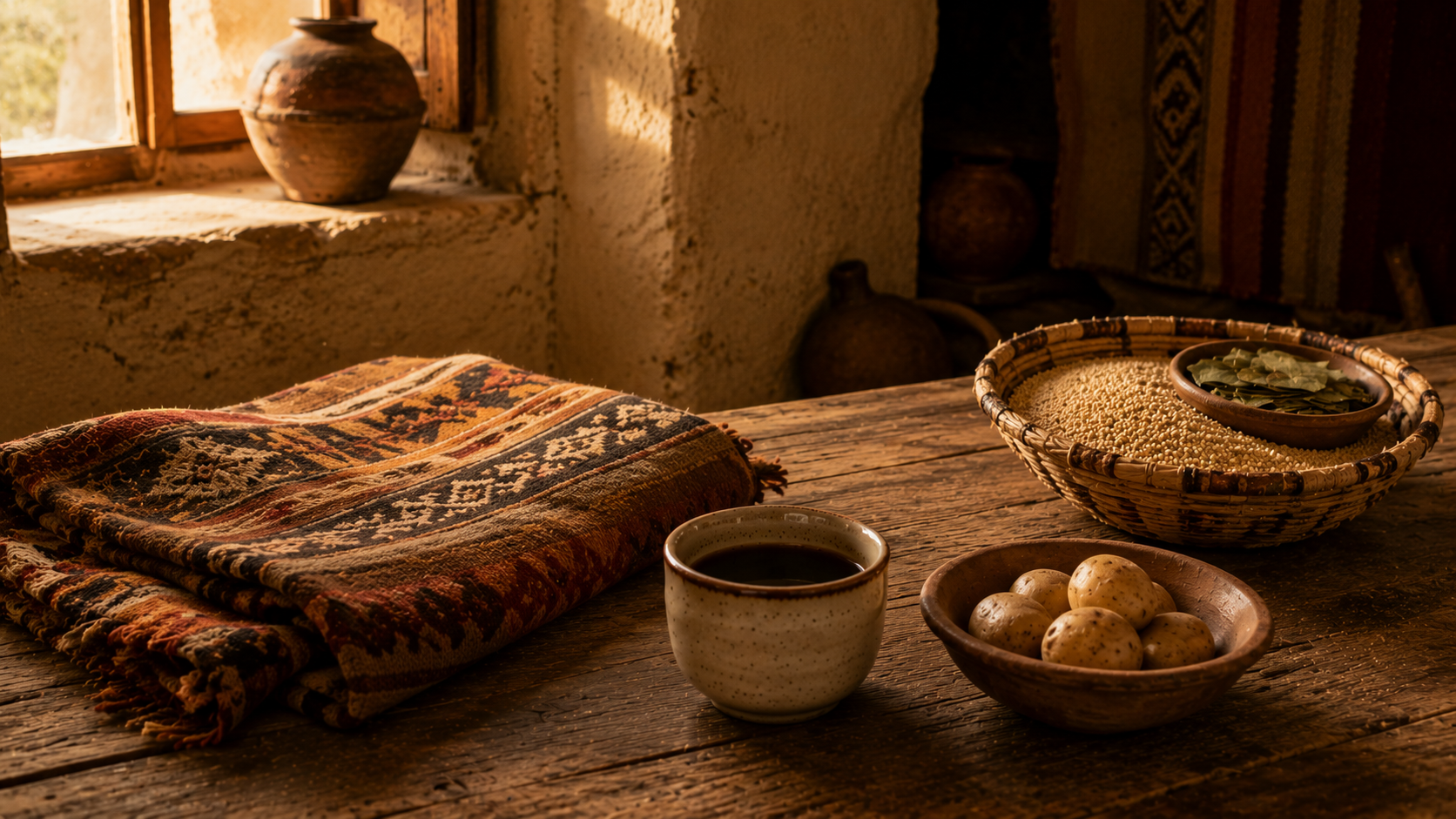
A reference on the Spanish of Peru — three sharply different geographic varieties shaped by the country's three-zone geography, with the coastal Spanish of Lima distinguished by preserved consonants, moderate pace, and the formal Limeño register; the Andean Sierra Spanish of Cusco, Arequipa, Puno, Ayacucho, and the highland departments shaped by sustained Quechua and Aymara contact with the characteristic apical s, the compressed vowels, and the intimate ustedeo in some traditional contexts; the Amazonian Spanish of the selva with its indigenous-language influences and riverine cultural register; the deep Quechua substrate that has contributed enormous vocabulary to Peruvian and broader Latin American Spanish; the Afro-Peruvian inheritance on the central coast in Chincha and Cañete with the música criolla tradition; the contemporary urban Spanish that has emerged from the great internal migration of Sierra people to Lima and the broader chicha and música andina cultural emergence; and the disproportionately rich culinary tradition that has positioned Peruvian cuisine among the world's great culinary heritages.
A Spanish of Three Geographies
Peru divides, geographically and linguistically, into three sharply different worlds. The costa — the narrow desert coastal strip running the country's full length, anchored by Lima and including Trujillo, Piura, Chiclayo, Arequipa's coastal areas, and the southern coastal regions — produces a Spanish that combines Caribbean-adjacent features with its own particular character. The sierra — the Andean highlands that form the country's backbone, including Cusco, Puno, Huancayo, Ayacucho, Cajamarca — produces a Spanish deeply shaped by centuries of contact with Quechua and Aymara, with phonological, lexical, and grammatical features distinct from coastal Peruvian Spanish. The selva — the Amazonian lowlands, including Iquitos, Pucallpa, Madre de Dios — produces another variety again, with its own indigenous-language contact patterns and a register shaped by the river culture of the Amazon basin.
These three geographic zones are not abstract divisions. They correspond to sharply different climates, economies, ethnic histories, and cultural traditions. A Peruvian from Lima speaking with a Peruvian from Cusco is engaging across these geographic realities, and the linguistic differences between coastal and Andean speech carry social meaning that goes beyond mere variation. Peru is, more than perhaps any other Latin American country except Bolivia, a place where geography and ethnicity and class and language are intertwined in ways that have shaped the country's history and continue to shape contemporary speech.
A learner who studies "Peruvian Spanish" without specifying which Peruvian Spanish risks the same trap that learners of "Colombian Spanish" face: encountering a single national variety that does not, in practice, exist. The Lima variety dominates national media and international representation, and most general resources for learners default to Lima Spanish, but a learner whose interest is in Andean Peru — in Cusco's tourism, in the Quechua-influenced highland Spanish of Ayacucho or Huancayo, in Aymara-Spanish bilingual contexts around Lake Titicaca — needs different orientation than a Lima-focused learner. A learner whose interest is in the Amazonian Spanish of Iquitos needs different orientation again.
This guide treats Peruvian Spanish as the family of varieties it actually is, with detailed coverage of the Lima coastal variety (which has the strongest claim to be the implicit national standard), the Andean sierra varieties (which collectively have more speakers than the coast and a deeper indigenous-language inheritance), and the Amazonian variety. The profile is longer than some others because of this internal complexity — Peru genuinely requires more sub-treatment than countries with less internal variation.
One additional complication shapes contemporary Peruvian Spanish: the great internal migration of recent decades. Lima, which in 1950 had a population of about 600,000, now has more than 11 million residents. The majority of this growth has come from internal migration, particularly from the Andean Sierra. The result is that Lima today is, demographically, an Andean city as much as a coastal one, with millions of Sierra-origin residents and their children producing what is sometimes called limeño andino Spanish — a variety blending Lima coastal features with Sierra-origin influences. This migration has reshaped contemporary Lima Spanish and produced new urban cultural forms (música chicha, contemporary cumbia, new street vocabulary) that are part of the contemporary linguistic landscape.
A note on scope. The major regional varieties treated in this guide are Lima coastal Spanish, southern Andean Spanish (Cusco, Puno, Arequipa highland), central Andean Spanish (Huancayo, Ayacucho), northern Andean Spanish (Cajamarca, Huánuco), Amazonian Spanish, and Afro-Peruvian coastal Spanish. The treatment is more developed for Lima and the Andean varieties; Amazonian and Afro-Peruvian coastal varieties receive shorter treatment but are not omitted.
1. The Pronoun System
Peruvian Spanish is, across all regional varieties, a tuteo variety. Tú is universal as the second-person singular informal pronoun. Vos is absent in productive use. Usted functions in the textbook formal sense.
However, one important regional pattern complicates the simple binary: parts of Andean Peru exhibit intimate ustedeo, particularly in older or more traditional family contexts. The pattern is shared with the Andean intimate-ustedeo regions discussed in The Ustedeo Guide — highland Ecuador, the Colombian Andes, the Bolivian highlands.
1.1 — Lima Coastal Tuteo
Lima Spanish uses tú as the standard informal pronoun in the textbook pattern. Tú hablas, tú comes, tú vives. The familiar imperative uses standard tuteo forms (habla, come, vive). The subjunctive is the standard tuteo subjunctive.
Usted in Lima coastal Spanish functions in the formal sense — used with elders, with strangers, in professional contexts, with hierarchical superiors. The formal/informal binary holds.
Lima coastal Spanish, particularly in formal and middle-class contexts, can be more formal than Caribbean coastal speech. Use of usted with employers, with elders, with strangers in any service context is expected. The threshold for moving to tú with someone new is somewhat higher than in Cuba or Venezuela, closer to Mexican or Bogotano norms.
1.2 — Andean Intimate Ustedeo
In parts of Andean Peru, usted functions as an intimate pronoun in family contexts, in the pattern discussed in The Ustedeo Guide. The usage is most pronounced in older speakers and in more traditional families, less universal among urban younger Andean Peruvians. The pattern is shared with highland Ecuadorian Spanish, with Colombian Andean Spanish, and with Bolivian highland Spanish — it is a feature of the broader Andean linguistic geography.
In Andean Peruvian families that practice intimate ustedeo, usted may be used with children, with spouses, with close family members. The pronoun does not signal distance; it signals warmth, attentiveness, and family tradition. The same speakers also use usted in formal contexts, distinguishing intimate from formal uses through tone and situation rather than through any change in the pronoun form.
The pattern is less consistent and less universally identified with Peru than Costa Rican ustedeo or Colombian Paisa ustedeo, but it is real and recognizable in Andean Peruvian speech, particularly in the southern Sierra (Cusco, Puno) and in older generations.
1.3 — The Andean Diminutive of Address
A particular Andean Peruvian feature worth noting: the use of affectionate diminutive forms of address that combine with the pronoun system. Mamita, papito, tiíta, casero/casera (a familiar term for a regular customer or service provider, used affectionately) — these terms of address are highly productive in Andean Peruvian speech and contribute to the warmth of the variety.
1.4 — Practical Consequences for the Learner
A learner of Peruvian Spanish should master standard tuteo as the foundation, since it works everywhere in Peru, and use usted in formal contexts, since Peruvian Spanish — particularly Lima — is relatively formal compared to Caribbean varieties. For learners focused on Andean Peru, awareness of intimate ustedeo as it appears in family contexts is useful; for learners focused on Lima, the standard formal/informal binary is sufficient.
2. The Sound of Peru: Three Phonologies
Peruvian phonology varies sharply by geographic zone. The systematic treatment of regional phonological patterns is in A Pronunciation Guide to Latin American Spanish. What follows is the Peruvian-specific picture.
2.1 — Lima Coastal Spanish
The Spanish of Lima exhibits features that distinguish it from both Caribbean coastal Spanish and from Andean Peruvian Spanish:
Generally preserved s. Unlike Caribbean Spanish, Lima middle-class educated speech preserves the s in most positions. Los amigos is pronounced los amigos. Está is pronounced está.
There is, however, an important caveat: Lima's large Andean-migrant population has brought patterns from the Sierra that include some s preservation features but also some particular Andean pronunciation patterns. Working-class Lima Spanish, particularly in the conos (the peripheral districts of the city largely populated by Andean migrants and their descendants), can show some patterns that differ from middle-class Lima Spanish.
Stable consonants. Final consonants are generally preserved. The d between vowels is preserved in careful speech (cansado fully articulated) though it can soften in fast casual speech.
Standard yeísmo. Ll and y merge to the standard y sound. No Argentine sh-realization. No Andean ll/y distinction preservation.
A soft j and g before e/i. Close to the English h sound, similar to Mexican Spanish and to Bogotano Spanish.
A characteristic intonation. Lima Spanish has a particular melodic intonation that distinguishes it from Bogotano, Mexican, or Caribbean varieties. The pattern is sometimes described as having a slightly more flat or measured quality than the more melodic Caribbean varieties.
Moderate speech rate. Lima Spanish moves at a moderate pace — faster than Bogotano but slower than Caribbean. The combination of preserved consonants and moderate pace makes Lima Spanish reasonably accessible for learners.
2.2 — Andean Peruvian Spanish
The Spanish of the Sierra has features that distinguish it sharply from Lima Spanish. Many of these features reflect centuries of Quechua-Spanish and Aymara-Spanish bilingualism.
A distinctive s. Andean Peruvian Spanish, like other Andean varieties, uses an s with a sharper, slightly whistling quality. The apical s of the Sierra is one of the most immediately recognizable features of the variety.
Preserved s in all positions. Like other Andean varieties, the final s is preserved.
Stable consonants throughout. Final and intervocalic consonants are pronounced clearly.
Compressed vowels. Andean Peruvian Spanish tends to shorten or compress unstressed vowels, reflecting Quechua phonological influence. The pattern can give Andean Peruvian speech a more clipped quality than coastal Spanish, with the full vowels of stressed syllables prominent against shorter unstressed vowels.
Distinctive intonation. Andean Peruvian Spanish has a characteristic melodic intonation that is widely recognized — sometimes described as having a rising-falling quality, with notable pitch variation across syllables. The pattern is partly attributable to Quechua's tonal-like prosodic patterns and is one of the most identifying features of Andean speech.
Some preserved ll/y distinction in older speakers. Conservative Andean Peruvian speakers, particularly in rural areas and among older generations, may preserve a residual distinction between ll and y — the ll pronounced with a sound similar to the Italian gl in figlio — that has been lost in most other Latin American varieties. The distinction is fading but still detectable in some communities.
Quechua-influenced phonological features. Some Andean Peruvian speakers, particularly those who acquired Spanish as a second language after Quechua, exhibit features attributable to Quechua influence — particular consonant clusters, particular vowel realizations, particular stress patterns. These features are most pronounced in fully bilingual speakers and less so in monolingual Spanish-speaking Sierra residents.
Distinctive treatment of certain consonants. Andean Peruvian Spanish sometimes preserves a slight aspiration in certain consonants, attributable to Quechua phonological influence — Quechua distinguishes plain, aspirated, and ejective consonants. The pattern is subtle in monolingual Spanish-speaking Andean speakers but recognizable to trained ears.
2.3 — Amazonian Spanish
The Spanish of the Amazonian lowlands (Iquitos, Pucallpa, the river towns) has features that distinguish it from both coastal and Andean Spanish:
Some s weakening. Amazonian Spanish shows some weakening of the s in syllable-final position, less aggressive than Caribbean Spanish but more so than Lima Spanish.
A distinctive intonation. The Amazonian melodic pattern is different from coastal and Andean patterns, sometimes described as having a slower, more lilting quality reflecting both indigenous-language influence and the riverine culture of the region.
Indigenous-language influence. The Spanish of the Amazon has been shaped by contact with multiple indigenous languages (Shipibo-Conibo, Asháninka, Awajún, and others). Vocabulary and some phonological patterns reflect this contact.
Distinctive vocabulary. Amazonian Spanish carries an extensive regional vocabulary related to the Amazonian environment — names of fish, plants, animals, and cultural practices specific to the region.
2.4 — Afro-Peruvian Coastal Spanish
In the central coastal regions where Afro-Peruvian communities are concentrated (Chincha, Cañete, El Carmen), Spanish has features influenced by African linguistic inheritance:
- Some particular intonation patterns shared with other Afro-influenced Latin American varieties
- Vocabulary related to Afro-Peruvian music (cajón, zapateo, festejo, landó) and culture
- Distinctive pragmatic features in some traditional communities
The Afro-Peruvian inheritance is less internationally recognized than the Afro-Cuban or Afro-Brazilian inheritance, but it is real and culturally significant.
3. The Quechua and Aymara Substrate
The most distinctive feature of Andean Peruvian Spanish, and a feature that distinguishes Peruvian Spanish from most other national varieties, is the depth of indigenous-language inheritance. Peru, along with Bolivia, has the largest indigenous-language-speaking populations in Latin America. Quechua has approximately 4 million speakers in Peru; Aymara has approximately 500,000. The presence of these languages has shaped Andean Peruvian Spanish at every level — vocabulary, phonology, syntax, and pragmatics.
3.1 — Quechua Loanwords
Quechua has contributed an enormous vocabulary to Peruvian Spanish, and from Peruvian Spanish to broader Spanish:
Words now in general Spanish use:
- Cancha — popcorn (originally toasted corn); also a sports field
- Choclo — corn (the ear of corn); used throughout Andean regions
- Cóndor — the Andean condor
- Llama — the South American camelid
- Vicuña — another South American camelid, source of fine wool
- Alpaca — another South American camelid
- Guanaco — another South American camelid
- Quinua (or quinoa) — the Andean grain
- Coca — the coca leaf
- Chacra — a small farm or rural property
- Pucho — a cigarette, or the end of a cigarette
- Carpa — a tent
- Chullo — the Andean knitted cap with earflaps
- Poncho — a wool poncho (Quechua origin)
- Mate — a hot infusion (mate is general now but the word and the drink come from Andean origins)
Words common in Peruvian Spanish, less so elsewhere:
- Causa — the Peruvian potato dish (originally Quechua)
- Pisco — the grape brandy
- Anticucho — the skewered grilled meat dish
- Wawa (or guagua) — a baby (Quechua)
- Wáchimán — a watchman (mixed Quechua-English-Spanish origin)
- Chaufa — Chinese-Peruvian fried rice (mixed origin)
- Cushma — a traditional tunic
- Yapa — an extra amount given by a vendor (a small bonus)
Quechua-derived expressions:
- Ahorita pe — right now (the pe a contraction of pues common in Peruvian Spanish, attributable in part to Quechua influence)
- Huachafo / huachafa — pretentious or trying too hard (originally Quechua-derived)
3.2 — Aymara Loanwords
Aymara contributions are smaller than Quechua but real, particularly in the southern Peruvian regions around Lake Titicaca:
- Aymara itself (the language and people)
- Achachila — a sacred mountain or ancestor
- Apacheta — a sacred cairn of stones at high mountain passes
- Various place names in Puno and the surrounding region
3.3 — Phonological and Syntactic Influence
Beyond vocabulary, Quechua has influenced Andean Spanish in deeper ways:
Phonological influence. As mentioned in Section 2.2, the apical s, the compressed vowels, the distinctive intonation, and some consonant features of Andean Spanish are attributable to Quechua phonological influence over centuries of bilingualism.
Syntactic influence. Andean Spanish exhibits some syntactic patterns that linguists attribute to Quechua influence:
- Use of dice as a hearsay marker. Andean Spanish uses dice (he/she says) or dicen (they say) as a discourse marker indicating that information is hearsay rather than direct knowledge, reflecting Quechua's grammaticalized evidential system. Dice que vino ayer (apparently he came yesterday, or so they say).
- Particular word-order patterns. Some Andean Spanish constructions show object-verb order patterns or other syntactic features attributable to Quechua influence.
- Distinctive use of certain particles. The discourse marker pues (often shortened to pue or pe) is used in Andean Spanish with particular productivity, partly attributable to Quechua's discourse-marker system. Sí pues, sí pe — yes indeed.
- Diminutive intensification. Andean Spanish uses diminutives intensively, in part reflecting Quechua's productive affective morphology.
The Andean Spanish syntax of possession. Some Andean Peruvian speakers use constructions like de mi tío su casa (my uncle's house, literally "of my uncle his house") that reflect Quechua possession grammar. These are characteristic of fully bilingual or recently-bilingual speakers and less so of monolingual urban Andean speakers.
3.4 — The Sociolinguistic Dimension
The Quechua-Aymara inheritance carries social weight in Peru. Historically, Andean features in Spanish have been stigmatized by coastal elites as markers of indigeneity, rural origin, or low social status. The terms motoso and motosidad (sometimes derogatory) refer to Quechua-influenced features in Spanish.
Contemporary attitudes are shifting. The large Andean migration to Lima has produced sizeable urban populations whose Spanish carries Andean features, and these features have become more visible and less stigmatized in urban contexts than they once were. The cultural emergence of chicha music and cumbia peruana, which often draws on Andean musical traditions and uses Andean-influenced Spanish, has contributed to the cultural revaluation of Andean features.
For learners, the practical implication is that Andean features in Spanish are real, common, and increasingly accepted as part of contemporary Peruvian Spanish. A learner who acquires some Andean Spanish patterns will sometimes encounter the older stigma but will more often encounter Peruvians who recognize and value the variety.
4. Distinctive Peruvian Vocabulary
Peruvian Spanish has developed an extensive vocabulary that is recognizably Peruvian. Some vocabulary is shared with neighboring Andean countries (Bolivia, Ecuador, Colombia); some is specifically Peruvian.
4.1 — Core Peruvian Vocabulary
A selection of high-frequency Peruvian words a learner will encounter:
- Pe (or pues) — a discourse marker, used productively in Peruvian speech. Sí pe (yes indeed). No pe (no, come on). Distinctive of Peruvian Spanish though also used in Bolivia and parts of other Andean countries.
- Causa — friend, buddy, pal (informal). Mi causa (my friend). Distinctly Peruvian.
- Pata — friend, also informal. Mi pata. Pan-Peruvian.
- Brother / broder — friend, dude (English-derived, common in casual speech among young people)
- Compadre — friend, sometimes with respectful tone
- Chibolo / chibola — kid, young person. Distinctly Peruvian.
- Chamba — work, job. Pan-Andean and Peruvian.
- Jato — house. Estoy en mi jato (I'm at my house). Peruvian slang.
- Roche — embarrassment, shame. ¡Qué roche! (How embarrassing!) Distinctly Peruvian.
- Bacán — cool, great. Shared with Chilean and other South American varieties (treated in detail in Bacán — A Word That Crossed Continents).
- Chévere — cool, great. Less common in Peru than in Venezuela or Colombia but used.
- Pituco / pituca — upper-class, snobby. Distinctly Peruvian, with class connotations.
- Habla — used as a greeting, particularly among young men. ¡Habla causa!
- ¿Cómo vas? — how's it going (standard Peruvian greeting beyond just ¿cómo estás?)
- Plata — money. Pan-Andean.
- Lucas — Peruvian soles (the currency). Cien lucas (a hundred soles).
- Misio — broke, without money. Estoy misio.
- Chela — beer. Shared with Mexican usage.
- Tono — party. Vamos al tono.
- Trome — expert, skilled. Eres un trome.
- Asu (often asu mare) — exclamation of surprise. (Asu mare literally "ah, your mother" but used as a mild exclamation; the title of a famous Peruvian film.)
- Bamba — fake, counterfeit. Es bamba (it's fake).
- Chancar — to study hard, to grind. Estoy chancando (I'm studying hard).
- Chocar — to disagree with, to dislike. Me choca (I dislike it/him).
- Conchudo / concha — shameless person (with vulgar undertone in some uses)
- Mostro / mostra — great, excellent. Está mostro (it's great).
- Asado / asada — upset, angry. Está asado (he's angry).
- Achorado / achorada — aggressive, street-tough behavior
- Tono musical and fiesta both used for party in different registers
4.2 — Food Vocabulary
Peruvian Spanish carries an extensive food vocabulary — Peruvian cuisine has become internationally celebrated, and the vocabulary reflects the country's culinary richness:
- Ceviche — the iconic fish dish, with multiple regional variations
- Tiradito — a related raw-fish preparation
- Causa — the cold potato dish layered with various fillings
- Anticucho — the skewered grilled meat
- Ají de gallina — the chicken in cream-and-yellow-chile sauce
- Lomo saltado — the stir-fried beef dish (showing Chinese-Peruvian influence)
- Arroz con pato — duck rice, classic northern Peruvian dish
- Pachamanca — the underground oven cooking technique from the Andes
- Chupe — various stews and chowders, with regional variations
- Rocoto relleno — stuffed Andean chile
- Papa rellena — the stuffed potato
- Picarones — sweet potato fritters with chancaca syrup
- Pisco sour — the iconic Peruvian cocktail
- Chicha morada — the purple corn beverage
- Inka Kola — the iconic golden Peruvian soft drink
- Choclo, humita, tamal — corn dishes with regional variations
4.3 — Vocabulary of the Migration and Urban Experience
The large internal migration of recent decades has produced vocabulary specific to the contemporary urban Peruvian experience:
- Conos — the peripheral districts of Lima (Cono Norte, Cono Sur, Cono Este) settled largely by internal migrants
- Pueblo joven — a young town, the historical term for migrant settlements (now often replaced by more neutral terms)
- Asentamiento humano — a human settlement, sometimes informal
- Chicha — beyond the beverage, the term refers to the cultural-musical movement of Sierra-origin urban migrants. Cultura chicha — chicha culture.
- Combi — the small bus or van (informal public transit), with its associated subculture
- Mototaxi — the motorcycle taxi
- Cumbia peruana — Peruvian cumbia, the contemporary popular music genre
- Huayno — the Andean musical tradition, now in both traditional and modern forms
- Cajón — the Peruvian percussion box, foundational to Afro-Peruvian music and now used internationally
5. The Diminutive in Peruvian Spanish
As covered in The Diminutive in Latin American Spanish, Andean varieties use diminutives intensively. Peruvian Spanish, particularly Andean Peruvian Spanish, is among the most diminutive-rich varieties in Latin America, comparable to or exceeding Mexican Spanish in frequency.
Some particularly Peruvian diminutive patterns:
- Mamita, papito, abuelita, tiíta — extensively used in family and intimate contexts
- Casero, casera — affectionate diminutive-like term for a regular vendor or customer
- Wachito (a small child) — from wawa (Quechua-origin word for baby)
- Achachado and similar Quechua-Spanish hybrid diminutives in some regions
- Double diminutives — chiquititita, cerquitita — found in some Andean speech, marking intensified affection or smallness
The Andean Peruvian diminutive reflects both Spanish diminutive patterns and the influence of Quechua's productive affective morphology. The result is a Spanish in which diminutives saturate everyday speech, particularly in domestic, affectionate, and service contexts.
6. Pragmatics: The Peruvian Style
Beyond grammar and vocabulary, Peruvian Spanish has pragmatic features that distinguish it from neighboring varieties.
Formality and politeness. Peruvian Spanish, particularly Lima Spanish, is among the more formal Latin American varieties. Use of usted, formal greetings, polite address with titles (Señor, Señora, Doña, Don, Doctor — used widely for any professional), and elaborated politeness conventions are characteristic. The threshold for casual tú use with strangers is higher than in Caribbean varieties.
The Andean warmth. Andean Peruvian Spanish, while maintaining politeness conventions, has its own warmth — affectionate diminutives, terms of endearment, the use of casero/casera with regular service providers, the indirect-but-warm pragmatic register of intimate ustedeo where it appears. The warmth operates through softening and affection rather than through the rapid-intimacy patterns of Caribbean Spanish.
The indirect Andean style. Andean Peruvian speech often operates through indirection, particularly in formal contexts. Direct refusal, direct contradiction, or direct demand can feel impolite; the preferred mode is suggestion, hint, softened request. The use of dice (hearsay marker) and similar particles allows speakers to introduce information without committing strongly to it, providing pragmatic flexibility.
The classed nature of Peruvian speech. Peruvian Spanish carries class distinctions more openly than some other varieties. Vocabulary, pronunciation, and pragmatic patterns mark speakers as upper-class, middle-class, working-class, urban, or rural in ways that affect how speech is received. A learner becomes aware of these distinctions over time and learns to navigate them as part of acquiring the variety.
The pe register. The discourse marker pe (a reduction of pues) is one of the most identifying features of Peruvian casual speech, particularly Andean Peruvian and migrant-origin Lima Spanish. Sí pe (yes indeed), no pe (no, come on), de a verdad pe (really, truly). The pe is used productively as an emphatic marker, a softener, or a confirmation. Heavy use of pe marks the speaker as casual or Andean-influenced; lighter use is more middle-class urban.
Greetings. Peruvian greetings tend to be elaborated but not overly extended. Buenos días, ¿cómo está? — Bien, gracias. ¿Y usted? — Bien también, gracias. Physical greetings (handshakes, kisses on the cheek) follow standard Latin American patterns, with the kiss on the cheek between women and between men-and-women in informal contexts; among men, handshakes are more common.
7. Regional Variation Within Peru
Detailed coverage of the major Peruvian regional varieties:
7.1 — Lima and the Central Coast
The dominant variety nationally, the implicit standard heard in Peruvian media. The Lima variety has internal class differentiation that is particularly pronounced — middle-class educated Lima Spanish operates by different conventions than the Spanish of the conos (peripheral districts) where Andean migration has been concentrated.
The Lima coastal variety as understood in middle-class educated speech features preserved consonants, moderate speech rate, standard tuteo with formal usted, the polite-formal pragmatic register, and the implicit standard vocabulary that is shared with broader Peruvian formal Spanish.
7.2 — The Northern Coast
The Spanish of Trujillo, Piura, Chiclayo, and the surrounding northern coastal regions has features that distinguish it from Lima. Northern coastal speech is sometimes faster than Lima speech, with some consonant softening more pronounced than in Lima. The region has its own particular vocabulary and cultural identity, with stronger Afro-Peruvian presence in some areas and a distinctive cuisine (ceviche, cabrito, seco de cabrito).
7.3 — The Southern Coast
The Spanish of Ica, the southern coastal valleys, and Arequipa's coastal areas. Arequipa itself, the second-largest Peruvian city, has its own distinctive Spanish — sometimes characterized by Arequipeños as the clearest Peruvian Spanish (with the same dynamic as Bogotá's "neutrality" perception). Arequipeño regional pride in their Spanish is a distinct cultural feature.
7.4 — The Southern Andes (Cusco, Puno, Apurímac)
The Spanish of the southern highlands, including the Cusco region (which has the country's largest tourist economy and a sizeable international visitor presence) and Puno on the Bolivian border (with strong Aymara presence). The variety exhibits deep Quechua influence (Aymara influence in Puno particularly), the apical s, the distinctive intonation, and the intimate-ustedeo register in some communities.
Cusco Spanish has been shaped by the city's role as the major Andean tourist destination, with a service-industry Spanish that interacts daily with international visitors. The variety remains recognizably Andean Peruvian while accommodating international communication.
7.5 — The Central Andes (Huancayo, Ayacucho, Junín)
The Spanish of the central highlands, including Huancayo (the major commercial city of the central Sierra) and Ayacucho (historically central to the country's recent political history). The variety shares core Andean features with the southern Sierra but with regional variations.
7.6 — The Northern Andes (Cajamarca, Huánuco, Áncash)
The Spanish of the northern highlands has features that share more with northern coastal Spanish than the southern Andean variety does. The Quechua spoken in these regions (Cajamarca Quechua, central Peruvian Quechua) differs from southern Cuzco Quechua, and the resulting Spanish influences differ slightly.
7.7 — The Amazon (Iquitos, Pucallpa, the river system)
The Spanish of the Amazonian lowlands, with its own distinctive features — some s weakening, particular intonation, indigenous-language influence from multiple Amazonian languages, regional vocabulary related to the riverine and forest environment.
7.8 — Afro-Peruvian Coastal Communities
Concentrated in Chincha, Cañete, El Carmen, and other central coastal communities. The Spanish of these communities has features influenced by African linguistic inheritance, alongside the broader Afro-Peruvian cultural tradition (música criolla, festejo, landó, zapateo).
7.9 — The Andean Migration in Lima
A significant feature of contemporary Peruvian Spanish: the large migration of Andean Peruvians to Lima over recent decades has produced a Lima variety that is no longer purely coastal. The limeño andino register — Andean-influenced Lima Spanish — is now spoken by millions of residents and is part of the contemporary linguistic landscape of the capital. This urban Andean Spanish has produced its own cultural forms (música chicha, cumbia peruana) and represents an important contemporary development of Peruvian Spanish more broadly.
8. The Cultural Register
Peru has produced one of the most internationally significant bodies of Spanish-language literature relative to its population, plus rich musical and cinematic traditions.
8.1 — Literature
Mario Vargas Llosa (1936-2025), the Peruvian novelist who won the Nobel Prize in 2010, is among the most internationally read Spanish-language writers of the twentieth and twenty-first centuries. La ciudad y los perros (1963), Conversación en La Catedral (1969), La guerra del fin del mundo (1981), La fiesta del Chivo (2000), and many others have shaped how Spanish-language literature is read internationally. Vargas Llosa wrote across the Peruvian and international literary landscapes, addressing Peru directly in some works and engaging broader Latin American and global subjects in others.
César Vallejo (1892-1938), the Peruvian poet who lived much of his adult life in Paris, is among the great Spanish-language poets of the twentieth century. Los heraldos negros (1919), Trilce (1922), and Poemas humanos (1939, posthumous) represent some of the most experimental and emotionally charged poetry written in Spanish. Vallejo's poetry has been profoundly influential on subsequent Spanish-language poetry.
José María Arguedas (1911-1969), the Andean-Peruvian writer who grew up speaking Quechua before Spanish, wrote some of the most important works addressing the Andean Peruvian experience: Yawar fiesta (1941), Los ríos profundos (1958), Todas las sangres (1964), and El zorro de arriba y el zorro de abajo (1971). Arguedas brought Quechua linguistic and cultural elements into Spanish-language literature in ways that previous writers had not.
Other major Peruvian writers include Alfredo Bryce Echenique, Julio Ramón Ribeyro (one of the great twentieth-century short-story writers in Spanish), Manuel Scorza, Blanca Varela (poet), Carlos Germán Belli (poet), Antonio Cisneros (poet), Daniel Alarcón (writing in English and Spanish about Peruvian themes), Santiago Roncagliolo, Renato Cisneros, and many others. Contemporary Peruvian fiction continues this productive tradition.
8.2 — Music
Música criolla — the coastal traditional music including vals criollo, marinera, polka peruana, and other forms. Major figures include Chabuca Granda, Felipe Pinglo Alva, and the broader tradition of Lima musical life from the twentieth century.
Afro-Peruvian music — including festejo, landó, zamacueca, and other forms. Major figures include Susana Baca, Eva Ayllón, the Ballumbrosio family, Perú Negro (the ensemble), and Lucila Campos. The international recognition of Afro-Peruvian music has grown considerably in recent decades.
Andean traditional music — huayno, yaraví, music of the zampoña (panpipes) and the quena (Andean flute) and the charango (small stringed instrument). The tradition spans regional varieties and remains central to contemporary Andean cultural life.
Música chicha and cumbia peruana — the contemporary urban Andean and tropical music traditions that have emerged from internal migration. Major figures include Los Shapis, Grupo 5, Hermanos Yaipén, Armonía 10, and others. The cumbia peruana scene is one of the most vital contemporary popular music movements in Latin America.
Contemporary popular music — Peruvian musicians work across genres, with growing recent presence in Latin urban music, rock, and other forms.
8.3 — Cinema
Peruvian cinema has produced internationally recognized work, particularly in recent decades:
Claudia Llosa has been one of the most internationally recognized contemporary Peruvian filmmakers, with La teta asustada (2009, Berlin Golden Bear winner, Academy Award nominee) bringing Andean Peruvian Spanish to international audiences.
Other Peruvian films worth noting include Madeinusa (Llosa, 2006), La boca del lobo (Francisco Lombardi, 1988), Días de Santiago (Josué Méndez, 2004), Asu mare (Ricardo Maldonado, 2013 — the most commercially successful Peruvian film), and contemporary work continuing to emerge.
8.4 — Cultural Themes
Beyond the artistic traditions, Peruvian cultural identity has been shaped by:
- The pre-Columbian indigenous heritage, particularly the Inca and earlier Andean civilizations
- The Spanish colonial period and the role of Lima as the colonial viceroyalty's capital
- The complex twentieth-century history including the political violence of the 1980s and 1990s
- The contemporary economic development and its uneven distribution
- The large diaspora of Peruvians in the United States, Chile, Argentina, Spain, and elsewhere
- The country's emergence as one of the world's great culinary destinations in the twenty-first century
9. For the Learner
A few practical paths into Peruvian Spanish:
Choose a regional focus. Lima coastal Spanish is the natural default and the most accessible for general purposes. For learners with specific interests — Andean Peru, Amazon, Afro-Peruvian — adjust accordingly. The regional differences are significant enough that focused study pays off.
Recognize the class and ethnic dimensions. Peruvian Spanish carries social meaning more openly than some other varieties. A learner becomes aware of how speech marks origins and develops sensitivity to these dimensions over time. This is not a barrier to learning but a feature of engagement with the variety.
Study some Quechua loanwords. Even for learners focused on Lima coastal Spanish, basic familiarity with the major Quechua-origin words is valuable — they are part of standard Peruvian Spanish vocabulary and are unfamiliar to learners trained on Mexican or Iberian Spanish.
Listen to multiple musical traditions. Música criolla for the coastal foundation, Afro-Peruvian music for the central coastal tradition, Andean huayno for the Sierra, contemporary chicha and cumbia peruana for the urban contemporary scene. Each provides exposure to different registers and varieties.
Watch Peruvian cinema. La teta asustada, Madeinusa, Asu mare, and other contemporary films provide listening practice across regional and class varieties.
Read Vargas Llosa. For accessible literary Spanish, the early Vargas Llosa novels (La ciudad y los perros, Conversación en La Catedral) offer immersion in Lima's twentieth-century social fabric and in carefully crafted literary Spanish. Vallejo's poetry is more challenging but worth the effort for the literary reward. Arguedas's Los ríos profundos provides exposure to Andean Peruvian Spanish in literature.
Find a Peruvian tutor. As discussed in the italki review, italki provides access to Peruvian tutors. Lima is the most readily available; tutors from Cusco, Arequipa, and other regions are also findable. For learners specifically focused on Andean Peruvian Spanish, choose accordingly.
Travel to Peru. Lima provides exposure to the dominant variety; Cusco to Andean Peruvian Spanish in a context with established international visitor infrastructure; northern coastal cities like Trujillo to different coastal varieties; Iquitos to Amazonian Spanish (though logistics of Amazonian travel require more planning).
Engage with the food. Peruvian cuisine is one of the country's great cultural treasures, and vocabulary related to food is dense and culturally significant. Engaging with Peruvian cooking — through restaurants, through cooking classes, through home preparation — provides motivated entry into a rich vocabulary.
Be patient with the formality. Peruvian Spanish, particularly in formal contexts and in middle-class Lima, can be more formal than learners accustomed to Caribbean varieties expect. The formality is not coldness; it is the pragmatic convention. Adjusting to it improves social navigation.
Develop awareness of contemporary developments. Contemporary Peruvian Spanish is dynamic, with the chicha cultural emergence, the cumbia peruana movement, the contemporary urban migrant Spanish, and the ongoing cultural production all shaping the variety. A learner who engages with contemporary Peruvian cultural media (music, film, television, social media) develops awareness of these developments more reliably than through static study.
A Closing Note
Peruvian Spanish, in its three geographic worlds — coast, Sierra, Amazon — and in its many regional and class varieties within each, is one of the most internally complex Spanishes in Latin America. The country contains one of the deepest indigenous-language inheritances in the Spanish-speaking world, with Quechua and Aymara not merely as substrates but as continuing living languages with millions of speakers. It contains one of the most significant literary traditions in twentieth- and twenty-first-century Spanish-language letters. It contains one of the more important Caribbean-Andean linguistic intersections, with the central coast hosting one of the more important Afro-Latin American communities outside Cuba and Brazil. And it contains a contemporary urban migration story that has reshaped the country's largest city and produced new cultural forms still developing.
For a learner, Peruvian Spanish offers exceptional cultural depth and exceptional linguistic richness. The investment in learning the variety — whether focused on Lima coastal Spanish, Andean Spanish, or other regional varieties — provides access to a country whose contribution to Spanish-language culture has been disproportionate to its population, and whose continuing cultural production keeps the variety vital.