Nicaraguan Spanish: A Learner's Guide
Nicaraguan Spanish has the most universal voseo in Latin America, where vos extends into contexts that other Spanish varieties reserve for usted or tú. With the bilingual Caribbean coast, an outsized cultural tradition, and a large diaspora across Central America.

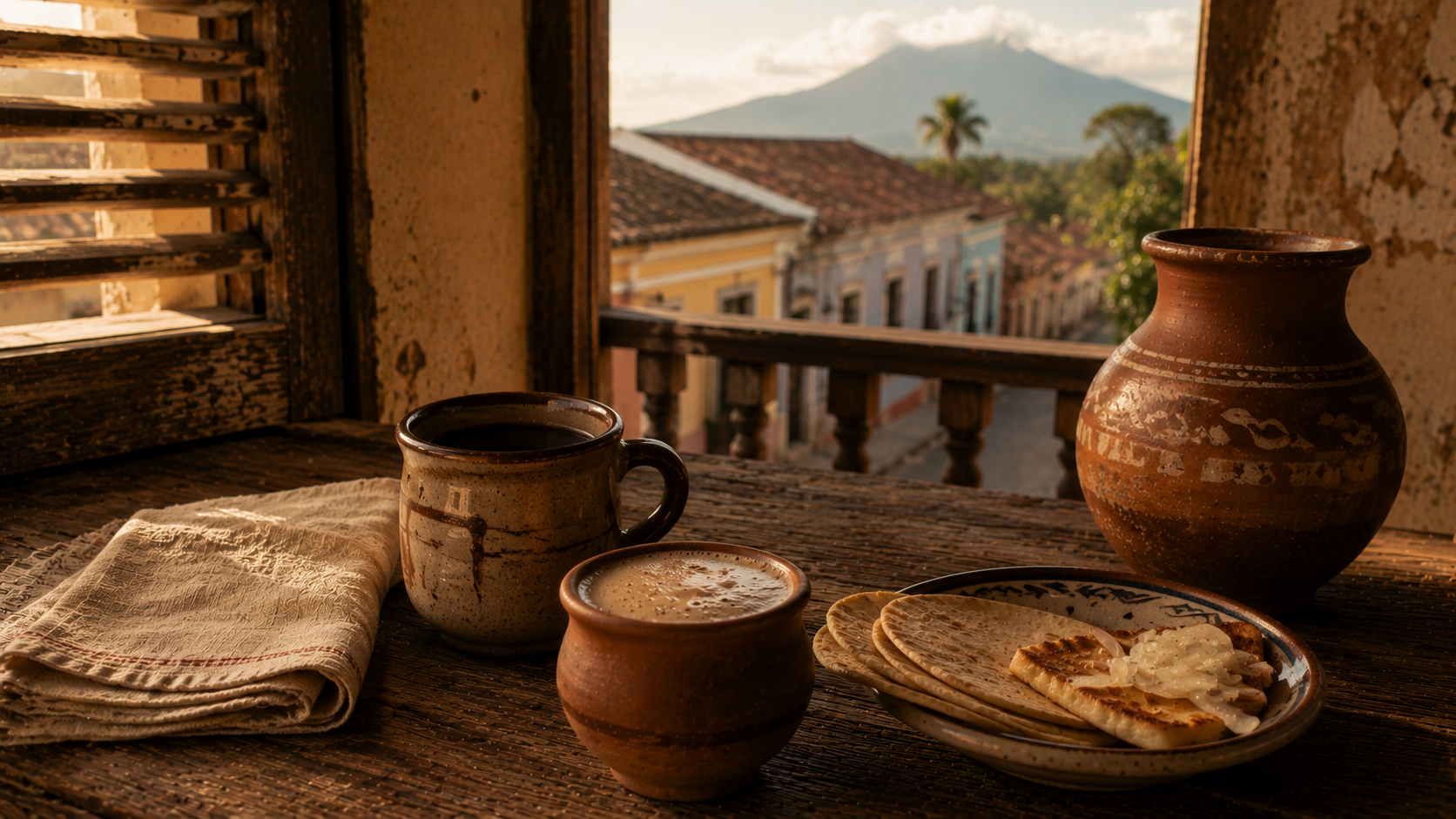
A reference on the Spanish of Nicaragua — the country with the most universal voseo in Latin America, where vos extends into contexts that other Spanish varieties reserve for usted or tú; the moderate Central American phonology; the indigenous and African inheritances of the Pacific-Central regions; the bilingual Caribbean coast where Miskito, Mayangna, Rama, and Creole English coexist with Spanish; the outsized cultural-literary tradition that produced Rubén Darío as the founder of modernismo and continues through Ernesto Cardenal, Gioconda Belli, and Sergio Ramírez; the political-historical context shaped by the Sandinista Revolution and its aftermath; and the large diaspora that has spread Nicaraguan Spanish to neighboring Costa Rica and to the United States.
A Country of Universal Voseo
A learner arriving in Nicaragua with assumptions about how voseo operates — perhaps based on Argentine, Uruguayan, or even Costa Rican experience — will quickly discover that Nicaraguan voseo operates more pervasively than any other variety. In Nicaragua, vos is not merely the informal pronoun used among friends, family, and peers. Vos extends into contexts where most other voseo-using varieties would use usted — into some professional contexts, into some formal addresses, into nearly all contexts where the speaker is not specifically marking distance. A Nicaraguan addressing a stranger at a bus stop might use vos. A Nicaraguan child speaking to a teacher might use vos in some circumstances. The threshold for vos use in Nicaragua is among the lowest of any Spanish-speaking country.
This universal voseo is sometimes described as the most fundamentally Nicaraguan feature of the language. The pronoun is so central to Nicaraguan identity that it functions almost as a cultural marker — to use vos in Nicaragua is to participate in Nicaraguan linguistic-cultural identity, and to use usted in many contexts where other varieties would naturally use it is to mark oneself as foreign or as distancing from Nicaraguan norms. The voseo is universal enough that Nicaraguans abroad, when they want to maintain their Nicaraguan identity, hold to vos even in contexts where local Spanish varieties would expect tú or usted.
Beyond the universal voseo, Nicaraguan Spanish shares core features with neighboring Central American Spanish varieties — moderate phonology with preserved consonants, the Central American intonation patterns, a vocabulary largely common across the region. The country also has distinctive cultural-historical features that shape its Spanish: the outsized literary tradition that produced Rubén Darío (perhaps the most influential Spanish-language poet of the late nineteenth and early twentieth centuries, founder of modernismo) and continues through major contemporary writers; the complex Caribbean coast with its indigenous and Afro-Caribbean populations; the Sandinista Revolution and its aftermath; and the contemporary political-economic situation that has produced large migration flows to Costa Rica and the United States.
The Caribbean coast represents one of the most linguistically and culturally distinct regions in Central America. While the Pacific-Central regions of Nicaragua — where the great majority of the population lives, including the major cities of Managua, León, Granada, and others — are Spanish-dominant, the Caribbean coast (the Costa Caribe, including the autonomous regions of RACCN and RACCS, the North and South Caribbean Autonomous Regions) has Miskito-speaking populations (Miskito is an indigenous language with approximately 180,000 speakers), Mayangna-speaking communities, smaller Rama-speaking communities, Creole English-speaking Afro-Caribbean populations, and Spanish-speaking ladino populations. The cultural-political relationship between the Pacific-Central Spanish-dominant majority and the multilingual Caribbean coast is one of the most fundamental features of Nicaraguan linguistic-cultural reality, with the autonomous regions established in 1987 reflecting recognition of the Caribbean coast's cultural-linguistic distinctness.
This guide treats Nicaraguan Spanish in its full complexity, with attention to the universal voseo, to the Caribbean coast bilingual reality, to the cultural-literary tradition, and to the political-historical context that has shaped contemporary Nicaragua. The profile is centred on the Pacific-Central variety that dominates national media and operates as the implicit standard, while honouring the multilingual reality of the Caribbean coast.
A note on scope. Nicaraguan Spanish in this guide refers primarily to the Spanish spoken in Nicaragua, with particular attention to the Pacific-Central variety (Managua, León, Granada, the broader western and central regions) that represents the dominant national variety. The Caribbean coast Spanish is treated as a distinct regional variety with its own particular character shaped by sustained contact with indigenous and Creole English languages. The Nicaraguan diaspora in Costa Rica, the United States, and other countries is addressed in Section 10.
1. The Universal Voseo
Nicaraguan voseo deserves substantive treatment because it represents one of the most extensive voseo systems in the Spanish-speaking world. The systematic treatment of voseo is in The Voseo Guide. What follows is the Nicaraguan-specific picture.
1.1 — The Standard Nicaraguan Voseo
The pronoun. Vos replaces tú as the standard informal pronoun across nearly all casual contexts.
The verb forms. Nicaraguan voseo follows the standard Central American pattern: vos hablás, vos comés, vos vivís, vos sos. Final-syllable stress in present indicative.
The imperative. Hablá, comé, viví, andá, sé, hacé, poné, salí, vení, decí.
The subjunctive. Nicaraguan voseo typically uses the voseo subjunctive (que vos hablés) more consistently than in some other voseo varieties, including in moderately educated speech. The pattern aligns with Salvadoran and Honduran usage.
1.2 — The Extended Range of Nicaraguan Voseo
What distinguishes Nicaraguan voseo from other voseo varieties is its extended range into contexts that other varieties reserve for usted or tú:
In semi-formal contexts — Many semi-formal interactions where Costa Rican Spanish would use usted or Argentine Spanish would maintain vos with care, Nicaraguan Spanish maintains vos with greater pragmatic latitude.
With strangers in casual contexts — A Nicaraguan addressing a stranger in an everyday context (a vendor, a passerby, a service worker) is more likely to use vos than speakers from other voseo varieties.
Between generations in some contexts — Younger speakers addressing older speakers may use vos in some Nicaraguan contexts where other varieties would expect usted.
In some educational contexts — Teachers and students may use vos in some Nicaraguan educational contexts where other varieties would maintain formal usted.
This is not to say that usted is absent from Nicaraguan Spanish. Usted is used in clearly formal contexts (with very senior figures, in clearly professional or formal interactions, with the most distant strangers, in religious contexts). But the threshold for vos use is significantly lower than in most other voseo varieties.
1.3 — The Cultural Weight of Vos
The universal Nicaraguan voseo carries cultural-political weight beyond its grammatical function. The pronoun functions as a marker of Nicaraguan identity in international contexts. It was reinforced by Sandinista cultural-political work — the Sandinista government emphasized vos as part of Nicaraguan revolutionary identity, distinguishing the egalitarian vos from the more hierarchical usted — and continues to be used by Nicaraguans abroad as identity maintenance. In contemporary discourse, the pronoun is sometimes associated with progressive or popular cultural identity.
The pronoun is therefore not merely grammatical but also cultural-political.
1.4 — Tú in Nicaragua
Tú is essentially absent from native Nicaraguan speech. It appears in:
- Media-influenced speech, particularly in television and some commercial contexts
- Speech of Nicaraguans returning from long stays in tuteo countries
- Some song lyrics influenced by broader Latin American pop conventions
- Some specifically religious or formal contexts
But native Nicaraguan speech overwhelmingly uses vos in informal contexts and usted in formal contexts, with tú essentially absent.
1.5 — Practical Consequences for the Learner
A learner of Nicaraguan Spanish should master voseo as the universal informal pronoun. Usted remains in use for clearly formal contexts, with the understanding that the threshold for usted is higher than in most other varieties. Tú should generally not be used — it will sound very foreign in Nicaraguan ears. And the foundational point is that Nicaraguan voseo is more pervasive than Argentine, Uruguayan, or Costa Rican voseo; the same morphological forms operate across a wider pragmatic range.
2. The Sound of Nicaragua
Nicaraguan phonology is moderate, sharing core features with Central American Spanish and with some particular Nicaraguan distinctions. The systematic treatment of regional phonological patterns is in A Pronunciation Guide to Latin American Spanish. What follows is the Nicaraguan-specific picture.
2.1 — Generally Preserved Consonants in the Pacific-Central Region
The s. Pacific-Central Nicaraguan Spanish generally preserves the final s in careful and educated speech. Some weakening occurs in casual speech, particularly in some regional and class varieties, but not as aggressively as in Caribbean varieties. The pattern aligns with broader Central American Spanish.
In some rural and working-class urban speech, particularly in Managua, more noticeable s weakening occurs, with the s often aspirated to h before consonants. Los amigos can become loh amigoh in some casual contexts.
Stable final consonants in general, with some softening in casual speech.
Past participle d can soften in casual speech (cansado → cansao), consistent with broader Latin American patterns.
2.2 — Caribbean Coast Phonology
The Spanish of the Caribbean coast exhibits more pronounced consonant reduction, sharing features with Caribbean island varieties:
- More aggressive s aspiration and dropping
- Some r → l transformation patterns (similar to Puerto Rican Spanish in some respects)
- More general consonant weakening
- Caribbean-influenced intonation patterns
The Caribbean coast Spanish operates as a Caribbean-zone variety in many respects, distinct from the Pacific-Central interior variety.
2.3 — Distinctive Nicaraguan Intonation
Nicaraguan Spanish has a characteristic melodic intonation that distinguishes it from neighboring Central American varieties. The pattern is recognisable to other Central Americans, sometimes described as having a particular rise-and-fall quality with distinctive rhythm.
The Caribbean coast variety has its own intonation patterns shaped by sustained contact with indigenous and Creole English languages.
2.4 — Standard Yeísmo
Nicaraguan Spanish uses standard yeísmo — ll and y both pronounced with the standard y sound.
2.5 — Soft J and G Before E/I
The Nicaraguan realization of j and g before e/i is soft, close to the English h sound, similar to broader Central American and Caribbean patterns.
2.6 — Indigenous Language Phonological Influences
In Caribbean coast Spanish spoken by bilingual indigenous speakers, Miskito, Mayangna, or Rama phonological features can appear, varying with the degree of bilingualism.
2.7 — Speech Rate
Nicaraguan Spanish moves at a moderate pace, similar to broader Central American patterns.
3. The Indigenous and African Inheritances of the Pacific-Central Region
The Pacific-Central regions of Nicaragua, while predominantly Spanish-monolingual, carry indigenous and African linguistic inheritances from the historical populations of the region.
3.1 — The Nahuatl Inheritance
The pre-colonial Pacific-Central regions had sizeable Nahuatl-speaking populations, linguistically and culturally connected to the broader Mesoamerican Nahuatl world that included Mexico. The Nahuatl languages of Nicaragua declined dramatically during the colonial period, with most monolingual speakers gone by the nineteenth century, but Nahuatl vocabulary remains widespread in Nicaraguan Spanish:
- Chocolate — chocolate (Nahuatl origin)
- Tomate — tomato
- Aguacate — avocado
- Chile — pepper
- Tamal — tamale
- Atol (or atole) — corn-based drink
- Cacao — cocoa
- Cuate — twin, friend (Nahuatl origin, used in Nicaragua and Mexico)
- Petate — woven mat
- Comal — flat cooking surface
- Chayote — the squash
Many Nahuatl-origin place names exist in Nicaragua: Managua, Masaya, Granada (named for the Spanish city but located in a region with Nahuatl heritage), Estelí, Ometepe (the island in Lake Nicaragua), Nicaragua itself (from Nicarao, the indigenous leader, plus agua — though etymology is contested), and many others.
3.2 — The Chorotegan Heritage
The pre-colonial Pacific Nicaraguan region also had Chorotegan-speaking populations (a Mesoamerican linguistic family distinct from Nahuatl, related to languages of Costa Rica and other regions). Chorotegan languages also declined dramatically, with the inheritance now primarily in some vocabulary, in regional cultural traditions, and in place names.
3.3 — The Sutiaba (Maribio) Heritage
The Sutiaba region around León had its own Maribio language, now extinct but having left some traces in regional vocabulary and cultural practice.
3.4 — African Inheritance in Pacific-Central Regions
The Pacific-Central regions had African populations during the colonial period, though smaller than in Cuba, the Dominican Republic, or even the Caribbean coast of Nicaragua. Afro-Nicaraguan inheritance in the Pacific-Central regions appears in some vocabulary, in some cultural-musical traditions, and in the broader demographic mixture of contemporary Pacific-Central Nicaragua.
4. The Caribbean Coast: A Distinct Linguistic Region
The Caribbean coast of Nicaragua (the Costa Caribe or Costa Atlántica) is one of the most linguistically and culturally distinct regions in Central America, with marked differences from the Pacific-Central regions that constitute the demographic majority of the country.
4.1 — The Geographic and Political Context
The Caribbean coast spans roughly the eastern third of the country, including the autonomous regions of the Costa Caribe Norte (RACCN) and the Costa Caribe Sur (RACCS), plus the eastern parts of the Río San Juan department. The major cities of the region are Bilwi (formerly Puerto Cabezas), Bluefields, and the Corn Islands. The region has historically been separated from Pacific-Central Nicaragua by mountains, lack of infrastructure, and distinct cultural-political development.
The Caribbean coast was historically a British sphere of influence — the Mosquito Coast protectorate, which existed in various forms until 1894. The cultural-political integration with Spanish-speaking Nicaragua has been incomplete, and the 1987 establishment of the autonomous regions reflected recognition of the coast's distinct cultural-linguistic reality.
4.2 — The Linguistic Diversity
The Caribbean coast operates with multiple languages in active use:
Miskito — the largest indigenous language of the region, with approximately 180,000 speakers. Miskito is part of the Misumalpan language family and is the dominant indigenous language of the northern Caribbean coast. The language has real literary and educational presence, including Miskito-language radio, some schools using Miskito as language of instruction, and Miskito-language literary production.
Mayangna (also called Sumo) — related to Miskito, with several thousand speakers in interior communities of the Caribbean coast.
Rama — a smaller indigenous language with a very small contemporary speaker population, the result of sustained language shift to Creole English and Spanish.
Creole English — spoken by the Afro-Caribbean population descended primarily from West Indian (especially Jamaican) workers who came to the region in the nineteenth and early twentieth centuries for plantation, mining, and railroad work. The Creole English is related to Jamaican Patois and to the English Creoles of other Central American Caribbean coasts (Costa Rican Limonese, Panamanian, Belizean). Bluefields particularly is associated with Creole English-speaking communities.
Garífuna — a smaller community of Garífuna speakers exists in parts of the Caribbean coast, similar to the larger Garífuna communities in Honduras, Belize, and Guatemala.
English — Standard English has real presence on the Caribbean coast, partly through the Creole English-speaking community's connections to broader English, partly through colonial heritage, partly through contemporary international contact.
Spanish — Spanish-speaking ladino populations have migrated from Pacific-Central regions in increasing numbers in recent decades, making Spanish more dominant in the region than it historically was. Caribbean coast Spanish has its own particular features shaped by contact with the other languages of the region.
4.3 — The Cultural Distinctness
The Caribbean coast has cultural distinctness beyond the linguistic dimension:
- Religious traditions (Anglican, Moravian, and other Protestant churches) different from the Catholic mainstream
- Musical traditions including soca, calypso, reggae, and other Caribbean genres
- Cuisine including coconut-based dishes, rondón soup, gallo pinto with regional variations
- Cultural celebrations including May Pole celebrations (the Mayo Ya) and other Caribbean-origin traditions
4.4 — The Political-Cultural Relationship with Pacific-Central Nicaragua
The relationship between the Caribbean coast and the Pacific-Central majority has been politically complex throughout Nicaraguan history. The 1987 autonomy law established the autonomous regions and recognized regional rights, but the implementation has been uneven and political tensions continue. The relationship between the central government and the Caribbean coast indigenous and Creole communities continues to evolve, with ongoing challenges including resource extraction, land rights, and political representation.
4.5 — Practical Consequences for the Learner
For most learners of Nicaraguan Spanish, the Pacific-Central variety is the practical default and the most accessible. The Caribbean coast represents a distinct linguistic-cultural zone that learners specifically interested in the region may want to engage with separately. Awareness of the Caribbean coast complexity is part of engaged understanding of Nicaraguan linguistic geography even for learners focused primarily on the Pacific-Central variety.
5. Distinctive Nicaraguan Vocabulary
Nicaraguan Spanish has extensive vocabulary that is recognisably Nicaraguan. Some is shared with broader Central American Spanish; some is specifically Nicaraguan.
5.1 — Core Nicaraguan Vocabulary
A selection of high-frequency Nicaraguan words a learner will encounter:
- Vos — universal informal pronoun
- Nica — informal Nicaraguan (used affectionately by Nicaraguans for themselves and by other Central Americans for Nicaraguans). Es nica (he/she is Nicaraguan).
- Chele / chela — light-skinned or blonde person (informal). Es chela — she's blonde. Used widely in Nicaragua and broader Central America.
- Maje (sometimes majes) — guy, dude (informal, similar to mae in Costa Rica)
- Pinche — used as intensifier (qué pinche calor — what damn heat). Shared with Mexican usage.
- Tuani — cool, great (informal, related to Costa Rican tuanis)
- Vergón — great, awesome (vulgar in origin but used in casual register)
- Cabuya — situation, matter
- Chunche — thing (similar to Costa Rican usage)
- Bicho — kid, child (informal)
- Cipote — child (shared with Salvadoran and Honduran usage)
- Vergueando — fighting, struggling (vulgar)
- Cipoteada — kid stuff, child's play
- Birra — beer
- Diay — discourse marker (shared with Costa Rican usage)
- Idiay — same as diay, an expression of mild surprise or pause
- Pisto — money (slang, shared with Guatemalan usage)
- Cordobita — affectionate diminutive of córdoba (the Nicaraguan currency)
- Pendejo / pendeja — fool (with stronger negative connotations than in Mexican usage)
- Carga la pava — to take the blame
- Estar pelando — to be broke
- Casaca — false talk, BS
- Bayunco / bayunca — silly
- Echarse los palos — to drink alcohol
- Bolo / bola — drunk
- Chichi — informal term used in some contexts
- Pajarito — affectionate term for a young person
- Estar bolo — to be drunk
- Birriondo — drunken
- Buen, va — okay then, agreement marker
- Va — interjection at end of sentences (similar to other Central American usage)
5.2 — Distinctively Nicaraguan Expressions
- Dale pues — okay then, let's go
- Ya estuvo — that's it, that's done
- Te vacila vos — really? (with disbelief)
- Maje, no jodás — dude, don't mess with me
- Estás de a verga — you're great (vulgar emphasis)
- Ñañiñato — nothing, nada (in some contexts)
5.3 — Food Vocabulary
- Gallo pinto — the iconic Nicaraguan breakfast (different from but related to Costa Rican gallo pinto)
- Nacatamal — the iconic large Nicaraguan tamal wrapped in plantain leaves
- Vigorón — a dish of yuca, chicharrón, and cabbage salad
- Quesillo — the iconic Nicaraguan snack of tortilla, soft cheese, pickled onions, and cream
- Indio viejo — corn-based stew
- Vaho — meat-and-yuca dish steamed in plantain leaves
- Rondón — Caribbean coast coconut-based soup
- Pinolillo — corn and cacao drink (often considered the national drink)
- Tiste — fermented corn beverage
- Chicha de maíz — corn-based traditional drink
- Guayaba — guava
- Cuajada — fresh cheese
- Crema — Nicaraguan sour cream (different from Mexican usage)
5.4 — Cultural-Political Vocabulary
- Sandinista — supporter of the Sandinista movement, FSLN (Frente Sandinista de Liberación Nacional)
- Contra — historical term for the U.S.-backed forces that fought against the Sandinista government in the 1980s
- Frente — abbreviated reference to the FSLN
- Liberal — historically the Liberal political tradition (different in meaning from contemporary U.S. usage)
- Conservador — Conservative political tradition
- Comandante — title used for senior Sandinista leaders historically
- Tata — informal term for Daniel Ortega (current president, in some contexts)
- Doña / Don — used productively, particularly with respect for older figures
- Pinolero / pinolera — informal demonym for Nicaraguan (from pinolillo)
- Centroamericano — Central American
6. The Diminutive in Nicaraguan Spanish
As covered in The Diminutive in Latin American Spanish, Latin American varieties use diminutives at varying frequencies. Nicaraguan Spanish uses diminutives at moderate to high frequency, comparable to broader Central American patterns.
The Nicaraguan diminutive functions for affection and softening within the standard pragmatic patterns. Mamita, papito, abuelita — affectionate diminutives in family contexts. Cafecito, tortillita — diminutives in domestic and social contexts.
Some distinctively Nicaraguan diminutive expressions include affective forms in casual speech that combine with voseo to produce a particularly warm pragmatic register.
7. Pragmatics: The Nicaraguan Style
Beyond grammar and vocabulary, Nicaraguan Spanish has pragmatic features that distinguish it from neighboring Central American varieties.
7.1 — The Voseo Pragmatic Register
The universal voseo discussed in Section 1 produces a Nicaraguan pragmatic register that is more egalitarian and direct in some respects than varieties with stronger formal-informal distinctions. The reduced threshold for vos use produces conversational rhythm that some observers describe as warmer or more casual than neighboring Costa Rican or Honduran patterns.
7.2 — Verbal Expressiveness
Nicaraguan speech values verbal expressiveness, humor, and lively conversational engagement. The cultural tradition includes a rich vein of joke-telling, wordplay, and observational humor.
7.3 — Political Consciousness in Casual Speech
The political-historical context of contemporary Nicaragua means that political-cultural questions appear in everyday conversation more often than in some other Latin American varieties. The Sandinista period, the contemporary government, the political tensions, and the broader political consciousness are present in Nicaraguan social interaction in ways that learners should be aware of.
7.4 — The Pacific-Caribbean Distinction
Pacific-Central pragmatic norms differ from Caribbean coast norms. Caribbean coast pragmatic patterns reflect the bilingual reality and the cultural traditions of the region. A Spanish-speaker who moves between Pacific-Central Nicaragua and the Caribbean coast adjusts pragmatic register accordingly.
7.5 — Greetings
Nicaraguan greetings tend toward physical contact (kisses on the cheek between women and across genders in informal contexts), with extensions including family inquiries. The greetings are typically warm but somewhat less elaborate than in some other Latin American varieties.
7.6 — Diaspora-Influenced Pragmatics
The Nicaraguan diaspora, particularly in Costa Rica and in the United States, has produced some pragmatic dynamics in contemporary Nicaraguan speech. Nicaraguans returning from extended stays abroad may have adjusted pragmatic patterns; ongoing communication between diaspora and homeland produces dynamic pragmatic developments.
8. Regional Variation Within Nicaragua
Nicaragua has real internal regional variation.
8.1 — Managua and the Central Pacific Region
The Spanish of Managua, the capital, is the dominant variety in national media and the implicit standard. Managua has been the political-cultural centre since the capital was moved from León in the nineteenth century. The Managuan variety carries cultural-political prestige.
8.2 — León and the Western Pacific Region
León, Nicaragua's second-largest city and a major colonial cultural centre, has its own distinctive regional Spanish. León has deep cultural-historical importance — it was the colonial capital of Nicaragua and remains a major cultural centre with the largest cathedral in Central America. The León variety shares core features with Managuan but with some regional distinctness.
8.3 — Granada and the Western Lakes Region
Granada, the other major colonial city, lies on the shores of Lake Nicaragua. The historical rivalry between Liberal León and Conservative Granada shaped much of nineteenth-century Nicaraguan history. Granadan Spanish has its own particular features.
8.4 — The Northern Highlands (Matagalpa, Jinotega, Estelí)
The northern highland departments have their own distinctive Spanish, shaped partly by the regional coffee-growing economy and by some particular regional features.
8.5 — The Southern Region (Río San Juan, Rivas)
The southern departments along the border with Costa Rica have features shaped by sustained cross-border contact and by their distinct geographic-cultural context. The Río San Juan department has had historical significance as a strategic location.
8.6 — The Caribbean Coast
As discussed in Section 4, the Caribbean coast is the most distinct regional variety, with its multilingual context and Caribbean cultural-linguistic features.
8.7 — The Cordillera Highlands and Mining Regions
The interior highland and mining regions (parts of Boaco, Chontales, the older mining districts) have their own regional variations, particularly affected by historical population movements related to the mining economy.
9. The Cultural Register: An Outsized Tradition
Nicaragua has produced an outsized literary and cultural tradition relative to its small population (approximately 6.5 million). The country's small size belies the cultural contribution it has made to Spanish-language and broader Latin American culture.
9.1 — Rubén Darío and Modernismo
Rubén Darío (1867-1916), born Félix Rubén García Sarmiento, is widely considered the founder of modernismo — the modernist literary movement that transformed Spanish-language poetry in the late nineteenth and early twentieth centuries. Darío's influence on Spanish-language literature is comparable to the influence of major figures in other literary traditions. He is sometimes described as the most influential Spanish-language poet between the Golden Age writers and the twentieth-century masters.
Darío's major works include Azul... (1888, often considered the founding text of modernismo), Prosas profanas y otros poemas (1896), Cantos de vida y esperanza (1905), and many others. His work brought new forms, rhythms, and imagery to Spanish-language poetry and influenced subsequent generations of poets throughout the Spanish-speaking world.
Darío's significance for Nicaragua extends beyond his literary work to his role as a foundational figure in Nicaraguan national-cultural identity. He is the most internationally recognized Nicaraguan figure in any field, and his presence in Nicaraguan cultural consciousness is deep. The Rubén Darío theatre in Managua, the Rubén Darío museum, and the broader presence of his memory throughout Nicaragua reflect his cultural-political importance.
9.2 — The Twentieth-Century Continuation
Ernesto Cardenal (1925-2020), priest, poet, and former Minister of Culture during the Sandinista government, was one of the most internationally recognized Latin American poets of the twentieth century. His work — including Oración por Marilyn Monroe y otros poemas (1965), Salmos (1969), and many others — combined political engagement with religious and humanistic vision. Cardenal's role in liberation theology and in Sandinista cultural policy made him a figure of international stature.
Pablo Antonio Cuadra (1912-2002), poet, essayist, and intellectual, one of the major twentieth-century Nicaraguan literary figures.
José Coronel Urtecho (1906-1994), poet and essayist, member of the Vanguardia literary movement of the 1920s-1930s.
Sergio Ramírez (born 1942), novelist, essayist, and former Vice President during the Sandinista government (1985-1990). Ramírez has produced a body of work including Castigo divino (1988), Margarita, está linda la mar (1998, winner of the Premio Alfaguara), Sombras nada más (2002), and many others. He won the Cervantes Prize in 2017. Ramírez's break with the Ortega government in recent decades and his subsequent exile have made him a figure of international stature in Latin American letters.
Gioconda Belli (born 1948), novelist and poet who has been one of the most internationally recognized contemporary Latin American writers. Her novels including La mujer habitada (1988) and El país bajo mi piel (2001, memoir of the Sandinista period) have been translated into many languages. Belli, like Ramírez, broke with the Ortega government in recent decades.
Carlos Martínez Rivas (1924-1998), important twentieth-century poet.
Other contemporary Nicaraguan writers include Vidaluz Meneses, Alejandro Bravo, Roberto Cuadra, and many others continuing the literary tradition.
9.3 — The Vanguardia Movement
The Nicaraguan Vanguardia literary movement of the late 1920s and 1930s was one of the major Latin American avant-garde movements, bringing experimental modernist approaches to Nicaraguan literature. The movement included Coronel Urtecho, Cuadra, and other figures who shaped subsequent Nicaraguan cultural development.
9.4 — Music
Trova nicaragüense — the Nicaraguan singer-songwriter tradition that developed through the twentieth century. Major figures include the Mejía Godoy brothers (Carlos and Luis Enrique), whose work was central to Sandinista cultural production and continues to be foundational in Nicaraguan popular music.
Música popular nicaragüense — the broader traditional music includes various regional forms including the son nica and other folk styles.
Caribbean coast musical traditions — the Caribbean coast has its own distinctive traditions including Creole English-language music, Miskito-language traditional music, and contemporary genres including reggae and dancehall.
Contemporary popular music — Nicaraguan musicians have worked across genres.
9.5 — Cinema
Nicaraguan cinema has been a smaller tradition than literature, but the Sandinista period produced significant work including some collaborations with international filmmakers. Contemporary Nicaraguan cinema continues to develop.
9.6 — Cultural Themes
Nicaraguan cultural identity has been shaped by:
- The pre-Columbian indigenous heritage including Nahuatl, Chorotegan, Misumalpan, and other linguistic-cultural groups
- The Spanish colonial period and the founding of the major colonial cities
- The nineteenth-century instability including William Walker's filibustering expedition and the broader Liberal-Conservative conflicts
- The U.S. interventions of the early twentieth century and the Somoza dynasty (1936-1979)
- The Sandinista Revolution (1979) and the subsequent Sandinista government (1979-1990)
- The Contra War (1981-1990) backed by the United States
- The 1990 transition with the election of Violeta Chamorro
- The return of the Ortega government beginning in 2007
- The 2018 protests and the contemporary political tensions
- The migration to Costa Rica and the United States
- The cultural-linguistic complexity of the Caribbean coast
- The outsized literary and cultural production
10. The Diaspora
Nicaragua has a large diaspora, particularly to neighboring Costa Rica and to the United States. The migrations reflect both economic conditions and political events.
10.1 — The Costa Rican Migration
Nicaraguan migration to Costa Rica is one of the largest internal Central American migrations, with estimates of Nicaraguans in Costa Rica ranging from 300,000 to over 500,000 (including large undocumented populations). The migration has been sustained since the 1980s, driven by political conflict and economic conditions, and continues in the contemporary period.
Nicaraguans in Costa Rica typically work in agriculture, construction, domestic service, and other labor-intensive sectors. The linguistic and cultural relationship between Nicaraguan and Costa Rican Spanish in Costa Rica has been discussed in the Costa Rican Spanish profile.
10.2 — The United States Migration
Nicaraguan migration to the United States, particularly to Miami, accelerated dramatically in the 1980s following the Sandinista Revolution and the Contra War. The Miami Nicaraguan-American community is one of the established Latino communities in the city, with significant cultural-political presence.
Contemporary Nicaraguan migration to the United States has continued and increased in recent years due to political tensions and economic conditions.
10.3 — Other Diaspora Communities
Nicaraguans have communities of meaningful size in Spain, Panama, Mexico, and other countries.
10.4 — Linguistic Implications
The diaspora has produced:
- Code-switching and English-influenced features in U.S. diaspora Nicaraguan Spanish
- Some accommodation patterns in Costa Rica
- Continuing strong Nicaraguan identity maintenance through cultural practice and pronoun choice
- A continuous back-and-forth movement that keeps homeland and diaspora varieties in contact
11. For the Learner
A few practical paths into Nicaraguan Spanish:
Master Nicaraguan voseo as the universal pronoun. Vos hablás, vos comés, vos vivís. The forms are essentially the same as Argentine voseo, but the pragmatic use is more pervasive — extending into contexts that other voseo varieties would reserve for usted or tú.
Develop awareness of the extended voseo range. Nicaraguan voseo extends into contexts where you might expect usted in other varieties. Be prepared to use vos with strangers in casual contexts, in some semi-formal situations, and across generations more readily than in other Spanish varieties.
Read Rubén Darío. Azul..., Prosas profanas, Cantos de vida y esperanza — Darío's work represents one of the most influential bodies of poetry in Spanish-language literature. Engaging with Darío is essential for serious engagement with Nicaraguan literary tradition.
Read contemporary Nicaraguan writers. Sergio Ramírez, Gioconda Belli, Ernesto Cardenal, Pablo Antonio Cuadra — these authors provide accessible engagement with contemporary Nicaraguan Spanish and with the cultural-political reality.
Listen to Nicaraguan music. The Mejía Godoy brothers' work for the Sandinista-era trova tradition; trova nicaragüense more broadly for the singer-songwriter tradition; Caribbean coast music for the regional diversity; contemporary popular music for current speech.
Find a Nicaraguan tutor. As discussed in the italki review, italki provides access to Nicaraguan tutors. Nicaragua is represented, with tutors offering various regional and political-cultural backgrounds.
Travel to Nicaragua. Granada and León provide accessible exposure to the major colonial cities; Managua provides the contemporary capital; the Pacific coast provides regional variety; the highland regions offer additional varieties; and the Caribbean coast (with logistical preparation) provides exposure to the multilingual context. Nicaragua has reasonable tourism infrastructure, though the political situation has affected tourism in recent years.
Be aware of the political-historical context. The Sandinista Revolution, the Contra War, the contemporary political tensions, and the broader political-cultural consciousness shape contemporary Nicaragua deeply. Engaged understanding involves awareness of this context.
Engage with the Caribbean coast complexity. Even for learners primarily focused on the Pacific-Central variety, awareness of the Caribbean coast multilingualism is part of engaged understanding of Nicaraguan linguistic geography.
Recognize the outsized cultural reach. Nicaragua's small population (approximately 6.5 million) contains a cultural tradition with real international significance. The investment in learning Nicaraguan Spanish provides access to cultural production that exceeds what the population size would suggest.
Approach the political-cultural reality honestly. The contemporary Ortega government's authoritarian developments, the 2018 protests, and the broader political situation are real features of contemporary Nicaragua. Many Nicaraguan writers, intellectuals, and cultural figures have positioned themselves in opposition to current developments. Engaged understanding involves awareness without taking partisan positions in the political conflict.
A Closing Note
Nicaraguan Spanish — in its universal voseo, its moderate Central American phonology, its complex multilingual Caribbean coast with Miskito, Mayangna, Rama, Creole English, and Spanish co-presence, its outsized literary tradition that produced Rubén Darío as one of the founders of modern Spanish-language poetry and continues through Cardenal, Belli, Ramírez, and others, its political-historical context shaped by the Sandinista Revolution and its aftermath, and its diaspora across Costa Rica and the United States — is one of the most culturally consequential Spanish varieties relative to its small population.
The voseo alone makes Nicaragua worth serious study for learners of Latin American Spanish. The pattern of the most extensively used voseo in the Spanish-speaking world represents one of the most distinctive features of any Latin American variety. The complications of using vos in contexts where other varieties would expect usted or tú produce a pragmatic system that learners must approach with care.
Beyond the voseo, Nicaraguan Spanish offers engagement with a country whose cultural-literary tradition is genuinely disproportionate to its small population. The Darío figure alone — comparable in cultural-historical weight to major figures of other national literatures — represents reason enough to engage with Nicaraguan culture. The contemporary continuation through Cardenal, Belli, Ramírez, and others provides ongoing access to a rich body of cultural production.
For a learner, Nicaraguan Spanish offers exceptional engagement with one of the most distinctive Spanish varieties in pronoun usage, with a deep literary-cultural tradition, with the complex Caribbean coast linguistic geography, and with the contemporary political-cultural reality. The investment provides access to a country whose linguistic and cultural distinctness is real, whose challenges of contemporary political situation and migration deserve honest engagement, and whose disproportionate cultural-historical contribution to Spanish-language literature represents one of the consequential Latin American legacies.