Ecuadorian Spanish: A Learner's Guide
Ecuadorian Spanish is four regional varieties within one country — the Sierra Spanish of Quito and Cuenca with its intimate ustedeo, the Caribbean-influenced coastal Spanish of Guayaquil, the Amazonian Spanish of the Oriente, and the distinctive Spanish of the Galápagos.

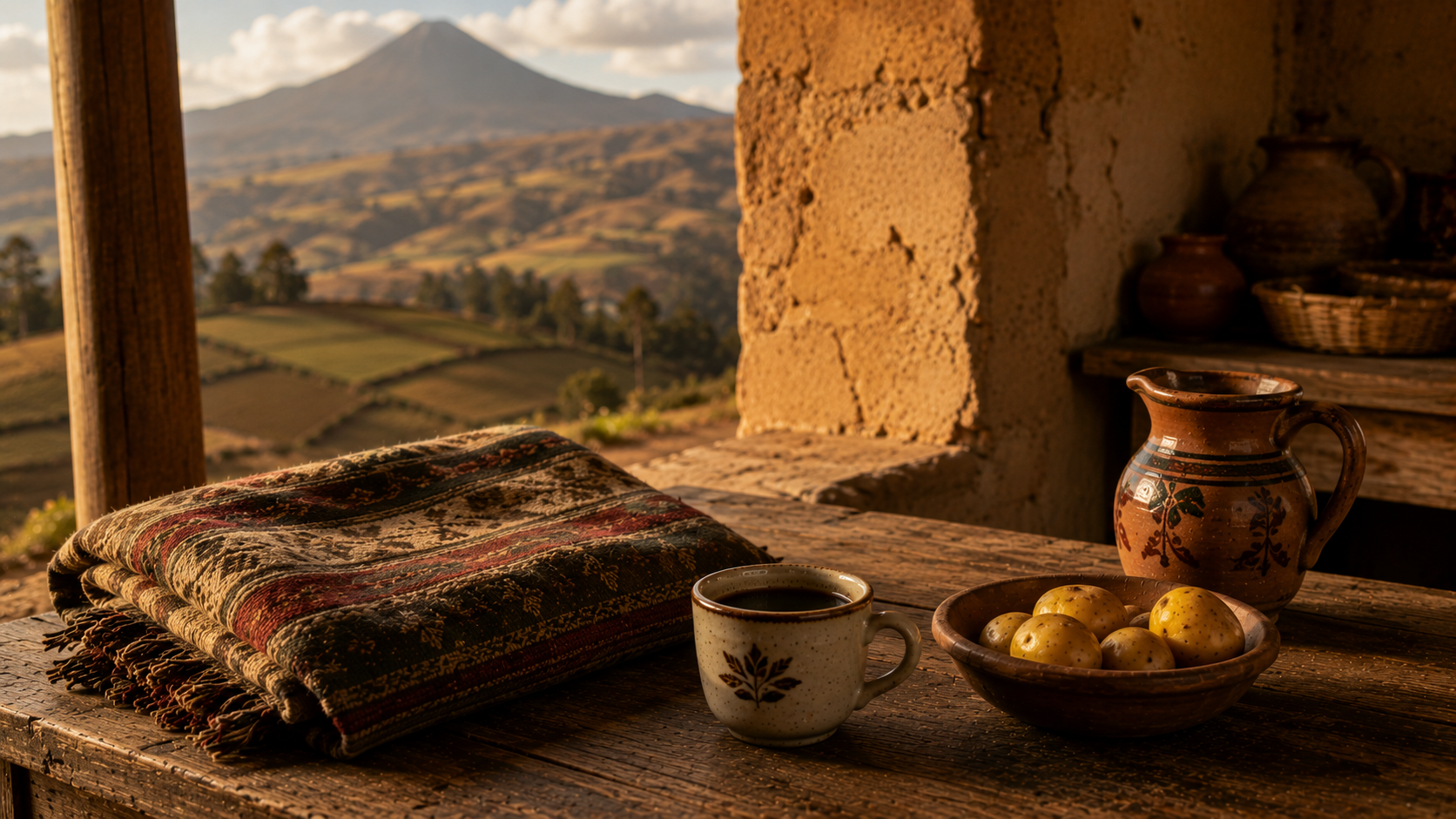
A reference on the Spanish of Ecuador — four sharply different geographic varieties (the highland Spanish of Quito and the Sierra, the coastal Spanish of Guayaquil and the costa, the Amazonian Spanish of the Oriente, and the distinctive Spanish of the Galápagos); the intimate ustedeo system that characterizes Andean Ecuadorian Spanish as one of the canonical examples of that register alongside Costa Rican usage; the Kichwa substrate that has shaped highland speech with extensive vocabulary including wawa, achachay, ñaño, and chuchaqui; the preserved ll/y distinction in some Sierra communities that has been lost in most other Latin American varieties; the Caribbean-influenced coastal Spanish of Guayaquil with its faster pace and consonant reductions; the cultural-linguistic rivalry between quiteños and guayaquileños that has been one of the defining features of Ecuadorian cultural life; the contemporary context including the 2000 dollarization and the ongoing political transformations; and the large recent emigration that has created significant diaspora communities in Spain, the United States, and elsewhere.
A Country of Four Regions
Ecuador divides geographically into four sharply different worlds within a remarkably compact territory. The country is small — roughly the size of Italy or the U.S. state of Colorado — but contains the costa (the coastal plain along the Pacific), the sierra (the Andean highlands), the oriente (the Amazonian lowlands east of the Andes), and the Galápagos (the volcanic archipelago 1,000 kilometers west of the mainland). Each of these regions produces a distinct variety of Ecuadorian Spanish, shaped by different ethnic histories, different indigenous-language substrates, different cultural traditions, and different economic-political histories.
The most consequential division for Ecuadorian Spanish is between the costa and the sierra. Coastal Ecuadorian Spanish, centered on Guayaquil (Ecuador's largest city and economic engine) and including Manta, Esmeraldas, Manabí, and the broader coastal region, exhibits Caribbean-influenced features — softening final consonants, faster speech, the cultural register of the tropical coast. Sierra Ecuadorian Spanish, centered on Quito (the capital) and including Cuenca, Ambato, Riobamba, Loja, and the broader Andean highlands, exhibits classic Andean features — preserved consonants, slower measured speech, intimate ustedeo in family contexts, the cultural register of the highland Andean world.
These two regional varieties are different enough that a learner who masters one will recognize but not fluently produce the other. They are also culturally distinct in ways that go beyond linguistic variation. The rivalry between quiteños (people of Quito and by extension Sierra Ecuadorians) and guayaquileños (people of Guayaquil and by extension coastal Ecuadorians) is one of the defining features of Ecuadorian cultural and political life, expressed through humor, sport (Liga de Quito versus Barcelona Sporting Club), regional pride, and ongoing economic and political tensions. The two cultures share a national identity but maintain strong regional consciousness, and the linguistic differences are part of this broader cultural distinction.
Beyond costa and sierra, Ecuador's Oriente — the Amazonian region — produces its own variety influenced by contact with multiple indigenous languages. The Galápagos — the islands made internationally famous by Darwin — has small population but its own distinct cultural and linguistic features, shaped by migration patterns from the mainland and by the dominant role of conservation and tourism in the regional economy.
This guide treats Ecuadorian Spanish as the family of varieties it actually is, with detailed coverage of the Quito-centered Sierra variety, the Guayaquil-centered coastal variety, and shorter treatments of the Oriente and Galápagos varieties. The treatment honors the genuine differences between these regional varieties and the cultural-political tensions that have shaped them, while addressing the features that mark Ecuadorian Spanish as a coherent national variety distinct from neighboring Colombian, Peruvian, and other Spanishes.
A note on scope. The major regional varieties treated are highland Sierra Spanish (Quito, Cuenca, the highland departments), coastal Spanish (Guayaquil, Manabí, Esmeraldas, the coastal regions), Amazonian Oriente Spanish (Tena, Puyo, Macas, the Amazonian regions), and Galápagos Spanish. Smaller regional varieties and indigenous-bilingual community Spanishes receive shorter treatment.
1. The Pronoun System Across Ecuador
Ecuador has, like Colombia, a pronoun system that varies sharply by region. The major split is between the Sierra (with intimate ustedeo) and the costa (with standard tuteo). The pattern aligns Ecuadorian regional pronoun systems with the broader Andean-Caribbean linguistic geography of northwestern South America.
The systematic treatments of voseo and intimate ustedeo are in The Voseo Guide and The Ustedeo Guide. What follows is the Ecuadorian-specific picture.
1.1 — Sierra Intimate Ustedeo
The Spanish of the Ecuadorian Sierra — Quito, Cuenca, Ambato, Riobamba, Loja, and the broader highland region — is one of the canonical examples of intimate ustedeo described in The Ustedeo Guide. The pattern is more pronounced and more widely used in Sierra Ecuadorian Spanish than in most other intimate-ustedeo regions, comparable in intensity to Costa Rican usage.
Intimate ustedeo in family contexts. Sierra Ecuadorian parents may address their children with usted from infancy. Spouses may use usted with each other. Close family members across generations may use usted in intimate contexts. The pronoun does not signal formality in these uses; it signals warmth, attentiveness, and family tradition.
The pragmatic flexibility. Sierra Ecuadorian speakers move between usted (intimate or formal, depending on context), tú (informal with friends and peers in some contexts), and very occasionally other forms based on the situation. The pattern is genuinely fluid, and the same speaker can use usted with their spouse intimately, tú with a close friend, and usted with a stranger formally, all within a short period.
The pronoun shifts as social signaling. Sierra Ecuadorian speakers shift between pronouns to signal changes in register, mood, or relationship. A parent who normally uses intimate usted with a child may shift to tú in moments of casual playfulness, or back to usted in moments of seriousness or reproach. Each shift carries pragmatic meaning that learners gradually internalize through extensive listening.
Sierra ustedeo with strangers and in formal contexts. Usted also operates in the textbook formal sense — used with elders, in professional contexts, with strangers in formal situations. The same pronoun thus carries either intimate or formal meaning depending on relationship and context, with no morphological distinction between the two uses.
1.2 — Coastal Tuteo
The Spanish of the Ecuadorian coast — Guayaquil, Manta, Esmeraldas, the coastal regions — uses tú as the standard informal pronoun in the textbook pattern. Usted in coastal Ecuadorian Spanish functions in the standard formal sense. Intimate ustedeo is absent or minimal on the coast.
The standard tuteo system. Tú hablas, tú comes, tú vives. Standard conjugations. The familiar imperative and the subjunctive follow standard tuteo patterns.
The coastal informality. Like other Caribbean-influenced varieties, coastal Ecuadorian Spanish moves into the tú register relatively quickly with strangers in informal contexts. The threshold for casual tú use is lower on the coast than in the Sierra.
1.3 — Voseo in Ecuador
Voseo exists in Ecuadorian Spanish but is geographically and socially limited. It appears in some rural Sierra communities, particularly in areas with historical Colombian Paisa contact, and in some pockets elsewhere. Ecuadorian voseo is not the standard informal pronoun in any major urban area; it is regional, marked, and not characteristic of Ecuadorian Spanish more broadly.
For most learners, Ecuadorian voseo is not a primary feature to acquire. A learner specifically focused on certain rural Sierra regions might encounter it; a learner working with general Ecuadorian Spanish does not need to internalize it.
1.4 — The Code-Switching Habit
Ecuadorian Spanish, particularly in the Sierra, exhibits frequent code-switching between pronouns within conversations. A Sierra Ecuadorian speaker may use usted and tú with the same interlocutor across a single conversation, with each pronoun carrying different shadings — closeness, distance, affection, mock formality, seriousness. The flexibility is part of what learners must internalize.
1.5 — Practical Consequences for the Learner
A learner of Ecuadorian Spanish should, depending on the region of focus, master one of two patterns. For Sierra Ecuadorian Spanish (Quito, Cuenca, the highlands), this means mastering tuteo as the foundation and then developing strong awareness of intimate ustedeo as it appears in family and intimate contexts. For coastal Ecuadorian Spanish (Guayaquil, the coast), it means mastering standard tuteo with standard formal usted, since intimate ustedeo is not a primary feature. For general Ecuadorian work, both patterns matter, with awareness that the Sierra-coast distinction is real and consequential.
The Sierra intimate ustedeo is one of the features of Ecuadorian Spanish that most distinguishes it from broader Latin American Spanish, and a learner who develops this register has crossed into a deeper level of engagement with Ecuadorian Sierra culture.
2. The Sound of Ecuador: Three Phonologies
Ecuadorian phonology varies sharply by region. The systematic treatment of regional phonological patterns is in A Pronunciation Guide to Latin American Spanish. What follows is the Ecuadorian-specific picture.
2.1 — Sierra Spanish
The Spanish of Quito, Cuenca, and the Ecuadorian Sierra exhibits classic Andean phonological features:
Preserved s in all positions. Like other Andean varieties, the final s is preserved. Los amigos sounds clearly like los amigos.
The apical s. Sierra Ecuadorian Spanish uses an s with a sharper, slightly whistling quality characteristic of Andean varieties. The feature is recognizable to trained ears as Andean.
Stable consonants throughout. Final and intervocalic consonants are pronounced clearly. Cansado is fully articulated.
Distinctive Sierra intonation. The melodic pattern of Sierra Ecuadorian Spanish is characteristic of highland Andean speech, with rise-and-fall patterns shaped by Kichwa prosodic influence. The intonation distinguishes Sierra Ecuadorian Spanish from coastal Ecuadorian Spanish immediately.
Preserved ll/y distinction in some communities. Sierra Ecuadorian Spanish is one of the regions where the conservative distinction between ll and y is preserved more often than in most other Latin American varieties. Older speakers and rural Sierra speakers may pronounce ll with a sound similar to the Italian gl in figlio, distinct from the y sound. Urban younger speakers tend toward standard yeísmo, but the distinction has survived more robustly in the Ecuadorian Sierra than in many other regions.
Compressed vowels in Kichwa-influenced speech. Heavily Kichwa-Spanish bilingual speakers exhibit some vowel compression reflecting Kichwa's three-vowel system, though the pattern is less pronounced in monolingual urban Sierra speakers.
Kichwa-influenced consonant features in bilingual speech. Some Kichwa-bilingual speakers show consonant features attributable to Kichwa phonology (Kichwa distinguishes plain and aspirated consonants in some varieties), though these features are subtler in monolingual Spanish speakers than in fully bilingual speakers.
Moderate to slow speech rate. Sierra Ecuadorian Spanish moves at a moderate pace, similar to Bogotano Spanish or to Andean Peruvian Spanish.
2.2 — Coastal Spanish
The Spanish of Guayaquil, Manta, Esmeraldas, and the Ecuadorian coast exhibits Caribbean-influenced features:
Softening s in syllable-final position. Coastal Ecuadorian Spanish, like Caribbean varieties generally, softens the s to an h-like breath or drops it entirely. Los amigos becomes loh amigoh or lo amigo. The pattern is less aggressive than in Cuban or Dominican Spanish but more pronounced than in the Sierra.
Softening d in past participles. Cansado becomes cansao. Pescado becomes pescao. Hablado becomes hablao. The pattern aligns coastal Ecuadorian Spanish with Caribbean Spanish.
Some final consonant weakening. Beyond s and d, final consonants weaken in fast coastal speech.
Faster speech rate. Coastal Ecuadorian Spanish moves faster than Sierra Ecuadorian Spanish, with shorter pauses and more linked words.
Standard yeísmo. Unlike the Sierra preservation of the ll/y distinction, coastal Ecuadorian Spanish uses standard yeísmo. Llamar sounds like yamar. Yo sounds like yo in English.
Caribbean-influenced intonation. The melodic pattern of coastal Ecuadorian Spanish shares features with Caribbean varieties, distinct from Sierra Ecuadorian intonation.
Soft j and g before e/i. Close to the English h sound, similar to Mexican and Caribbean varieties.
2.3 — Amazonian (Oriente) Spanish
The Spanish of the Ecuadorian Amazon — Tena, Puyo, Macas, Coca (Francisco de Orellana), and the surrounding regions — has features that distinguish it from both Sierra and coastal varieties:
Mixed phonological features. The Oriente has been settled by migrants from both Sierra and coastal regions, producing a Spanish that blends features from both source varieties.
Indigenous-language influence. The Amazonian Oriente has real indigenous-language presence (Kichwa lowland varieties, Shuar, Achuar, Cofán, and other Amazonian languages), and the resulting Spanish reflects this contact in vocabulary and some phonological features.
Slower speech rate than coastal Spanish, with a distinctive regional intonation.
Regional vocabulary related to the Amazonian environment, riverine culture, and indigenous-language-influenced cultural practices.
2.4 — Galápagos Spanish
The Spanish of the Galápagos Islands (Santa Cruz, San Cristóbal, Isabela, the smaller islands) has been shaped by migration patterns from the mainland and by the dominant role of conservation and tourism. The variety:
- Reflects mainland migration patterns (significant migration from both Sierra and coast, with coastal influence somewhat stronger)
- Has been influenced by sustained contact with international visitors and the tourism economy
- Has some particular vocabulary related to the conservation context (terms for endemic species, scientific terminology)
- Operates in a context where many residents are recent or first-generation migrants from elsewhere in Ecuador
The Galápagos variety is small in speaker numbers but distinctive as a contemporary Ecuadorian Spanish shaped by particular geographic and economic circumstances.
3. The Kichwa Substrate
The Quechua language family, locally known in Ecuador as Kichwa (with various regional varieties), has shaped Sierra Ecuadorian Spanish deeply. Ecuadorian Kichwa is a distinct branch of the Quechua family from Peruvian and Bolivian Quechua, with its own phonological and lexical particularities.
Ecuador has approximately 500,000 to 2 million Kichwa speakers (estimates vary depending on definitions of "speaker"), concentrated in the highland Sierra and with smaller populations in the Amazonian lowlands (where lowland Kichwa varieties — Napo Kichwa, Pastaza Kichwa — are spoken). Kichwa was granted official-language status alongside Spanish in the 2008 Constitution of Ecuador, similar to the broader trends in Andean countries.
3.1 — Kichwa Loanwords
Kichwa has contributed extensive vocabulary to Ecuadorian Spanish:
Words in general Sierra Ecuadorian use:
- Wawa (sometimes spelled guagua) — baby (universal in Sierra Ecuadorian Spanish; wawa is one of the most identifying Kichwa-origin words)
- Achachay — exclamation expressing cold (¡Achachay! — How cold!) Distinctively Sierra Ecuadorian.
- Atatay — exclamation expressing disgust (Sierra Ecuadorian)
- Arrarray — exclamation of physical pain
- Ñañita / ñaña / ñaño — affectionate term for sister/brother (Kichwa origin, used in Sierra Ecuadorian Spanish)
- Mishky — sweet (Kichwa)
- Chimba — across the river, on the other side (Kichwa, used in some Sierra contexts)
- Chuchaqui — hangover (distinctively Ecuadorian, Kichwa origin)
- Cancha (popcorn, also a sports field — Quechua origin shared across Andean Spanish)
- Choclo (corn — Quechua origin)
- Chacra (small farm — Quechua origin)
- Pucho (cigarette — shared with broader Andean usage)
- Carpa (tent — Quechua origin)
Specifically Ecuadorian Kichwa-origin words:
- Mucha — kiss (Kichwa origin, used in Ecuadorian Sierra)
- Ñaño/ñaña — brother/sister (term of close family affection, widespread in Sierra Ecuadorian Spanish)
- Llacta (or llajta) — homeland, town (Kichwa origin)
- Cushqui — money (Kichwa origin, used in some Ecuadorian colloquial speech)
3.2 — Phonological and Syntactic Influence
Like in Peru and Bolivia, Kichwa has shaped Andean Ecuadorian Spanish at the phonological and syntactic levels:
The apical s — discussed in Section 2.1, attributable in part to Kichwa influence.
Compressed vowels in bilingual speakers, reflecting Kichwa's three-vowel system.
Some syntactic patterns in heavily bilingual speakers, including:
- Object-verb word order in some constructions
- The de mi tío su casa pattern (genitive constructions) similar to Andean Peruvian patterns
- Use of evidential or hearsay markers similar to the Peruvian dice pattern
Discourse markers, including the productive use of pues (sometimes shortened) and similar particles attributable in part to Kichwa influence.
Diminutive intensification, with Sierra Ecuadorian Spanish using diminutives very productively, in part reflecting Kichwa's affective morphology.
3.3 — The Sociolinguistic Dimension
The status of Kichwa-influenced Spanish in Ecuador has shifted in recent decades. Historically, Kichwa features in Spanish were stigmatized by coastal and Sierra elites as markers of indigenous origin or rural background. The broader political-cultural emergence of indigenous identity in Ecuador, the political role of the CONAIE (the Confederation of Indigenous Nationalities of Ecuador), and the 2008 Constitution that recognized Kichwa and Shuar as official languages alongside Spanish, have shifted these dynamics. Contemporary attitudes toward Kichwa-influenced Spanish are more varied than they once were, with real cultural valorization in some contexts.
For learners, Kichwa-origin features in Sierra Ecuadorian Spanish are part of contemporary speech and are increasingly recognized as legitimate features of the variety rather than as deviations from a Spanish standard.
4. The African Inheritance
Ecuador has Afro-Ecuadorian populations concentrated primarily in two regions: the coastal province of Esmeraldas (in the northwest, bordering Colombia) and the Chota Valley in the highlands (in the northern Sierra). Both communities have shaped local Spanish and have produced distinctive cultural traditions.
4.1 — Esmeraldas
Esmeraldas province has one of the largest Afro-descendant populations in the Spanish-speaking Americas as a proportion of regional population. The Spanish of Esmeraldas exhibits some features attributable to African linguistic inheritance, alongside the broader coastal phonological patterns:
- Distinctive intonation patterns
- Some particular vocabulary
- The marimba music tradition of Esmeraldas, recognized as UNESCO Intangible Cultural Heritage, with its own musical and lyrical Spanish
4.2 — The Chota Valley
The Chota Valley in the northern Sierra has a smaller but culturally significant Afro-Ecuadorian community, with distinctive cultural practices and a particular Spanish that combines Sierra phonological features with some African-influenced cultural register.
4.3 — Afro-Ecuadorian Cultural Contribution
The Afro-Ecuadorian inheritance in vocabulary, music, and cultural register is recognized in Ecuadorian cultural life. Contemporary writers like Antonio Preciado, musicians, and cultural figures have brought Afro-Ecuadorian voices into the national conversation in ways that were less visible in earlier periods.
5. Distinctive Ecuadorian Vocabulary
Ecuadorian Spanish has developed an extensive vocabulary that is recognizably Ecuadorian. Some vocabulary is shared with neighboring countries (particularly Colombia and Peru); some is specifically Ecuadorian.
5.1 — Pan-Ecuadorian Vocabulary
- Chévere — great, cool. Universal across Ecuador.
- Bacán — great, cool. Used productively, particularly in Sierra contexts.
- Pana — friend, buddy. Used in both Sierra and coast, shared with Venezuelan Spanish.
- Ñaño / ñaña — brother/sister (Kichwa origin, used affectionately in Sierra Spanish particularly).
- Mijo / mija — my son/daughter, used affectionately for close relations or younger people, similar to Mexican usage.
- Plata — money (standard across Ecuador, shared with broader Andean Spanish).
- Lucas — used colloquially for money, particularly larger amounts.
- Estar misio — to be broke (Andean usage shared with Peru).
- Foco — light bulb (shared with various Latin American varieties; the standard bombilla is also used).
- Carro — car (rather than the Iberian coche).
- Departamento — apartment (Spanish-language standard, though Ecuadorian usage emphasizes this term).
- Chuta / chu — discourse marker expressing surprise or emphasis (distinctively Ecuadorian — ¡Chuta! expresses surprise).
- Verás (used as an attention-getting marker, particularly Sierra)
- Ya mismo — right away (Sierra Ecuadorian usage particularly).
- Está más bien — used as a polite or softened version of "está bien" — distinctively Ecuadorian Sierra.
5.2 — Sierra Vocabulary
- Chuchaqui — hangover (Kichwa origin, ubiquitous in Sierra Ecuadorian Spanish)
- Achachay — exclamation expressing cold (Sierra Spanish)
- Atatay — exclamation expressing disgust (Sierra Spanish)
- Guagua / wawa — baby (Sierra and Andean usage)
- Mishky — sweet, used in Sierra contexts (Kichwa origin)
- Pelado / pelada — young person, kid (Sierra usage; also used in Caribbean Colombian Spanish)
- Chuso / chusa — kid (Sierra usage)
- Estar pilas — to be alert, sharp, ready (distinctively Ecuadorian Sierra)
- Sale — okay, deal (in agreement, similar to Mexican sale)
5.3 — Coastal Vocabulary
- Mono / mona — used in coastal Ecuadorian speech to refer to people from the Sierra (sometimes affectionate, sometimes derogatory depending on context)
- Serrano / serrana — used by coastal Ecuadorians to refer to Sierra people (and by Sierra people for self-identification)
- Costeño / costeña — the coastal demonym, used by Sierra and coastal speakers
- Guayaco / guayaca — informal demonym for people from Guayaquil
- Verás — used differently on the coast than in the Sierra
- Bacán — used heavily on the coast in casual speech
- Loco — used affectionately in coastal speech as a term for a friend
- Pana — friend, used heavily on the coast
- Habla — used as a casual greeting on the coast (¡Habla pana! — Hey buddy!)
5.4 — Cultural and Food Vocabulary
Ecuadorian Spanish carries extensive food vocabulary, distinct between Sierra and coast:
Sierra cuisine vocabulary:
- Cuy — guinea pig, the traditional Andean roasted dish
- Locro — the Sierra potato-and-cheese soup
- Hornado — the slow-roasted pork
- Llapingachos — the Sierra potato-cheese cakes
- Mote — hominy corn (Kichwa origin, central to Sierra cuisine)
- Aji — chile pepper, with regional Ecuadorian variations
- Tamales and humitas — corn-based dishes with regional variations
Coastal cuisine vocabulary:
- Ceviche — Ecuadorian-style ceviche, distinct from Peruvian ceviche
- Encebollado — the coastal fish-and-onion soup (sometimes called the national dish)
- Bolón — the green plantain ball
- Patacón — the fried plantain (shared with Caribbean varieties)
- Encocado — coconut-based stew, particular to Esmeraldas coastal cuisine
- Tigrillo — the green-plantain dish from the coast and Loja region
5.5 — Vocabulary of Contemporary Ecuador
The contemporary political-economic context has produced distinctive vocabulary:
- Dolarización — the 2000 dollarization of the Ecuadorian economy (Ecuador uses the U.S. dollar as its official currency)
- Sucre — the former Ecuadorian currency (replaced by the dollar)
- Correísta — supporters of Rafael Correa, who served as president from 2007 to 2017
- Anti-correísta — opposition to Correa
- Forajidos — historically the term used for protestors during the political upheavals of recent decades
- CONAIE — the Confederation of Indigenous Nationalities of Ecuador, politically important
- Various other terms specific to contemporary Ecuadorian politics
6. The Diminutive in Ecuadorian Spanish
As covered in The Diminutive in Latin American Spanish, Andean varieties use diminutives intensively. Sierra Ecuadorian Spanish is among the most diminutive-rich varieties in Latin America, comparable to Mexican and Andean Peruvian Spanish.
The Sierra Ecuadorian diminutive functions for affection, softening, politeness, and the broader pragmatic patterns described in the systematic guide. Mamita, papito, abuelita, ñañita, hijita, casero/caserita — these terms saturate Sierra Ecuadorian family and intimate speech.
The diminutive pattern combines with the intimate ustedeo register to produce a Sierra Ecuadorian Spanish that is particularly warm and softened. ¿Cómo está usted, mamita? between a daughter and her mother in Quito captures a register of care and affection that integrates the pronoun system, the diminutive, and the broader Sierra pragmatic norms.
Coastal Ecuadorian Spanish uses diminutives at a more moderate frequency, closer to Caribbean patterns. The diminutive is present but less pervasive than in Sierra speech.
7. Pragmatics: Two Ecuadorian Styles
Sierra and coastal Ecuadorian Spanish operate by markedly different pragmatic conventions. The differences contribute to the broader cultural distinction between quiteños and guayaquileños.
7.1 — Sierra Pragmatic Style
Layered formality and politeness. Sierra Ecuadorian Spanish, particularly in Quito and Cuenca, maintains layered formality in many contexts. Use of usted (in either formal or intimate function), of titles (Don, Doña, Don Doctor, professional titles), and of polite address conventions is consistent. The threshold for casual tú use with strangers is higher than on the coast.
The intimate ustedeo register. As discussed in Section 1, the Sierra intimate ustedeo produces a distinctive register where formality and intimacy combine. The same usted form carries different meanings, and Sierra speakers navigate this fluidly.
Indirection. Sierra Ecuadorian speech often operates through indirection, suggestion, and softened request. Direct refusal can feel impolite; preferred conventions allow for face-saving.
Andean warmth. Despite the formality, Sierra Ecuadorian speech carries real warmth through diminutives, terms of endearment, the affectionate use of intimate ustedeo, and the cultural patterns of Sierra family life.
The serrano stereotype and self-image. Sierra Ecuadorians sometimes accept and sometimes reject the stereotype of being "more formal," "more reserved," "more traditional" than coastal Ecuadorians. The stereotype shapes both how Sierra speakers operate and how they are perceived.
7.2 — Coastal Pragmatic Style
Less elaborate formality. Coastal Ecuadorian Spanish operates with less elaborate formality than Sierra Spanish. Greetings can be more compressed; the threshold for casual tú use is lower.
Caribbean warmth. Coastal Ecuadorian speech has warm pragmatic norms — quick movement toward casual intimacy, use of affectionate terms of address with relative strangers, the warm physical and verbal greetings characteristic of Caribbean varieties.
Directness. Coastal Ecuadorian speakers are often more direct than Sierra speakers in many contexts. The famous guayaquileño directness can feel brusque to Sierra speakers and is sometimes a source of regional joke and tension.
Humor and wit. Coastal Ecuadorian speech values verbal play and humor, including the famous coastal sense of irreverent humor (choteo) shared with Caribbean cultural traditions.
The costeño/guayaco stereotype and self-image. Coastal Ecuadorians sometimes embrace the stereotype of being "more open," "more direct," "more entrepreneurial" than Sierra Ecuadorians. The stereotype shapes both how coastal speakers operate and how they are perceived.
7.3 — Inter-Regional Code-Switching
Ecuadorians who move between Sierra and coast frequently adjust their pragmatic register based on context. A Sierra Ecuadorian working in Guayaquil may relax formal conventions; a coastal Ecuadorian in Quito may elevate formal conventions. The flexibility is part of being Ecuadorian and operating across the country's regional cultural landscape.
The cultural-political tensions between regions sometimes make these adjustments more loaded than they would be in less divided countries. The rivalry is genuine, the regional pride is genuine, and pragmatic adjustments can carry social meaning. But routine inter-regional travel and communication is common, and most Ecuadorians navigate the differences successfully.
8. Regional Variation Within Ecuador
Detailed coverage of the major Ecuadorian regional varieties:
8.1 — Quito and the Northern Sierra
The Spanish of Quito, the capital, and the northern Sierra (Imbabura, Carchi, Pichincha province beyond Quito itself). Quito Spanish carries cultural-political prestige as the variety of national government, media, and education centered in the highlands. The quiteño identity is strong, with deep Sierra regional pride.
The Quito variety exhibits all the Sierra features: preserved consonants, apical s, Kichwa substrate influence, distinctive intonation, intimate ustedeo, formal politeness register.
8.2 — Cuenca and the Southern Sierra
The Spanish of Cuenca, Ecuador's third-largest city and a colonial-era cultural center, and the southern Sierra provinces (Azuay, Cañar, Loja). Cuenca Spanish is sometimes characterized by cuencanos as the most refined Ecuadorian Spanish — the cultural-historical capital of conservative tradition and academic life.
Cuencano Spanish shares core Sierra features with Quito Spanish but with distinctive regional pronunciation (some particular consonant patterns, characteristic intonation) and vocabulary specific to the southern Sierra.
8.3 — Loja
The southernmost Sierra province, Loja sits geographically and culturally between the Ecuadorian Sierra and northern Peruvian Sierra. Lojano Spanish shares Sierra features but with some particularities reflecting the transitional location, including some vocabulary related to the coffee culture of Loja and to the cultural ties with northern Peru.
8.4 — Central Sierra (Ambato, Riobamba, the Cotopaxi region)
The central Sierra provinces (Tungurahua, Chimborazo, Cotopaxi) share core Sierra features. Ambato is the major commercial city of the central Sierra; Riobamba has real cultural importance.
8.5 — Guayaquil and the Central Coast
Ecuador's largest city and the economic engine of the country. Guayaquileño Spanish exhibits all the coastal features and carries cultural-political weight as the variety of the country's commercial center. Guayaquileño regional identity is strong, with deep pride in coastal cultural distinctness from the Sierra.
8.6 — Manabí and the Central Coast
The province of Manabí, with cities like Manta, Portoviejo, Bahía de Caráquez, has a coastal Ecuadorian Spanish with distinctive regional features and a strong cultural identity. Manabita Spanish is associated with the famous coastal cuisine (encebollado, ceviche, bollo, viche) and with a particular cultural register.
8.7 — Esmeraldas (Coast)
The northern coastal province of Esmeraldas, with its large Afro-Ecuadorian population, has a Spanish that combines coastal features with the African-influenced cultural register discussed in Section 4. The marimba musical tradition and the Afro-Ecuadorian cultural identity shape the variety.
8.8 — Coastal South (El Oro)
The southern coastal province of El Oro, bordering Peru, has features that bridge Ecuadorian coastal Spanish with northern Peruvian coastal Spanish. The variety is recognizably Ecuadorian but with some patterns reflecting the borderland position.
8.9 — The Amazonian Oriente
The Spanish of the Amazonian region, including Tena, Puyo, Macas, and Coca, with mixed Sierra-coastal heritage and real indigenous-language influence from multiple Amazonian languages.
8.10 — Galápagos
The Spanish of the islands, shaped by migration patterns and the tourism economy as discussed in Section 2.4.
9. The Cultural Register
Ecuador has produced significant cultural work across literature, music, and visual arts, with smaller international recognition than some larger Latin American countries but real cultural depth.
9.1 — Literature
Jorge Icaza (1906-1978), the foundational Ecuadorian indigenist novelist, whose Huasipungo (1934) brought the experience of indigenous Andean peasants into Ecuadorian and broader Latin American literature.
Pablo Palacio (1906-1947), an early avant-garde Ecuadorian writer whose experimental short stories and novels (Un hombre muerto a puntapiés, Débora) prefigured later Latin American literary developments.
Joaquín Gallegos Lara (1909-1947) and Demetrio Aguilera Malta (1909-1981), part of the Grupo de Guayaquil that produced foundational coastal Ecuadorian literature focused on regional and social themes.
Adalberto Ortiz (1914-2003), Afro-Ecuadorian poet and novelist whose work brought Afro-Ecuadorian experience into national literature.
Jorge Enrique Adoum (1926-2009), poet and novelist whose work spans Ecuadorian and broader Latin American literary developments.
Iván Égüez (born 1944), contemporary novelist.
María Fernanda Ampuero (born 1976), contemporary Ecuadorian writer whose short stories and essays have reached wide international audience.
Mónica Ojeda (born 1988), one of the most internationally recognized contemporary Ecuadorian writers, whose novels and short stories have been translated into multiple languages.
Ecuadorian literature has been continuously productive, with contemporary writers continuing to produce work that engages with the country's regional and ethnic complexity.
9.2 — Music
Sierra musical traditions include the sanjuanito, pasacalle, yumbo, and other traditional forms, with characteristic instruments including the bandolín, rondador (panpipes), and bombo.
Coastal musical traditions include the pasillo (a melancholic ballad form shared with Colombia), marimba music of Esmeraldas (UNESCO-recognized), and various regional forms.
Música tropical and popular contemporary music — Ecuadorian artists have worked across genres, with various contemporary figures reaching national and regional audiences.
9.3 — Visual Arts
Ecuador has a notable tradition in visual arts, with figures including Oswaldo Guayasamín (1919-1999), one of the most internationally recognized Latin American painters of the twentieth century. Guayasamín's work, which addressed indigenous Andean experience and broader human suffering, brought Ecuadorian visual art to global audiences.
9.4 — Cultural Themes
Ecuadorian cultural identity has been shaped by:
- The Inca and pre-Incan civilizations of the highlands
- The Spanish colonial period and the role of Quito as a colonial cultural center (the Quito School of art is internationally recognized)
- The complex twentieth-century history, including periods of political turbulence and military rule
- The indigenous-political emergence of recent decades, with CONAIE playing a major role
- The contemporary economic context, including dollarization and the petroleum-dependent economy
- The large recent emigration of Ecuadorians to Spain, the United States, and elsewhere, creating significant diaspora communities
10. For the Learner
A few practical paths into Ecuadorian Spanish:
Choose a regional focus. Sierra Ecuadorian Spanish (Quito, Cuenca, Andean highlands) is one focus; coastal Ecuadorian Spanish (Guayaquil, Manabí, Esmeraldas) is the other. The differences are real enough that focused study pays off, particularly given the intimate ustedeo system in the Sierra and the Caribbean-influenced features on the coast.
For Sierra Ecuadorian Spanish, internalize intimate ustedeo. This is the feature that most distinguishes Sierra Ecuadorian Spanish from broader Latin American Spanish. A learner who acquires the intimate ustedeo register has crossed into a deeper level of engagement with Sierra Ecuadorian culture.
Listen to traditional and contemporary music. Sierra traditions (sanjuanito, pasacalle) for highland exposure, coastal pasillo and marimba for coastal exposure, contemporary Ecuadorian popular music for current speech patterns.
Read contemporary Ecuadorian fiction. Mónica Ojeda's novels and short stories, María Fernanda Ampuero's writing, and other contemporary writers provide accessible engagement with current Ecuadorian Spanish.
Watch Ecuadorian films. Contemporary Ecuadorian cinema has been growing in international recognition, with films like Pescador, Mejor no hablar de ciertas cosas, and others providing listening practice across registers.
Find an Ecuadorian tutor. As discussed in the italki review, italki provides access to Ecuadorian tutors. For Sierra Ecuadorian Spanish, tutors from Quito or Cuenca; for coastal, tutors from Guayaquil or Manta. Both varieties are well represented among available tutors.
Travel to Ecuador. Quito provides exposure to Sierra Ecuadorian Spanish; Guayaquil to coastal; the smaller Sierra cities (Cuenca, Loja) to regional Sierra varieties; the coast (Manta, Esmeraldas) to regional coastal varieties; the Oriente (Tena, Puyo) to Amazonian Spanish; the Galápagos to that distinct variety. Ecuador's relatively small size makes multi-region travel manageable, allowing exposure to several varieties in a single trip.
Engage with the regional rivalry. The quiteño-guayaquileño rivalry is part of Ecuadorian cultural life. Understanding the rivalry, its expressions, and its cultural meaning helps learners navigate inter-regional interaction with awareness.
Acquire the Kichwa-origin vocabulary. Even a learner not aiming to learn Kichwa benefits from familiarity with the major Kichwa-origin words in Sierra Ecuadorian Spanish — wawa, achachay, ñaño, chuchaqui, mishky, and others are part of everyday Sierra Spanish.
Be patient with the regional differences. Ecuadorian Spanish in its full regional diversity requires time to internalize. Build regional ears gradually rather than expecting fluency across all varieties immediately.
Engage with the contemporary political-cultural context. Recent Ecuadorian history — dollarization, the rise of indigenous political movements, the various political transformations — has shaped contemporary Ecuadorian Spanish. Engaged understanding involves awareness of this context.
A Closing Note
Ecuadorian Spanish, in its four geographic varieties — Sierra, coast, Oriente, Galápagos — and in its strong regional cultural identities, is one of the rich Latin American varieties. The country is geographically small but linguistically rich, with the intimate ustedeo system that distinguishes Sierra Ecuadorian Spanish as one of the canonical examples of that register, the Caribbean-influenced coastal Spanish that connects Ecuador to the broader Caribbean linguistic world, the Kichwa substrate that has shaped highland speech, the Afro-Ecuadorian inheritance in Esmeraldas and Chota, and the cultural production that has produced Guayasamín in art, Icaza and Ojeda in literature, and rich musical traditions in both Sierra and coastal forms.
The cultural-political rivalry between Sierra and coast — between quiteños and guayaquileños, between Sierra Spanish and coastal Spanish — is one of the defining features of Ecuadorian cultural life. It is also one of the features that produces Ecuador's distinctive complexity. The country exists in multiple cultural registers simultaneously, with each region having its own integrity and its own contribution to the national whole.
For a learner, Ecuadorian Spanish offers real engagement with regional diversity within a manageable country size. The investment in learning Ecuadorian Spanish — whether focused on Sierra or coastal varieties — provides access to a country with deep indigenous heritage, distinctive cultural production, and a contemporary moment that continues to evolve in interesting ways. The smaller international recognition of Ecuadorian culture compared to that of larger Latin American countries does not reflect the cultural depth or the linguistic richness; it reflects the country's relative size and the accidents of which Latin American cultures have achieved global visibility.