Dominican Spanish: A Learner's Guide
Dominican Spanish is the most phonologically reduced Spanish in the Americas — extensive loss of final consonants, the distinctive Cibao r-to-i transformation, the merengue and bachata musical traditions that have spread the variety globally, and the large diaspora in the United States.

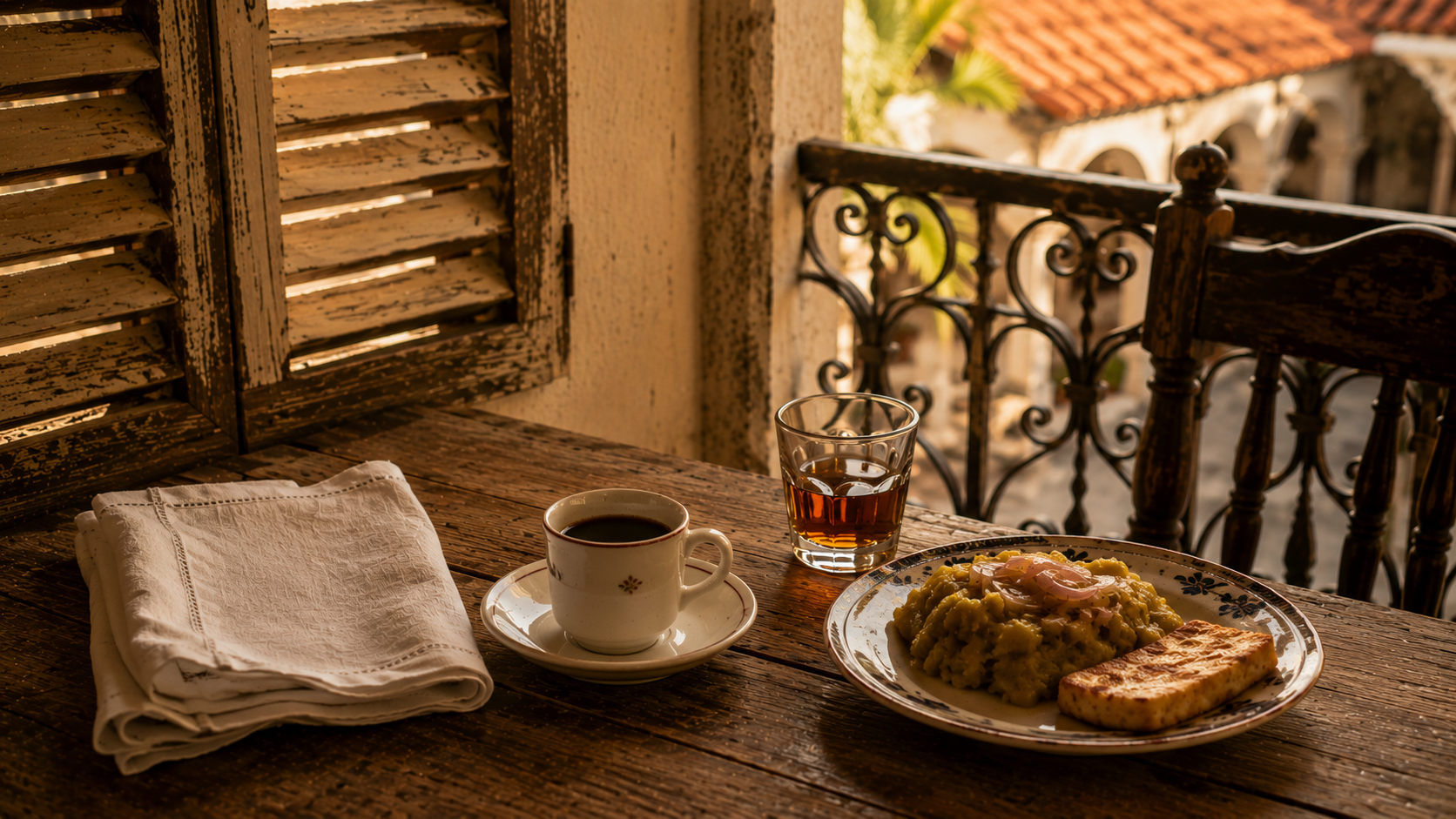
A reference on the Spanish of the Dominican Republic — the most phonologically reduced Spanish in the Americas, with extensive loss of final consonants and dramatic syllable compression that takes Caribbean reduction further than any other major variety; the expressed-subject-pronoun feature that distinguishes Dominican syntax from other tuteo varieties; the deep African inheritance from colonial-era slavery including the rich Afro-Dominican cultural-religious traditions; the particularly visible Taino linguistic inheritance from the indigenous Caribbean since Hispaniola was the first major Spanish colonization site; the complex relationship with Haiti and Haitian Creole, particularly in the border regions; the merengue and bachata musical traditions that have spread Dominican Spanish globally; and the large diaspora particularly to New York's Washington Heights that has made Dominican Spanish one of the most heard varieties in the contemporary United States.
A Spanish at the Edge of Reduction
A learner who has spent time with Mexican or Bogotano Spanish — varieties where consonants stay where they are written, where the s of plurals announces itself, where speech moves at a measured pace — and then encounters Dominican Spanish for the first time will find themselves at the far end of a phonological spectrum. The Spanish of Santo Domingo, Santiago, La Romana, and the broader Dominican Republic takes Caribbean phonological reduction further than any other major variety. Final consonants disappear. Words run together. Syllables compress. Grammatical information that the textbook insists is essential — the s that distinguishes singular from plural, the r that ends infinitives, the d that marks past participles — simply is not pronounced in much of casual Dominican speech.
The result is a Spanish that operates by different rules than the Spanish a learner has been studying. Buenos días, in Dominican casual speech, can become bueno día. Los amigos están aquí can become lo amigo tan aquí. Tú estás cansado can become tu ta cansao. The Spanish is there, but it has been processed through a phonological system that strips away the consonants the learner has been taught to expect and that condenses syllables in patterns that take getting used to. Learners frequently report that Dominican Spanish is the Caribbean variety they find most challenging to follow on first contact, and the reports are accurate.
This phonological reduction is not chaos. It follows rules that Dominican speakers have absorbed in childhood and apply automatically. The information that the textbook says the consonants carry has not been lost; it has migrated to context, to other words in the sentence, to syntactic structure, and to specific markers that Dominican Spanish uses where other varieties might not need them. Once a learner internalizes these patterns, Dominican Spanish reveals itself as a coherent, expressive, and rhythmically beautiful variety. Until then, it can feel impenetrable.
This guide is meant as a reference for the journey from impenetrability to fluency in Dominican Spanish. It treats the variety as the coherent system it is, with detailed attention to the phonological patterns that distinguish it, to the vocabulary that has developed in distinctive Dominican forms, to the cultural register that has produced merengue and bachata and a notable literary tradition, to the diaspora dimension that has spread Dominican Spanish far beyond the island, and to the complex relationships — with Haiti next door, with the United States across the Caribbean, with the broader Caribbean Spanish-speaking world — that have shaped the variety.
A note on scope. Dominican Spanish in this guide refers primarily to the Spanish spoken in the Dominican Republic, with attention to regional varieties (the Cibao region of the north, the capital region, the southern regions, the eastern regions). It also addresses, in Section 10, the Dominican Spanish of the diaspora, particularly in the New York metropolitan area, which has developed real differences through sustained English-language contact.
1. The Pronoun Core
Dominican Spanish is a tuteo variety. Tú is universal as the second-person singular informal pronoun. Vos is absent in productive use. Usted functions in the textbook formal sense.
The Dominican tuteo system is standard. Tú hablas, tú comes, tú vives. Standard conjugations. The familiar imperative and the subjunctive follow standard tuteo patterns.
The formal-intimate distinction works as the textbook describes. Tú with intimates; usted in formal contexts. The Dominican Republic does not have intimate ustedeo as discussed in The Ustedeo Guide. The textbook formal/informal binary holds cleanly.
The Caribbean warmth and the casual tú register. Like Cuban and Puerto Rican Spanish, Dominican Spanish moves into the tú register quickly with relative strangers in informal contexts. The threshold for casual tú use is low compared to, say, Bogotano or Sierra Ecuadorian Spanish.
1.1 — The Distinctive Feature: Expressed Subject Pronouns
One of the most distinctive grammatical features of Dominican Spanish is the much more frequent expression of subject pronouns than in other varieties. Standard Spanish is a pro-drop language — subject pronouns are typically omitted because verb conjugation indicates the subject. Tengo hambre is sufficient; yo tengo hambre is more emphatic. Tienes que ir works; tú tienes que ir adds emphasis.
Dominican Spanish, however, expresses subject pronouns far more frequently than other varieties, even when the verb conjugation makes the pronoun grammatically unnecessary. Tú tienes que ir (with explicit tú) is common in Dominican Spanish even in contexts where another variety would simply say tienes que ir. The same applies across pronouns — yo, él, ella, nosotros, and ellos/ellas appear in Dominican speech in contexts where they would be omitted in Mexican or Spanish Spanish.
Linguists have offered several explanations for this feature. One hypothesis connects it to the heavy phonological reduction of Dominican Spanish: when the s and other final consonants drop, the verb endings that normally distinguish subject (hablas versus habla) become identical or nearly so (habla versus habla). The expressed subject pronoun compensates for this loss of distinction, ensuring that listeners can identify the subject. Another hypothesis connects the feature to African linguistic influence, since several West African languages have grammatical structures that require expressed subject pronouns. The two hypotheses are not mutually exclusive, and both may contribute.
For learners, the practical implication is that Dominican Spanish sounds slightly different from textbook Spanish at the level of pronoun usage. Saying tú tienes que ir in Dominican contexts is natural; saying it in Madrid contexts would sound slightly emphatic or slightly foreign.
1.2 — Practical Consequences for the Learner
A learner of Dominican Spanish should master standard tuteo as the foundation and use usted in formal contexts as the textbook describes, while developing awareness of the expressed-subject-pronoun pattern as part of authentic Dominican syntax. The textbook formal/informal binary holds cleanly without intimate ustedeo, which keeps the pronoun grammar itself simple — the work of adjustment is mostly in the syntactic habit of expressing the pronouns that other varieties would drop.
2. The Sound of the Dominican Republic
Dominican phonology takes Caribbean features further than any other major variety. The systematic treatment of Caribbean phonological patterns is in A Pronunciation Guide to Latin American Spanish. What follows is the Dominican-specific picture.
2.1 — The Disappearing S
The final s in Dominican Spanish disappears more aggressively than in any other major Spanish variety. In casual Dominican speech, the s is almost entirely absent at the end of syllables and at word endings, except in the most careful or formal speech.
Before consonants. Estos hombres becomes eto hombre. Estás bien becomes ta bien. The s is not aspirated to h (as in some Cuban contexts); it is simply gone.
At word endings. Los amigos becomes lo amigo. Buenos días becomes bueno día. Las mujeres becomes la mujere. The plural marker has migrated entirely to context — the article (los/las) does carry plural information in writing, but in speech even the article often loses its s, leaving listeners to infer plurality from context.
Between vowels. The s between vowels is more often preserved than in other Caribbean varieties, though even here some weakening occurs in very fast speech.
The cumulative effect is dramatic. A Dominican sentence in casual speech can contain almost no s sounds at all, even when the written form would contain many. This is one of the features that makes Dominican Spanish particularly challenging for learners on first contact.
2.2 — The Disappearing Final R
Dominican Spanish has a distinctive treatment of the final r — the r that ends infinitives (hablar, comer, vivir) and that appears at the end of many other words (amor, señor, mar). In casual Dominican speech, this final r often disappears entirely or transforms in distinctive ways.
In the Cibao region (the northern region around Santiago), the final r often transforms to i. Mujer becomes mujei. Hablar becomes hablai. Comer becomes comei. Amor becomes amoi. This transformation is one of the most identifying features of Cibaeño Spanish.
In the capital region and the south, the final r often softens to l or simply drops. Mujer becomes mujel or muje. Hablar becomes hablal or habla. This r → l pattern is shared with some Puerto Rican Spanish.
In educated and formal speech, the final r is preserved more often than in casual speech. The reduction is associated with casual register and with regional speech rather than with all Dominican Spanish in all contexts.
2.3 — The Disappearing Final D
The final d in Dominican Spanish often disappears entirely. Verdad becomes verdá (with the same vowel-only ending as in other varieties) or simply verda. Universidad becomes universidá. Ciudad becomes ciudá.
The intervocalic d, particularly in past participles, drops universally in casual speech. Cansado becomes cansao. Pescado becomes pescao. Hablado becomes hablao. The pattern is the same as in Cuban Spanish but more uniformly applied in Dominican speech.
2.4 — Other Consonant Reductions
Beyond the s, r, and d, Dominican Spanish weakens consonants in many other positions, particularly in fast speech. Final consonants of various sorts can drop. Consonants in unstressed syllables can compress or disappear. The cumulative effect is that Dominican Spanish has the most reduced consonantal structure of any major Spanish variety.
2.5 — The Nasal Hum
Word-final n in Dominican Spanish, like in other Caribbean varieties, takes on a hum similar to the ng in English sing. Pan sounds closer to pang. Buen sounds closer to bueng. The pattern is consistent with broader Caribbean Spanish.
2.6 — Standard Yeísmo
Dominican Spanish uses standard yeísmo. Ll and y merge to the standard y sound, close to the English y in yes. Llama sounds like yama. Yo sounds like yo in English.
2.7 — Soft J and G
The Dominican realization of j and g before e/i is soft, close to the English h sound. Jefe sounds close to hefe. Gente sounds close to hente. The pattern aligns Dominican Spanish with Cuban, Mexican, and other Caribbean-Mexican varieties.
2.8 — The Distinctive Dominican Intonation
Dominican Spanish has a characteristic melodic intonation that distinguishes it from Cuban or Puerto Rican Spanish. The pattern is sometimes described as having a particular rise-and-fall quality with distinctive rhythmic patterning. The intonation is one of the markers that Dominicans use to identify each other, and one of the features that international audiences recognize through Dominican music (merengue particularly).
2.9 — The Speed
Dominican Spanish is often described as among the fastest of Latin American varieties. The combination of consonant reductions (which compress syllables), the fluid linking of words, and the rapid pace produces speech that can feel overwhelming to learners trained on slower varieties.
2.10 — The Practical Consequence
For a learner, the phonological reduction of Dominican Spanish requires the longest comprehension-building period of any Latin American variety. Where a learner moving from Mexican Spanish to Cuban Spanish might need three to six months of dedicated listening to develop reliable comprehension, the same learner moving to Dominican Spanish might need six months to a year. This is not a sign of failure; it is the practical reality of working with the most phonologically reduced Spanish variety.
3. The Taino Inheritance
The Dominican Republic, along with the rest of the Caribbean, has a distinctive Taino linguistic inheritance from the indigenous people who inhabited the islands at the time of Spanish arrival in 1492. Although the Taino population was decimated within the first century of colonization, Taino vocabulary entered Caribbean Spanish (and from there, Spanish globally) in ways that are particularly visible in Dominican Spanish.
3.1 — Taino Loanwords in Dominican Spanish
Many of the Taino-origin words now part of general Spanish vocabulary entered the language through the Spanish colonization of Hispaniola (the island shared by the Dominican Republic and Haiti):
- Hamaca (hammock)
- Tabaco (tobacco)
- Huracán (hurricane)
- Canoa (canoe)
- Iguana
- Maíz (corn)
- Yuca (cassava)
- Mamey (the fruit)
- Caoba (mahogany)
- Sabana (savanna)
- Cacique (chief)
- Barbacoa (barbecue, originally a wooden frame for roasting)
- Maraca (the percussion instrument)
- Manatí (manatee)
- Caimán (caiman)
- Batata (sweet potato)
Many of these words are now standard Spanish vocabulary used throughout the Spanish-speaking world, but their origin is in the Taino language of Hispaniola.
3.2 — Place Names
Dominican place names map the Taino linguistic inheritance throughout the country: Quisqueya (the Taino name for the island, still used as a poetic name for the Dominican Republic), Higüey, Bonao, Bayaguana, Maguana, Bani, Yaque (one of the major rivers), Cibao (the northern region), Yaguate, Jarabacoa, Constanza, and many others. The cultural-geographic identity of the country is mapped in Taino-origin names that residents use daily.
3.3 — The Taino Cultural Reference
Beyond vocabulary, Taino cultural reference appears in Dominican Spanish in identity discussions, in cultural-political discourse, and in the broader sense of Hispaniola as the first encounter site between European and indigenous American civilizations. The cultural-political emergence of indigenous identity in recent decades has reinforced this awareness, though full Taino linguistic survival has not occurred in the way that Quechua or Aymara have survived in the Andean countries.
4. The African Inheritance
The Dominican Republic received large numbers of enslaved Africans during the colonial period (though fewer than Cuba in absolute terms — colonial Hispaniola's economy was less sugar-intensive than later Cuban plantations), and the resulting Afro-Dominican communities have shaped Dominican culture and Spanish in significant ways.
4.1 — African-Origin Vocabulary
Many of the African-origin words discussed in the Cuban Spanish profile also appear in Dominican Spanish, sometimes with Dominican-specific variations:
- Mondongo (tripe dish) — possibly African origin
- Bemba — used in similar senses to Cuban Spanish
- Cachimba (pipe for smoking)
- Various words related to music and dance
Specifically Dominican African-influenced vocabulary includes terms related to the Afro-Dominican musical and cultural traditions.
4.2 — Afro-Dominican Cultural Traditions
The Afro-Dominican cultural presence is visible in:
Música popular dominicana — the broader category that includes merengue and other Dominican popular music traditions, with deep African rhythmic foundations.
Palo — traditional Afro-Dominican music played at religious and cultural ceremonies.
Gagá — religious music tradition shared with Haitian Vodou (the Rara tradition in Haiti), found particularly in border communities.
The religion of the 21 Divisions — an Afro-Dominican religious tradition with African and Catholic syncretic elements.
These cultural traditions carry their own vocabulary and have shaped the broader Dominican cultural register.
4.3 — The Phonological Question
Some linguists have proposed that the heavy consonant reduction in Dominican Spanish — particularly the disappearing s and the disappearing final r — is connected to African linguistic influence during the colonial period. The hypothesis is contested. Some scholars argue that the Caribbean Spanish phonological pattern is primarily attributable to Andalusian inheritance (Andalusian Spanish also reduces final consonants), with African influence playing a smaller role. Others argue that African phonological patterns reinforced existing Andalusian tendencies, producing the dramatic reduction characteristic of Dominican Spanish today. The question is academic and may not be fully resolvable. What is clear is that Dominican Spanish today bears the marks of centuries of contact among Spanish, African, and Taino linguistic systems, regardless of which specific phonological features came from which source.
4.4 — The Color of Speech
The Dominican Republic has historically had complex relationships between race and identity, and these intersect with linguistic variation. African-influenced features in Dominican Spanish have sometimes been associated with particular Afro-Dominican communities and have carried social meaning in ways that are complicated by the country's history. These dynamics continue to evolve, and contemporary Dominican Spanish operates in a context where Afro-Dominican cultural identity has become more publicly affirmed than in earlier periods.
5. Distinctive Dominican Vocabulary
Dominican Spanish has developed an extensive vocabulary that is recognizably Dominican. Some vocabulary is shared with other Caribbean varieties; some is specifically Dominican.
5.1 — Core Dominican Vocabulary
A selection of high-frequency Dominican words a learner will encounter:
- Vaina — thing. Highly productive, used for almost anything. Esa vaina (that thing). ¡Qué vaina! (What a thing!) Shared with Venezuelan and Caribbean Colombian Spanish but particularly central to Dominican casual speech.
- Chin — a little bit. Un chin (a little bit). Distinctively Dominican.
- Tíguere (sometimes spelled tiguere) — a sharp, street-smart person; can be admiring or pejorative depending on context. Ese muchacho es un tíguere (that kid is street-smart). One of the most distinctively Dominican words.
- Vacano / bacano — cool, great. Shared with other Latin American varieties (treated in Bacán — A Word That Crossed Continents).
- Chévere — great, cool. Pan-Caribbean usage.
- Compai — compadre, friend, buddy. Distinctively Dominican shortened form.
- Mi pana — my friend. Pan-Caribbean.
- Mami / papi — used affectionately for women/men in everyday speech (not only in romantic contexts). Universal in Dominican Spanish, as in other Caribbean varieties.
- Coño — extremely productive interjection. ¡Coño! expresses surprise, frustration, emphasis. Universal in Caribbean Spanish.
- Carajo — used as emphasis. ¡Carajo!
- Diablo — used as exclamation. ¡Diablo, qué calor!
- Cuca — vulgar term (use with awareness of register)
- Jevo / jeva — boyfriend/girlfriend. Shared with Cuban usage.
- Tipo / tipa — guy/girl, dude, person. Pan-Latin American but particularly common in Dominican casual speech.
- Concho — a shared taxi or informal public transit. Tomar un concho (take a shared taxi). Distinctively Dominican.
- Guagua — bus. Shared with Cuban Spanish; the standard autobús is also used.
- Bola — ride, hitchhiking. Coger bola (to hitchhike). Distinctively Dominican.
- Pana — friend. Pan-Caribbean.
- Manín — kid, dude (term of address). Distinctively Dominican.
- Fulanito / fulanita — generic name for an unnamed person (similar to John/Jane Doe).
5.2 — Distinctive Dominican Slang
Dominican Spanish has a particularly rich and rapidly evolving slang vocabulary:
- Klk / qué lo qué — "what's up?", "what's going on?" The greeting ¿qué lo qué? (often texted as klk) is one of the most identifying Dominican casual greetings.
- Toy bien — "I'm good" (with the toy reflecting the estoy → ehtoy → toy reduction characteristic of Dominican phonology)
- Dame luz — "give me light" (give me information, fill me in)
- Tá to — "everything's good" (extreme phonological reduction of está todo)
- Más na' — "nothing more, that's all" (reduction of más nada)
- Estar arrebatado — to be intoxicated, particularly on alcohol or drugs
- Boche — quarrel, argument
- Bochinche — gossip, drama
- Jablador / jabladora — talker, gossip (with the dropped intervocalic consonant characteristic of Dominican reduction)
- Aficao — wired, hooked on something
- Embaucao — confused, deceived
- Mangú — the iconic Dominican breakfast dish of mashed green plantains
5.3 — Food Vocabulary
Dominican Spanish carries an extensive food vocabulary:
- Mangú — the iconic mashed green plantain breakfast dish, sometimes served as part of los tres golpes (with fried cheese, salami, and eggs)
- Sancocho — the multi-meat traditional stew
- La Bandera — "the Flag," the iconic national dish of rice, beans, and meat
- Plátano maduro — fried sweet plantain
- Tostones — fried green plantain slices
- Mofongo — the mashed green plantain dish (shared with Puerto Rican cuisine)
- Bollo de yuca — the cassava roll
- Casabe — the cassava bread of Taino origin, still made in the Dominican Republic
- Asopao — soupy rice dish
- Mamajuana — the traditional drink of rum, wine, herbs, and bark
- Chimichurri / chimi — the Dominican fast-food burger or sandwich (not the Argentine sauce of the same name)
- Café — coffee, served strong and small in the Dominican Republic
5.4 — Vocabulary of the Diaspora Experience
The large Dominican diaspora, particularly to New York, has produced vocabulary specific to the migration experience:
- Dominicanyork — a Dominican living in New York or one with New York connections, sometimes derogatory in the Dominican Republic itself
- Allá (over there) — used to refer to the United States from the perspective of the homeland
- Aquí (here) — used to refer to the Dominican Republic from the diaspora perspective
- Various English-derived loanwords and code-switching patterns in diaspora Spanish
6. The Diminutive in Dominican Spanish
As covered in The Diminutive in Latin American Spanish, Caribbean varieties use diminutives at moderate frequency. Dominican Spanish uses diminutives less intensively than Mexican or Andean Spanish but more than the most reduced Caribbean varieties.
The Dominican diminutive functions for affection and softening within the standard pragmatic patterns. Mamita, papito, abuelita, hijita — affectionate diminutives are common in family contexts. Cafecito, cervecita — diminutives in domestic and social contexts function as in other Caribbean varieties.
Some Dominican usage includes the -ico suffix in eastern regions (similar to Cuban eastern usage and to Costa Rican usage), though -ito is the dominant suffix nationally.
7. Pragmatics: The Dominican Style
Beyond grammar and vocabulary, Dominican Spanish has pragmatic features that distinguish it from other Caribbean varieties.
Warmth and rapid intimacy. Dominican speech is famously warm, with quick movement toward casual closeness even with relative strangers. Mami, papi, mi amor, mi vida, mi corazón — affectionate terms appear in everyday speech across genders and relationships. The pragmatic norm is closer engagement than in formal Mexican or Bogotano speech.
Verbal exuberance. Dominican speech is often characterized by verbal energy, expressiveness, and exuberance. Conversations among friends operate at higher volume and with more rapid turn-taking than in more measured varieties. This is not aggression; it is the conversational rhythm of Dominican casual speech.
Humor and wit. Dominican speech values verbal play, double meanings, and humor. The Dominican comic tradition is rich and shapes how everyday conversation operates.
Physical greetings. Dominican greetings tend toward extensive physical contact — kisses on the cheek, hugs, shoulder pats. The minimal transactional greeting can feel cold in Dominican social contexts.
The conversational management of phonological reduction. Because Dominican Spanish reduces consonants so dramatically, speakers and listeners use various conversational strategies to ensure comprehension — repetition, rephrasing, confirmation requests, contextual elaboration. A learner who participates in Dominican conversation will find these strategies natural and useful, and will develop their own versions over time.
The use of vaina. Vaina operates in Dominican speech as one of the most productive content words. Esa vaina, otra vaina, cualquier vaina, ninguna vaina — the word can fill almost any noun role and carries pragmatic flexibility that learners must internalize. The frequency of vaina in Dominican casual conversation is high enough that learning to use it naturally is part of acquiring the variety.
8. Regional Variation Within the Dominican Republic
The Dominican Republic divides into several major regional varieties.
8.1 — The Capital (Santo Domingo)
The Spanish of Santo Domingo and the surrounding capital region is the dominant variety in national media and the implicit standard. The variety exhibits all the features described above — heavy phonological reduction, expressed subject pronouns, Caribbean intonation, the distinctive Dominican vocabulary. The capital variety carries cultural-political prestige as the standard.
8.2 — The Cibao (Northern Region)
The northern region of the Dominican Republic, anchored by Santiago de los Caballeros (the country's second-largest city), has its own distinctive variety known as Cibaeño Spanish. The most identifying feature is the r → i transformation discussed in Section 2.2: mujer → mujei, hablar → hablai. The Cibao region also has its own strong regional pride, with cultural distinctness from the capital that is reflected in linguistic features and cultural register.
Cibaeño Spanish is one of the most recognizable regional varieties in Latin American Spanish, immediately identifiable to other Dominicans and to other Latin Americans who have encountered the variety.
8.3 — The South (San Juan, Barahona, the southern coast)
The southern region of the Dominican Republic, anchored by San Juan de la Maguana and the southern coastal cities, has its own regional variety. The south has historically been more rural and less economically developed than the capital and Cibao regions, and some traditional features have been preserved more strongly in southern speech.
8.4 — The East (La Romana, Higüey, the eastern coast)
The eastern region, with a large tourism economy (Punta Cana and the surrounding resort area) and Higüey as the major cultural center, has its own variety. Features include some shared with the south and some particular to the east.
8.5 — The Northwest (Monte Cristi, Dajabón, the Haitian border)
The northwestern region, including the cities of Monte Cristi and Dajabón along the Haitian border, has features influenced by sustained contact with Haitian Creole. The bilingual border zone has produced its own particular speech patterns, including some vocabulary and pragmatic features specific to the border communities.
8.6 — The Border with Haiti
The Dominican-Haitian border is one of the most linguistically complex zones in Latin America. Haitian Creole and Spanish are in constant contact in border communities. Dominican-Haitian communities exist on both sides of the border, with people frequently bilingual in Spanish and Haitian Creole. The contemporary linguistic situation in border communities — shaped by complex political tensions, migration patterns, and trade — produces a distinctive contact zone that has its own particular character.
9. The Cultural Register
The Dominican Republic has produced major cultural traditions, particularly in music, plus a notable literary tradition.
9.1 — Music
Merengue is the iconic Dominican musical genre, declared part of UNESCO Intangible Cultural Heritage in 2016. Merengue has been the dominant Dominican popular music since the 19th century and has spread globally, becoming one of the most internationally recognized Latin American musical traditions. Major merengue figures include Johnny Ventura, Wilfrido Vargas, Juan Luis Guerra (perhaps the most internationally recognized Dominican musician, with extensive crossover appeal), and many others.
Bachata is the other major Dominican musical genre. Originally rural and stigmatized as low-class music, bachata emerged from the marginalized urban areas of Santo Domingo in the mid-20th century and has become internationally popular, particularly through artists like Aventura, Romeo Santos, Prince Royce, and others who have brought bachata into the global Latin music mainstream. Contemporary bachata has wide international audiences and continues to evolve.
Salsa — the Dominican Republic is one of the major salsa-producing countries, with real contributions to the broader Latin music tradition.
Dembow — the contemporary Dominican electronic music genre that has emerged in recent decades, with growing influence on broader Latin urban music.
Reggaetón — Dominican artists have been part of the broader Latin urban music movement.
For learners, Dominican music provides extensive exposure to the language across registers and historical periods. Merengue and bachata especially offer accessible introduction to Dominican Spanish through their wide international availability.
9.2 — Literature
Pedro Mir (1913-2000), the foundational twentieth-century Dominican poet, whose Hay un país en el mundo (1949) and other works established a major Dominican poetic tradition.
Juan Bosch (1909-2001), the prolific Dominican writer and statesman, whose short stories and novels have been important in Dominican literature.
Joaquín Balaguer (1906-2002), the long-time Dominican political figure who was also a productive writer, including literary criticism and historical works.
Rita Indiana (born 1977), one of the most internationally recognized contemporary Dominican writers, whose novels (Papi, La mucama de Omicunlé) have been translated into multiple languages and have brought Dominican Spanish to international audiences.
Junot Díaz (born 1968), Dominican-American writer who won the Pulitzer Prize for Fiction in 2008 for The Brief Wondrous Life of Oscar Wao. Díaz writes primarily in English but with substantial Dominican Spanish, particularly Dominican-American Spanish from the New York diaspora. His work has brought Dominican linguistic and cultural reality to global English-language audiences.
Julia Alvarez (born 1950), Dominican-American writer whose novels (How the García Girls Lost Their Accents, In the Time of the Butterflies) have been internationally significant in bringing Dominican history and culture to English-language audiences.
Frank Báez (born 1978), contemporary poet.
Contemporary Dominican and Dominican-American literature continues to produce significant work engaging with the country's history, the diaspora experience, and the complex realities of contemporary Dominican life.
9.3 — Cinema
Dominican cinema has been growing in recent decades, with films like Sambá (2017), Carpinteros (2017), Cocote (2017), and others reaching international festival audiences.
9.4 — Cultural Themes
Dominican cultural identity has been shaped by:
- The pre-Columbian Taino civilization
- The Spanish colonial period, beginning with Christopher Columbus's arrival in 1492 (Hispaniola was the first major Spanish colonization site in the Americas)
- The complex independence history (independence from Spain in 1821, immediate annexation by Haiti, independence from Haiti in 1844, brief return to Spain, full independence in 1865)
- The long Trujillo dictatorship (1930-1961) and its aftermath
- The complex twentieth-century political history including civil war and U.S. military intervention
- The large emigration to the United States, particularly New York, beginning in the 1960s and continuing
- The relationship with Haiti and the complex history of Hispaniola
- The contemporary tourism economy and the role of the country as a major Caribbean destination
10. The Spanish of the Dominican Diaspora
A defining feature of contemporary Dominican Spanish is the large diaspora, particularly to the United States. Dominican migration to the U.S. accelerated in the 1960s following the end of the Trujillo dictatorship and has continued, with established communities now in New York (particularly Washington Heights and the Bronx), Massachusetts (Lawrence, Boston area), Rhode Island (Providence), New Jersey, Florida (particularly Miami), and elsewhere.
The Dominican-American population in the United States now numbers approximately 2.5 million, representing the fifth-largest Latino group in the country and one of the largest Spanish-speaking communities outside of Latin America.
10.1 — Dominican-American Spanish
Dominican Spanish in the United States has undergone various adaptations:
English contact patterns. Dominican-Americans operate in sustained English-language contact, producing code-switching patterns, English loanwords integrated into Spanish, and bilingual modes of expression that distinguish Dominican-American Spanish from island Spanish.
Generational variation. First-generation Dominican-Americans typically maintain Dominican Spanish patterns relatively closely. Second-generation Dominican-Americans (born in the U.S. to Dominican parents) often grow up bilingual but with English as their dominant language; their Spanish carries Dominican features but operates differently than island Spanish. Third-generation Dominican-Americans often have weaker Spanish-language competence, though many maintain heritage-language connections.
Cultural maintenance through music and food. Despite generational language shift, Dominican-American communities have maintained strong cultural identity through merengue, bachata, food traditions, and family-community structures. These cultural practices keep Dominican Spanish in active use even where it might otherwise be eroded.
New York specifically. Washington Heights in upper Manhattan has been called "the Capital of the Dominican Republic outside the Dominican Republic" because of the concentration of Dominican population. The neighborhood, along with parts of the Bronx, has the largest concentration of Dominican-Americans, and Dominican Spanish is heard in everyday neighborhood interactions. The cultural and linguistic patterns of New York Dominican Spanish have influenced broader Dominican Spanish through media and through the back-and-forth movement of people between the island and the diaspora.
10.2 — The Junot Díaz Effect
The work of Junot Díaz, particularly The Brief Wondrous Life of Oscar Wao, has brought Dominican-American Spanish to international audiences in ways that no previous work has. Díaz's distinctive prose, mixing English narrative with Spanish phrases, slang, and cultural references, has shaped how Dominican-American identity is represented in global literary culture. His influence on subsequent Dominican-American and broader Latino writers has been considerable.
10.3 — Practical Consequences for the Learner
A learner of Dominican Spanish in 2026 must consider whether their interest is in:
- Island Dominican Spanish — the variety as spoken in the Dominican Republic
- Dominican-American Spanish — the variety as spoken in U.S. diaspora communities
- Both — recognizing that they have developed real differences
For most general learners, focusing on island Dominican Spanish provides the foundation, with awareness that diaspora communities maintain enough of the original variety that this orientation translates across contexts.
11. For the Learner
A few practical paths into Dominican Spanish:
Plan for an extended comprehension-building period. Dominican Spanish is among the most demanding Latin American varieties to develop comprehension for. A learner moving from a less-reduced variety should expect six months to a year of dedicated focused listening before casual Dominican speech becomes reliably accessible.
Start with music. Merengue and bachata provide condensed exposure to Dominican Spanish across registers and emotional textures. Juan Luis Guerra's music, in particular, offers relatively clear Dominican Spanish with sophisticated lyrics — excellent for learners building comprehension.
Watch Dominican films. Contemporary Dominican cinema provides listening practice across regional and class varieties, with films like Cocote, Sambá, and others.
Read contemporary Dominican fiction. Rita Indiana, Frank Báez, and other contemporary writers provide accessible engagement with current Dominican Spanish. Junot Díaz and Julia Alvarez offer the Dominican-American diaspora perspective in English with substantial Spanish embedded.
Find a Dominican tutor. As discussed in the italki review, italki provides access to Dominican tutors. Both island-based tutors and U.S.-based Dominican tutors are available. For learners focused on island Dominican Spanish, choose tutors based in the Dominican Republic. For learners focused on diaspora Dominican Spanish, consider tutors with U.S. connections.
Travel to the Dominican Republic. Santo Domingo provides exposure to the standard capital variety; Santiago to Cibaeño Spanish; the southern and eastern regions to their respective varieties. The country has well-developed tourism infrastructure that makes travel manageable.
Engage with the Dominican-American communities in the United States, if accessible. New York's Washington Heights, Boston-area Lawrence, and other Dominican-American communities have established cultural infrastructure (restaurants, music venues, religious communities) where Spanish is actively used.
Internalize the phonological patterns. The disappearing s, the disappearing r, the dropped d — these are not impediments to overcome but features to internalize. Once the ear adjusts, the patterns become natural rather than challenging.
Acquire the core vocabulary. Vaina, chin, tíguere, ¿qué lo qué?, concho, and the other distinctively Dominican words are part of everyday speech and acquiring them is part of acquiring the variety.
Be aware of the complex social dimensions. Dominican Spanish operates in a context shaped by the country's complex history with Haiti, with the United States, with class and race dynamics. Engaged understanding of the language involves awareness of this context.
Acknowledge the rhythmic patterning. Dominican Spanish has rhythm — particularly visible in merengue but present in everyday speech as well. The rhythm is one of the pleasures of the variety once the ear adjusts.
A Closing Note
Dominican Spanish, in its phonologically reduced beauty, its rhythmic patterning, its dense vocabulary, its rich cultural production through merengue and bachata, its complex relationship with Haiti and with the United States diaspora, and its distinctive grammatical features — is one of the great varieties of Caribbean Spanish. The variety is challenging for learners, requiring more dedicated comprehension-building than most other Latin American varieties, but rewards the investment with access to a culture of exceptional warmth, musicality, and creativity.
The country has produced some of the most internationally significant Caribbean music — merengue and bachata both now global phenomena — and a notable literary tradition both on the island and in the diaspora. The Dominican-American community in the United States has produced one of the most significant Spanish-language diasporas in the country, with Washington Heights serving as a kind of second Dominican capital. The complex relationships with Haiti, with the colonial past, with the United States, and with the broader Caribbean shape the contemporary Dominican Republic in ways that continue to evolve.
For a learner, Dominican Spanish offers exceptional engagement with one of the most distinctive Caribbean varieties. The work, as always, is what the work always is: time, patience, attention, exposure, the company of native speakers, and the willingness to engage with a variety whose phonology takes longer to internalize than most. Dominican Spanish, in all its reduced consonants and expanded vocabulary, repays the learner who commits to it with one of the most warmly inhabited Spanishes in the Americas.