Bolivian Spanish: A Learner's Guide
Bolivian Spanish is the Spanish of the most multilingual country in the Spanish-speaking world — thirty-six recognized indigenous languages alongside Spanish, the Aymara-influenced highlands, the Quechua-influenced valleys, the Camba voseo of the lowlands.

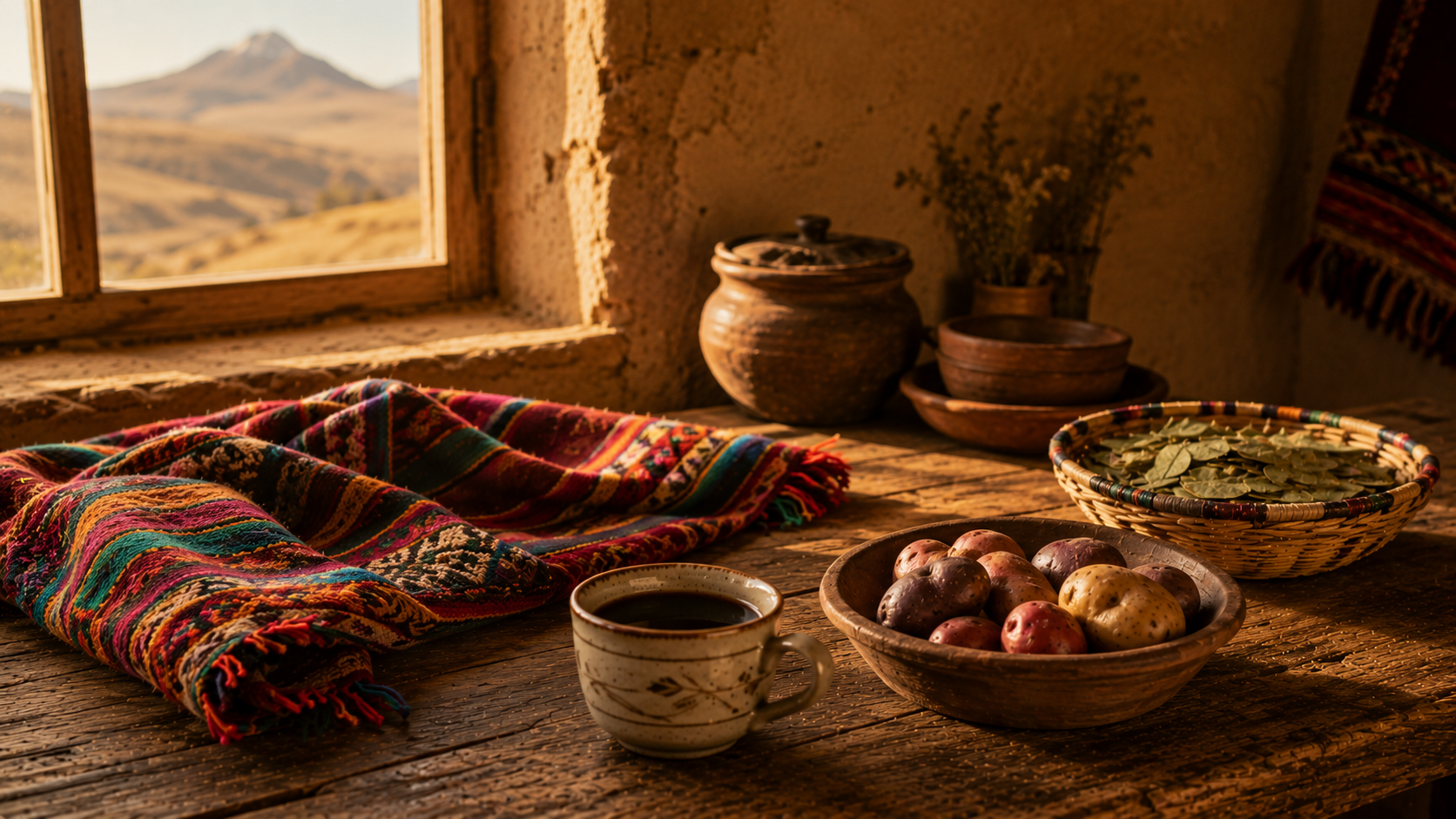
A reference on the Spanish of Bolivia — the most multilingual Spanish-speaking country in the world, with thirty-six recognized indigenous languages alongside Spanish under the 2009 Constitution; the deep highland-lowland divide between the Aymara-influenced altiplano of La Paz, El Alto, Oruro, and Potosí and the Camba lowlands of Santa Cruz with their distinctive voseo and cultural identity; the Quechua-rich valleys of Cochabamba, Sucre, and Tarija where bilingual urban life continues across generations; the deep Aymara presence in La Paz and El Alto that produces some of the most bilingually-shaped Spanish in the Americas; the eastern Camba voseo distinct from the highland-valley tuteo and aligned with neighboring Paraguayan and Argentine voseo patterns; the rich folkloric musical tradition and the internationally recognized Carnaval de Oruro; the political-cultural transformation that has accompanied the political emergence of indigenous Bolivia in the twenty-first century; and the contemporary moment that continues to navigate the camba-colla divide and the country's distinctive multilingual reality.
A Country Where Spanish Is One Language Among Many
A learner who arrives in Bolivia expecting to find Spanish in the simple sense of "the national language" will find a more complicated linguistic reality than in nearly any other Spanish-speaking country. Bolivia recognizes thirty-seven official languages — Spanish plus thirty-six indigenous languages — under the 2009 Constitution that followed the political transformation of the country since the election of Evo Morales in 2006. While many of these recognized indigenous languages are small, several have large speaker populations. Aymara has approximately two million speakers, primarily in the western highlands. Quechua has approximately two and a half million speakers, primarily in the valleys and parts of the highlands. Guaraní has perhaps fifty thousand speakers in the eastern lowlands. Smaller indigenous languages survive in various regions, some with active speaker communities, some endangered.
The result is that Bolivia has the highest proportion of indigenous-language speakers of any Spanish-speaking country — approximately thirty-five to forty percent of the population speaks an indigenous language as either a first language or a productive second language, with bilingualism widespread. In La Paz or El Alto, conversations in Aymara are everyday occurrences. In Cochabamba or Sucre, Quechua surrounds the visitor. In rural eastern lowland communities, Guaraní operates as a living language. Spanish in Bolivia exists alongside these languages rather than displacing them, and the Spanish that has developed in this multilingual environment carries the marks of sustained, contemporary contact with indigenous languages in ways that no other national variety does.
This multilingual context shapes Bolivian Spanish at every level. The phonology reflects Aymara and Quechua influences. The vocabulary draws extensively from indigenous languages, more so even than Peruvian Spanish. The grammar shows syntactic patterns attributable to indigenous-language contact. The pragmatic conventions of speech reflect the cultural patterns of communities where Spanish is one available language among others rather than the assumed default.
Bolivia also divides geographically and culturally in ways that shape its linguistic landscape. The highlands (el altiplano) — anchored by La Paz, the seat of government, and El Alto, the rapidly grown adjacent city now home to about a million people, with major mining centers in Oruro and Potosí — are dominated by Aymara culture and language, with large mestizo populations. The valleys (los valles) — anchored by Cochabamba (the country's third-largest city), Sucre (the constitutional capital), Tarija — are predominantly Quechua-influenced, with Cochabamba in particular being one of the most Quechua-Spanish bilingual major cities in the Americas. The lowlands (los llanos / el oriente) — anchored by Santa Cruz de la Sierra (the country's largest city by population), with the surrounding tropical and subtropical departments of Beni, Pando, and parts of Tarija — have a distinctly different cultural identity, with large European descendant populations, less indigenous-language presence in urban areas (though strong in rural eastern communities), and stronger cultural ties to neighboring Argentina, Paraguay, and Brazil than to the Andean rest of the country.
This highland-valley-lowland division is more than geographic. The cultural-political divide between kollas (highland and valley people, often used to include all Andean Bolivians) and cambas (lowland people, particularly those from Santa Cruz) is one of the central features of contemporary Bolivian society, with ongoing political tensions and clearly distinguishable cultural identities. The two communities speak meaningfully different Spanish — different phonology, different vocabulary, different pronoun systems (with voseo in the lowlands and tuteo with intimate ustedeo in the highlands), and different cultural references. A learner of "Bolivian Spanish" must decide which Bolivia they are studying, and the choice has real consequences.
This guide treats Bolivian Spanish as the family of varieties it actually is, with detailed coverage of the highland (paceño/altiplano) variety, the valley (cochabambino/sucrense/chuquisaqueño) variety, and the lowland (cruceño/camba) variety. The treatment honors the genuine differences between these regional varieties while also addressing the features that mark Bolivian Spanish as a coherent national variety distinct from neighboring Peruvian, Argentine, Paraguayan, and Chilean Spanishes.
A note on scope. The major regional varieties treated are highland Spanish (La Paz, El Alto, Oruro, Potosí — with attention to the Aymara substrate), valley Spanish (Cochabamba, Sucre, Tarija — with attention to the Quechua substrate), and lowland Spanish (Santa Cruz, the eastern departments). Smaller regional varieties and indigenous-bilingual community Spanishes receive shorter treatment.
1. The Pronoun System Across Bolivia
Bolivia has, like Colombia and Venezuela, a pronoun system that varies sharply by region. The major split is between the highland-valley tuteo (with intimate ustedeo in some Andean contexts) and the lowland voseo. This makes Bolivia one of the countries where multiple pronoun systems coexist within a single national identity.
The systematic treatments of voseo and intimate ustedeo are in The Voseo Guide and The Ustedeo Guide. What follows is the Bolivian-specific picture.
1.1 — Highland and Valley Tuteo
The highlands (La Paz, El Alto, Oruro, Potosí) and the valleys (Cochabamba, Sucre, Tarija) use tú as the standard informal second-person pronoun. Vos is generally absent in productive use, though it appears occasionally in some contexts. The pronoun system aligns with Peruvian Spanish, with much of Colombian and Ecuadorian Spanish, and with the broader Andean-Pacific Latin American tuteo zone.
The Bolivian highland-valley tuteo system is standard. Tú hablas, tú comes, tú vives. Standard conjugations. The familiar imperative uses standard tuteo forms. The subjunctive is the standard tuteo subjunctive.
The formal-intimate distinction. Usted in formal contexts works as the textbook describes. However, as in Andean Peru, parts of highland and valley Bolivia exhibit intimate ustedeo in family contexts, particularly among older speakers and in more traditional families.
1.2 — Highland Intimate Ustedeo
Like Andean Peru, the Bolivian highlands and valleys exhibit some intimate ustedeo in family and intimate contexts. The pattern is most pronounced in:
- Older generations, particularly grandparents addressing grandchildren or vice versa
- More traditional families, particularly those with strong indigenous-cultural identity
- Some rural Andean Bolivian communities
The pattern is less universal than in Costa Rica or in the Colombian Paisa region, but it is part of the highland linguistic landscape. A learner working in highland Bolivia should develop awareness of intimate ustedeo as it appears in family contexts.
1.3 — Lowland Voseo
The Spanish of Santa Cruz, Beni, Pando, and the eastern lowland regions uses voseo. This pattern is shared with neighboring Paraguayan Spanish, with Argentine Spanish across the southern border, and historically with broader Río de la Plata-adjacent voseo zones.
Camba voseo follows the standard voseo pattern. Vos hablás, vos comés, vos vivís, vos sos. Final-syllable stress. The forms are similar to Rioplatense voseo and to Paraguayan voseo.
The camba voseo is universal in the region. Unlike Zulian voseo in Venezuela (which is socially marked and not the unmarked informal pronoun), camba voseo is the standard informal pronoun in the eastern Bolivian lowlands. Tú in lowland Bolivia sounds foreign or affected; vos is the natural form.
The subjunctive. Camba voseo typically uses the tuteo subjunctive (que vos hables) rather than the voseo subjunctive (que vos hablés), similar to the Argentine pattern. The voseo subjunctive appears in informal speech but is less standardized.
The imperative. Camba imperative follows the standard voseo pattern: hablá, comé, viví, andá (the suppletive imperative of ir), sé (from ser), hacé, poné, salí, vení, decí.
1.4 — The Camba-Colla Linguistic Divide
The use of voseo by cambas and tuteo by kollas is one of the most visible features of the Bolivian linguistic landscape. The pronoun choice immediately marks regional and cultural identity. A speaker who uses vos hablás identifies as camba (or at least as eastern lowland); a speaker who uses tú hablas identifies as kolla or as from elsewhere.
This pronoun difference is part of a broader cultural-political divide that has been one of the central features of contemporary Bolivian society. The two communities historically have had political tensions, with Santa Cruz at times pursuing greater regional autonomy and the highland-based government pursuing centralization. The linguistic divide is one expression of the broader cultural divide.
For a learner, this means that pronoun choice in Bolivia carries social meaning. A learner using tú in Santa Cruz will sound like a kolla or like a foreigner; a learner using vos in La Paz will sound like a camba or like an Argentine. Neither is necessarily a problem, but the social meaning is real.
1.5 — Practical Consequences for the Learner
A learner of Bolivian Spanish should, depending on the region of focus, master one of the two systems. For highland-valley Bolivia, this means tuteo with formal usted, plus awareness of intimate ustedeo in family contexts. For lowland Bolivia (Santa Cruz), it means voseo following the standard pattern described in The Voseo Guide. For general Bolivian work, mastering both systems is necessary, since the country contains both.
2. The Sound of Bolivia: Three Phonologies
Bolivian phonology varies by region in patterns shaped by the highland-valley-lowland geography and by indigenous-language contact. The systematic treatment of regional phonological patterns is in A Pronunciation Guide to Latin American Spanish. What follows is the Bolivian-specific picture.
2.1 — Highland (Altiplano) Spanish
The Spanish of La Paz, El Alto, Oruro, and Potosí exhibits features characteristic of Andean Spanish, with the additional influence of Aymara that distinguishes it from Andean Peruvian Spanish.
Preserved s throughout. The final s is preserved in all positions, like other Andean varieties. Los amigos sounds clearly like los amigos.
The distinctive apical s. The highland Bolivian s shares the sharper, more whistling quality of other Andean varieties — the apical s produced with the tip of the tongue. The feature is particularly pronounced in highland Bolivian speech.
Stable consonants. Final and intervocalic consonants are pronounced clearly. Cansado is fully articulated.
Compressed vowels. Highland Bolivian Spanish, particularly in Aymara-influenced speech, exhibits compressed unstressed vowels reflecting Aymara phonological influence. Aymara has a three-vowel system (rather than Spanish's five), which has shaped how Aymara-Spanish bilingual speakers produce Spanish vowels — the distinctions between e and i, and between o and u, can be less sharply maintained in heavily Aymara-influenced speakers.
Aymara-influenced consonant features. Heavily Aymara-influenced speakers exhibit features attributable to Aymara phonology — Aymara distinguishes plain, aspirated, and ejective consonants, and traces of this distinction can appear in Aymara-Spanish bilingual speakers' Spanish.
Distinctive intonation. Highland Bolivian Spanish has a characteristic melodic intonation shaped by Aymara prosodic patterns. The pattern is recognizable to other Spanish speakers as Andean Bolivian.
Moderate to slow speech rate. Highland Bolivian Spanish moves at a moderate pace, slower than coastal Caribbean varieties.
2.2 — Valley Spanish
The Spanish of Cochabamba, Sucre, Tarija, and the surrounding valley regions shares the core Andean phonological features but with Quechua rather than Aymara as the primary indigenous-language influence. The result is a variety closer to Andean Peruvian Spanish phonologically than to Aymara-influenced highland Bolivian Spanish.
Preserved s in all positions.
Apical s with the sharper quality of Andean varieties.
Stable consonants throughout.
Quechua-influenced vowels. Quechua, like Aymara, has a three-vowel system, and Quechua-influenced Bolivian valley Spanish exhibits some vowel compression, though typically less pronounced than in Aymara-influenced highland Spanish.
Distinctive intonation reflecting Quechua prosodic influence.
Some preserved ll/y distinction in older speakers, particularly in rural areas and in more traditional communities.
Cochabamba in particular has been described as one of the most thoroughly Quechua-Spanish bilingual major cities in the Americas, with the urban Spanish reflecting daily bilingual interaction.
2.3 — Lowland (Camba) Spanish
The Spanish of Santa Cruz and the eastern lowlands exhibits features that distinguish it sharply from highland-valley Bolivian Spanish:
Some s weakening. Camba Spanish shows some weakening of the final s in syllable-final position, more pronounced than in highland Bolivian Spanish but less than in Caribbean varieties. The pattern aligns camba Spanish more with Paraguayan and Argentine Spanish than with Andean varieties.
Caribbean-style consonant patterns in some contexts, though generally more conservative than Caribbean coastal varieties.
A distinctive intonation. The camba intonation pattern is recognizable as eastern lowland, distinct from both Andean Bolivian and Argentine intonation, with its own particular character.
Standard yeísmo. Like all Bolivian regional varieties, camba Spanish uses the standard merged sound for ll and y, close to the English y in yes.
Faster speech rate than highland-valley Bolivian Spanish.
Voseo and its rhythmic consequences. The final-syllable stress of voseo verb forms gives camba speech a different rhythmic profile than tuteo varieties.
Some Guaraní-influenced features. In areas with significant Guaraní-Spanish bilingualism, the resulting Spanish reflects Guaraní phonological patterns.
2.4 — Indigenous-Bilingual Community Spanish
Beyond the regional patterns, Bolivian Spanish varies widely based on the speaker's indigenous-language background and degree of bilingualism. A fully Aymara-Spanish bilingual speaker from El Alto produces Spanish with stronger Aymara influences than a monolingual mestizo speaker from La Paz, even though both might be called "highland Bolivian Spanish."
The relationship between indigenous-language bilingualism and Spanish features is one of the most important sociolinguistic variables in Bolivia. Heavily indigenous-influenced Spanish was historically stigmatized; in the post-2006 cultural-political context, attitudes have shifted, though the older sociolinguistic dynamics have not entirely disappeared.
3. The Quechua and Aymara Substrate
Like Peruvian Spanish, Bolivian Spanish carries a deep indigenous-language inheritance. But the situation in Bolivia is different from Peru in two important ways: (1) the proportion of indigenous-language speakers is higher, and (2) the political-cultural status of indigenous languages has been transformed in the past two decades in ways that affect how the languages and their influences on Spanish are perceived.
3.1 — Aymara Influence in Highland Bolivia
Aymara, spoken by approximately two million people primarily in the Bolivian highlands and adjacent regions of Peru and Chile, has shaped highland Bolivian Spanish at every level.
Aymara loanwords in Bolivian Spanish:
- Chuño — freeze-dried potato, the traditional Andean food preservation
- Apacheta — a sacred cairn of stones at high mountain passes
- Achachila — a sacred mountain spirit or ancestor
- Awicha — grandmother (also Quechua-influenced)
- Pucho — a cigarette, end of cigarette (Aymara p'ujchu, also from Quechua)
- Camote — sweet potato (though this word is shared with many varieties)
- Various place names: La Paz region itself contains many Aymara-origin names (Achocalla, Tiquina, Sorata, Coroico)
Aymara-influenced syntactic and pragmatic features:
- The hearsay marker pattern (similar to the Peruvian dice pattern but with some particular Bolivian features)
- Certain word-order patterns in heavily bilingual speakers
- The discourse marker pues used productively, similar to Andean Peruvian patterns
Aymara-influenced vocabulary in technical-cultural domains:
The vocabulary of highland Andean culture — agriculture, weaving, ceremony, kinship — carries a deep Aymara-influenced terminology in Bolivian Spanish.
3.2 — Quechua Influence in Valley Bolivia
Quechua, spoken by approximately two and a half million people primarily in the Bolivian valleys and parts of the highlands, has similarly shaped Bolivian Spanish in those regions.
Many of the Quechua loanwords listed in the Peruvian profile also appear in Bolivian Spanish:
- Cancha, choclo, llama, alpaca, quinua (or quinoa), coca, chacra, carpa, chullo, poncho, mate
Bolivian-specific Quechua usage:
- Wawa (baby) — particularly common in Bolivian Spanish
- Wayqe (brother, friend) — appears in some Bolivian colloquial speech
- Mitayoc and other terms related to the colonial-era mita labor system
3.3 — Guaraní Influence in the Eastern Lowlands
In eastern Bolivia, particularly in regions with significant Guaraní-speaking populations, Guaraní has shaped local Spanish:
- Various Guaraní-origin words in regional vocabulary
- Place names: Charagua, Camiri, and many others derive from Guaraní
- The cultural register of Guaraní-influenced regions
Bolivia is one of three countries (with Paraguay and Argentina) where Guaraní is a real linguistic presence, though in Bolivia it is concentrated in specific eastern regions rather than being national in scope as it is in Paraguay.
3.4 — The Sociolinguistic Transformation
The political-cultural transformation associated with the rise of Evo Morales and the 2009 Constitution has shifted the status of indigenous languages and indigenous-influenced Spanish in Bolivia. Indigenous identity, language use, and traditional dress have moved from positions of stigma in some contexts to positions of cultural valorization or political prominence. The presence of speakers wearing traditional Andean clothing in positions of political and economic power has changed how indigenous-influenced Spanish is heard in public spaces.
This transformation has not been simple or uncontested. The political polarization around indigenous identity, the camba-colla divide, and the broader cultural-political tensions continue to shape how Bolivian Spanish operates socially. But the contemporary linguistic landscape is meaningfully different from what it was in the 1990s, and contemporary learners encounter a Bolivian Spanish in which indigenous-language influence is more visible and more often valorized than it was a generation ago.
4. Distinctive Bolivian Vocabulary
Bolivian Spanish has developed an extensive vocabulary that is recognizably Bolivian. Some vocabulary is shared with Peruvian Spanish (the Andean linguistic cluster); some is shared with Argentine or Paraguayan Spanish (the lowland linguistic connection); some is specifically Bolivian.
4.1 — Pan-Bolivian Vocabulary
- Pues (often shortened to pue or pe) — discourse marker used heavily, similar to Peruvian usage
- Mañasudo / mañasuda — used for "spoiled" or "demanding" (highland)
- Saltado / saltada — having a sharp reaction, getting angry quickly
- Chango / changa — kid, young person (particularly highland/valley)
- Chico/chica — kid (more standard usage)
- Plata — money, standard across the country
- Lucas — Bolivian bolivianos (the currency)
- Boliviano — the currency; also the demonym
- Estar pelado — to be broke
- Bacán — cool, great (also used)
- Macanudo — great, awesome (shared with Argentine usage)
4.2 — Highland-Valley Vocabulary
- Cholita — a woman in traditional Andean dress (the bowler hat, the pollera skirt, the shawl). The term has shifted from sometimes-pejorative use to widespread positive cultural use in the contemporary period, particularly with the celebration of cholitas paceñas in fashion, wrestling, and public life. Cholita paceña — a La Paz woman in traditional dress.
- Chola — related term, sometimes synonymous with cholita
- Aguayo — the traditional Andean woven carrying cloth, used to carry babies, goods, anything that needs carrying. Universal in highland-valley Bolivia.
- Cocaleros — coca leaf farmers, a politically significant social group
- Caserito / caserita — affectionate term for a regular customer or service provider
- Aliaga — used in some highland slang
- Llaqta (often Hispanized as llajta) — town, homeland (Quechua origin)
- Khasua and qhasua — terms related to traditional dance
4.3 — Lowland (Camba) Vocabulary
- Camba — the lowland identity, the people of Santa Cruz and surrounding regions
- Colla (or kolla) — the highland identity, used by both highland and lowland people but with different connotations in each
- Pinga — used as an intensifier or emphatic word (vulgar in origin)
- Carajo — used productively as in other varieties
- Chupar — to drink (more common in lowland Spanish than in highland Spanish for casual reference to drinking)
- Saco — jacket (rather than the standard chaqueta)
- Pucho — cigarette (shared with Andean usage)
- Marca — used colloquially in some lowland contexts
- Bacán, pana, and other terms shared with neighboring varieties
4.4 — Indigenous-Influenced Vocabulary
An extensive vocabulary in everyday Bolivian Spanish comes from Aymara, Quechua, and other indigenous languages, particularly in highland-valley regions:
- Chuño, papa lisa, papa walusa — various traditional Andean potatoes (Bolivia is one of the centers of potato cultivation, with hundreds of native varieties)
- Locoto, ulupica — varieties of Andean chiles
- Llajwa — the traditional Bolivian hot sauce
- Tunta — another freeze-dried potato
- Tantawawa — traditional bread for the Day of the Dead
- Salteñas — the iconic Bolivian baked empanadas (though salteña itself is named for Salta, Argentina, the dish is now distinctively Bolivian)
4.5 — Vocabulary of Contemporary Political-Cultural Life
- MAS (Movimiento al Socialismo) — the political party associated with Evo Morales
- Indigenismo and indigenista — the political-cultural movement valorizing indigenous identity
- Plurinacional — the term enshrined in the 2009 Constitution, Estado Plurinacional de Bolivia
- Cocalero — coca farmer
- Wiphala — the multicolored indigenous flag, now an official symbol alongside the tricolor
- Pachamama — Mother Earth in Andean cosmology (Quechua origin, widely used in contemporary Bolivian political and cultural discourse)
This vocabulary reflects the contemporary period and is genuinely distinctive of Bolivian Spanish.
5. The Diminutive in Bolivian Spanish
As covered in The Diminutive in Latin American Spanish, Andean varieties use diminutives intensively. Bolivian Spanish, particularly highland-valley Bolivian Spanish, is among the most diminutive-rich varieties in Latin America, sharing this feature with Andean Peruvian Spanish and with Mexican Spanish.
The diminutive in highland Bolivian Spanish frequently combines with affectionate terms, with terms of address, and with Quechua-Aymara linguistic features to produce a register of warmth. Mamita, papito, abuelita, tiíta, hijita, casero/caserita, wawita — these terms saturate Bolivian highland family and intimate speech.
The lowland (camba) Spanish uses diminutives at a more moderate frequency, closer to the patterns of Paraguayan or Argentine Spanish than to Andean Spanish.
The Andean Bolivian diminutive carries cultural weight beyond simply marking affection. It is part of how the highland-valley pragmatic register operates — with softening, with indirection, with attentiveness to interpersonal warmth that has been shaped by centuries of Quechua-Aymara cultural patterns alongside Spanish.
6. Pragmatics: The Bolivian Styles
Bolivian Spanish has pragmatic features that distinguish it, but the features differ between highland-valley and lowland varieties.
6.1 — Highland-Valley Pragmatic Style
Formality and respect. Highland-valley Bolivian Spanish maintains layered formality in many contexts. The use of usted, of titles (Don, Doña, professional titles), and of polite address conventions is consistent. Older speakers in particular maintain formal politeness conventions that newer urban speakers sometimes relax.
Andean warmth. Alongside the formality, highland-valley speech has real warmth — affectionate diminutives, terms of endearment, the casero/casera pattern with vendors and service providers. The warmth operates through softening and attentiveness rather than through rapid intimacy.
Indirection. Highland-valley speech often uses indirection, suggestion, and softened request rather than direct demand. Direct refusal can feel impolite; preferred conventions allow for face-saving on both sides.
The hearsay convention. Reflecting indigenous-language influence, highland-valley speakers use particles and constructions that signal hearsay versus direct knowledge, allowing for pragmatic distance from the information being conveyed.
The pluralization of usted to ustedes. Bolivian highland speech, like other Andean varieties, uses ustedes universally for plural address (no vosotros).
6.2 — Lowland (Camba) Pragmatic Style
Less elaborate formality. Camba Spanish, while not casual to the point of brusque, is less elaborately formal than highland-valley Spanish. Greetings can be more compressed; politeness can be expressed through other means.
Voseo warmth. The voseo pronoun system produces a different intimacy register than highland tuteo. Vos sos between cambas carries a particular warmth that tú eres does not produce.
Direct affection. Camba speech, perhaps influenced by neighboring Paraguayan and Argentine cultural patterns, sometimes uses more direct affectionate terms and expressions than the more indirect highland-valley style.
Cruceño regional pride. Santa Cruz speakers often express regional pride about their variety, their cuisine, and their cultural distinctness from the rest of Bolivia. This regional consciousness shapes how camba Spanish operates in inter-regional contexts.
6.3 — Cross-Regional Pragmatic Adjustments
A Bolivian who moves between highland and lowland regions will adjust their pragmatic register based on context — using vos and lowland conventions in Santa Cruz, tú and highland conventions in La Paz, even if their native variety is one or the other. The cultural-political tensions between regions sometimes make these adjustments more loaded than they would be in less divided countries, but they are routine for many Bolivians.
7. Regional Variation Within Bolivia
Detailed coverage of the major Bolivian regional varieties:
7.1 — La Paz and El Alto (Highland)
The Spanish of La Paz, the seat of government, and El Alto, the rapidly grown adjacent city. La Paz Spanish carries cultural-political prestige as the variety of national government, media, and education. El Alto Spanish, with its large Aymara-speaking population, has been described as one of the most Aymara-Spanish bilingual major urban centers in the Americas.
The La Paz-El Alto variety exhibits all the highland features: preserved s, apical pronunciation, Aymara substrate influence, distinctive intonation, intimate ustedeo in some family contexts.
7.2 — Oruro and Potosí (Highland)
The Spanish of the mining centers of the highlands. Oruro and Potosí have been central to Bolivia's mining-based economy for centuries (Potosí silver shaped global trade during the colonial period). The Spanish of these regions shares features with La Paz Spanish but with distinctive regional vocabulary related to mining and the highland economy.
7.3 — Cochabamba (Valley)
Bolivia's third-largest city and one of the most Quechua-Spanish bilingual major cities in the Americas. Cochabambino Spanish is heavily influenced by Quechua at every level — phonology, vocabulary, syntax, and pragmatics. The city has been historically important as a commercial center connecting highland and lowland Bolivia, and its Spanish reflects this intermediate position.
7.4 — Sucre and Chuquisaca (Valley)
Sucre is the constitutional capital of Bolivia (La Paz is the seat of government, but Sucre retains the formal constitutional capital status). Sucrense Spanish shares core features with Cochabambino Spanish but with the cultural-political register of the historical capital city. The variety is sometimes characterized by sucrenses as the most refined Bolivian Spanish.
7.5 — Tarija (Southern Valley/Lowland)
Tarija sits geographically and culturally between highland Andes and eastern lowlands, and its Spanish reflects this transitional position. Some highland-valley features mix with some lowland-influenced patterns. The Tarijeño cultural identity has its own particular character, with stronger connections to Argentine northern provinces (Salta, Jujuy) than to either Andean Bolivia or to Santa Cruz.
7.6 — Santa Cruz (Lowland)
Bolivia's largest city by population and the dominant city of the lowlands. Cruceño Spanish exhibits all the camba features: voseo, some consonant weakening, the distinctive lowland intonation, the camba vocabulary, and the cultural register of the lowland Bolivian identity. Santa Cruz has grown enormously over recent decades, becoming the economic engine of contemporary Bolivia.
7.7 — Beni and Pando (Lowland)
The Spanish of the northern lowlands, including the Amazonian regions of Bolivia. The variety shares core camba features but with distinctive regional vocabulary related to the riverine and forest environment, and with some indigenous-language influence from Amazonian indigenous languages.
7.8 — Indigenous-Bilingual Community Spanish
Throughout Bolivia, indigenous-Spanish bilingual communities produce Spanish that reflects their primary indigenous language. Aymara-Spanish bilingual Spanish in the highlands, Quechua-Spanish bilingual Spanish in the valleys, Guaraní-Spanish bilingual Spanish in the eastern lowlands — each has its own particular features distinguishing it from the urban mestizo Spanish of the same region.
8. The Cultural Register
Bolivia has produced significant cultural work across literature, music, and other arts, though with smaller international recognition than some other Latin American countries.
8.1 — Literature
Adela Zamudio (1854-1928), one of the foundational Bolivian writers, particularly important for early feminist literature in Spanish-language letters.
Jaime Saenz (1921-1986), considered by many to be the great Bolivian poet of the twentieth century. Recorrer esta distancia (1973), La piedra imán (1989, posthumous), and his prose work Felipe Delgado (1979) represent the heights of mid-twentieth-century Bolivian literature.
Renato Prada Oropeza (1937-2011), important Bolivian novelist and critic.
Pedro Shimose (born 1940), Bolivian poet with real international recognition.
Edmundo Paz Soldán (born 1967), contemporary Bolivian novelist working in the United States, with international readership. His novels include Río fugitivo (1998), El delirio de Turing (2003), and many others.
Rodrigo Hasbún (born 1981), one of the most internationally recognized contemporary Bolivian novelists, with novels like Affections (2015) translated into multiple languages.
Liliana Colanzi (born 1981), important contemporary Bolivian short story writer.
Bolivian literature is more compact than Peruvian or Argentine literature in international recognition, but the tradition is substantive and continues to produce significant contemporary work.
8.2 — Music
Música andina — the highland and valley musical traditions, with the characteristic instruments (zampoña, quena, charango, bombo) and forms (morenada, caporales, tinku, kullawada, and many others). Highland-valley folkloric music is one of Bolivia's most internationally recognized cultural exports.
Música cruceña — the lowland musical tradition, including taquirari, chovena, and other forms. Distinctive from highland-valley music.
Carnaval de Oruro — UNESCO-recognized intangible cultural heritage, one of the great Andean carnaval traditions, featuring extensive music and dance.
Tinku — both a traditional ritual combat practice and a musical-dance form celebrating it.
Contemporary popular music — Bolivian musicians work across genres, with various contemporary acts reaching national and regional audiences.
Folkloric music with international reach — groups like Los Kjarkas have brought Bolivian folkloric music to international audiences. The song "Llorando se fue," recorded by Los Kjarkas in 1981, was later transformed (without proper attribution) into the international hit "Lambada," producing a famous legal case that helped establish Bolivian music's place in the broader Latin American musical conversation.
8.3 — Cinema
Bolivian cinema has produced internationally recognized work, with Jorge Sanjinés (born 1936) as perhaps the most internationally known Bolivian filmmaker. His films, particularly Yawar Mallku (1969), El coraje del pueblo (1971), and La nación clandestina (1989), have been important in the broader Latin American cinematic tradition and have addressed indigenous Bolivian experience directly. Sanjinés often filmed in Quechua and Aymara with Spanish subtitles, in a deliberate engagement with the country's multilingual reality.
Contemporary Bolivian cinema continues to produce work, with some films reaching international festival audiences.
8.4 — Cultural Themes
Bolivian cultural identity has been shaped by:
- The deep indigenous heritage, particularly the Aymara and Quechua traditions but including many other indigenous cultures
- The colonial-period silver mining economy and the global trade networks it created
- The complex twentieth-century history including the 1952 revolution and various subsequent political transformations
- The political-cultural transformation associated with the rise of Evo Morales and the 2009 Constitution
- The contemporary economic role of Santa Cruz and the eastern lowlands
- The ongoing tensions between regional identities (camba-colla) and the project of national unity
- Bolivia's geographic landlockedness since the loss of coastal territory in the War of the Pacific (1879-1884), which remains a deep cultural-political theme
9. For the Learner
A few practical paths into Bolivian Spanish:
Choose a regional focus. Highland-valley Bolivian Spanish (centered on La Paz, El Alto, Cochabamba) is the more commonly encountered variety through media. Lowland Bolivian Spanish (centered on Santa Cruz) requires separate study, particularly for the voseo system. For general purposes, the highland-valley variety is the natural default; for specific lowland engagement, master the camba variety.
Engage with the multilingualism. Even a learner not aiming to learn Aymara or Quechua benefits from awareness of indigenous-language presence in Bolivian Spanish. The deep indigenous-language inheritance shapes everyday vocabulary and pragmatic patterns; engagement with this dimension is part of engaging with the country.
Listen to highland-valley folkloric music. Bolivian music has wide international availability through recordings of Los Kjarkas, Savia Andina, Inti-Illimani (though Chilean, deeply connected to Andean Bolivian traditions), and many other groups. The lyrics provide exposure to highland-valley Spanish with indigenous-language vocabulary integrated into the lyrical tradition.
Read contemporary Bolivian fiction. Edmundo Paz Soldán, Rodrigo Hasbún, and Liliana Colanzi offer accessible contemporary Spanish in works that engage with Bolivian and broader Latin American experience. Hasbún's Affections in particular has reached wide international readership.
Find a Bolivian tutor. Italki provides access to Bolivian tutors, with options from La Paz, Cochabamba, Santa Cruz, and other regions. For learners focused on highland-valley Spanish, tutors from La Paz or Cochabamba; for camba Spanish, tutors from Santa Cruz.
Watch Yawar Mallku and other Sanjinés films. For Andean Bolivian engagement, Jorge Sanjinés's films provide encounters with indigenous Bolivian cultural and linguistic reality in ways that no other resource does.
Travel to Bolivia. La Paz and El Alto for the highland Aymara-influenced Spanish; Cochabamba or Sucre for the valley Quechua-influenced Spanish; Santa Cruz for the lowland camba Spanish. Each provides distinct exposure to a different Bolivian variety. The country is geographically large and varied, but internal travel infrastructure has improved considerably in recent years.
Engage with the contemporary cultural-political reality. Bolivia today is shaped by the political-cultural transformation of the past two decades, and engaged understanding of contemporary Bolivian Spanish involves awareness of this context. A learner who follows Bolivian news, contemporary cultural production, and political discourse acquires the contemporary register.
Be patient with the multilingualism. Bolivian Spanish operates in a context where Spanish is one of several living languages. This is fundamentally different from the situation in, say, Mexico or Argentina, where Spanish is overwhelmingly the dominant language. A learner who approaches Bolivian Spanish with awareness that it exists alongside Aymara, Quechua, Guaraní, and other languages engages more accurately with the country's linguistic reality.
Acknowledge the regional and cultural divides. The camba-colla distinction is real and consequential. A learner engaging with one Bolivia must be aware of the other, even if not directly engaging with it. Cultural sensitivity to the divisions improves social navigation.
A Closing Note
Bolivian Spanish, in its multilingual context and its deep internal regional variation, is one of the most linguistically complex Spanishes in Latin America. The country is the most multilingual Spanish-speaking nation, with thirty-six recognized indigenous languages alongside Spanish, and the daily presence of Aymara and Quechua in Bolivian linguistic life produces a Spanish that has been shaped by sustained, contemporary bilingualism at a scale found nowhere else in the Spanish-speaking world.
The country's cultural-political transformation in the twenty-first century has shifted the status of indigenous languages and identities in ways that reshape how Bolivian Spanish is perceived and used. Indigenous-language influences in Spanish, once stigmatized in many contexts, are now part of the contemporary cultural landscape in ways they were not a generation ago. The camba-colla divide continues to shape regional and political identity, but the linguistic reality of the country is genuinely multilingual in a way that no other Latin American nation matches.
For a learner, Bolivian Spanish offers exceptional engagement with the multilingual reality of Latin American cultures. The investment in learning Bolivian Spanish — whether focused on the highland-valley Aymara-Quechua-influenced variety or on the lowland camba variety — provides access to a country whose linguistic richness is exceptional even by Latin American standards. The cultural production may be smaller in international visibility than that of larger Latin American countries, but the cultural depth is real, and the contemporary moment in Bolivia continues to produce new work that engages with the country's complex linguistic and political reality.